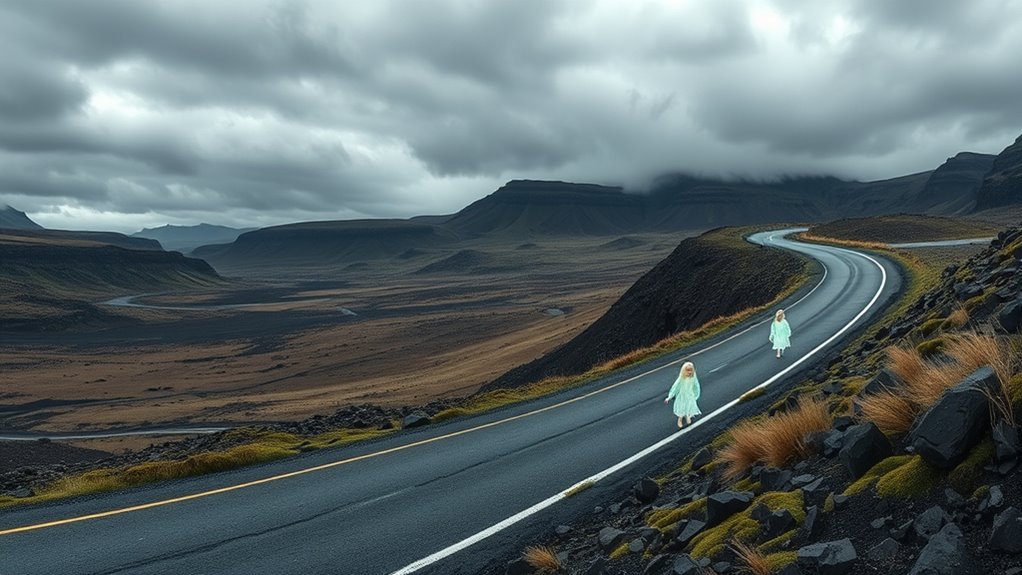
In Iceland, many believe in the hidden folk—elves, trolls, and unseen spirits—which markedly influence road planning and land use. Locals often consult experts and respect folklore, sometimes rerouting or delaying projects to avoid disturbing these mythical beings’ habitats. Small shrines and offerings near significant sites show their ongoing cultural importance. If you want to uncover more about how these beliefs shape Iceland’s landscape and infrastructure, keep exploring this fascinating tradition.
Key Takeaways
- Icelanders often consult folklore experts before construction to avoid disturbing areas believed to house hidden folk.
- Road planning may be rerouted or delayed to respect sites associated with elves, trolls, or other mythical beings.
- Small shrines and offerings are placed at believed inhabited rocks or hills to ensure safe passage and good luck.
- Landscape features are preserved or modified to honor cultural beliefs and maintain harmony with the unseen beings.
- Folklore influences modern land use decisions, reflecting ongoing respect for the hidden folk in Icelandic society.
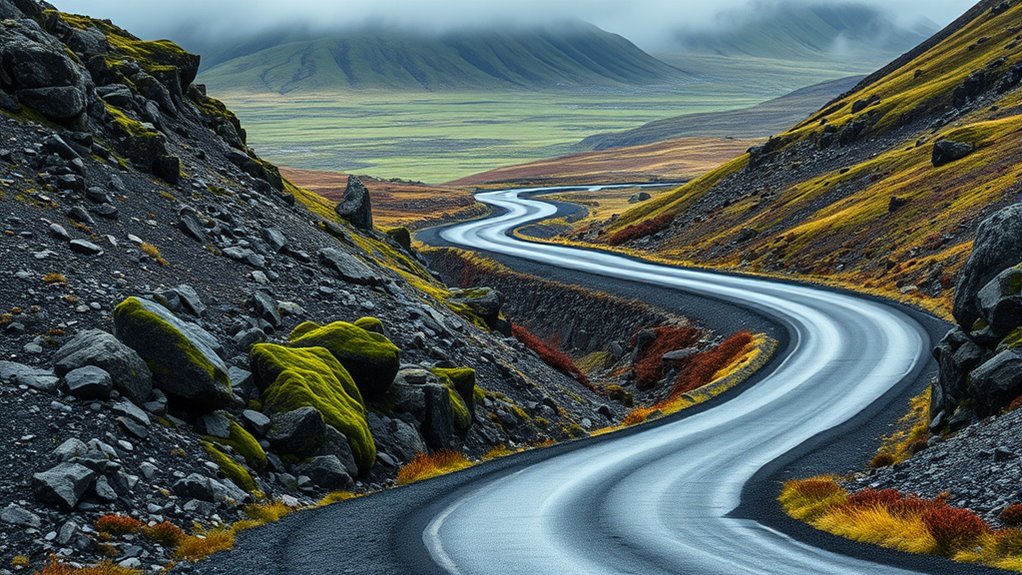
Have you ever wondered if the legends of Iceland hold more truth than just stories? In Iceland, belief in the hidden folk isn’t just a relic of the past; it’s a living part of the culture. Many Icelanders hold that mythical creatures, like elves, trolls, and hidden people, truly exist behind the veil of everyday life. These aren’t just characters from folklore traditions; they’re considered active entities that influence daily decisions and community life. For generations, Icelanders have shared stories about these beings, shaping a worldview where the natural and supernatural intertwine seamlessly.
In Iceland, the hidden folk are believed to be active forces influencing daily life and community decisions.
This deep-rooted belief impacts more than just bedtime tales. When planning roadworks or construction projects, locals often consult with experts who claim to have knowledge of the hidden folk. They believe that disturbing certain areas could anger these mythical creatures, leading to accidents or misfortune. As a result, many engineers and planners incorporate folklore traditions into their work, sometimes rerouting roads or delaying projects out of respect for the unseen inhabitants. It might sound unusual, but to those immersed in the culture, it’s a necessary step to maintain harmony between humans and the mythical world.
You might be surprised to learn that these beliefs aren’t dismissed as mere superstition but are treated with a degree of seriousness. Many Icelanders keep small shrines or leave offerings near rocks or hills believed to be inhabited by elves or trolls. These gestures aren’t just symbolic; they’re seen as ways to ensure safe passage and good luck. In some cases, local authorities have even altered plans to avoid damaging sites believed to be homes of the hidden folk, demonstrating how folklore traditions influence modern decisions. This respect for the unseen isn’t about fear but about coexistence, highlighting a cultural perspective where myth and reality gently overlap.
Additionally, some landscape features—such as certain rocks, hills, or even roads—are preserved or modified specifically because of these cultural beliefs. This cultural respect for land reflects a worldview that values harmony with nature and the unseen forces that shape it. Visitors might find it strange, but understanding this connection adds depth to Iceland’s landscape and history. It reminds us that stories about elves and trolls aren’t just entertainment—they’re woven into the fabric of daily life, guiding decisions and preserving a sense of wonder. Whether you believe in the hidden folk or see them as remnants of folklore traditions, recognizing their importance helps you appreciate Iceland’s unique relationship with its mythical past and its ongoing presence in the present.
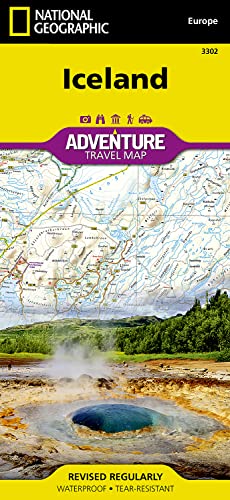
Iceland Map (National Geographic Adventure Map, 3302)
- Detailed Iceland Map: National Geographic Adventure Map
- High-Quality Cartography: Durable and detailed map of Iceland
As an affiliate, we earn on qualifying purchases.
As an affiliate, we earn on qualifying purchases.
Frequently Asked Questions
Are There Specific Rituals to Appease the Hidden Folk?
Yes, there are specific ritual practices to appease the hidden folk, deeply rooted in Iceland’s cultural traditions. You might leave offerings like food, drinks, or small gifts at special sites, especially near rocks or hills believed to conceal these spirits. People also perform respectful gestures, such as avoiding disturbing certain areas, to guarantee harmony. These rituals show reverence and help maintain good relations with the hidden folk, according to local beliefs.
How Do Icelanders Verify the Existence of Hidden Folk?
You can’t definitively verify the existence of hidden folk through folk sightings or folklore validation, as these are based on tradition and personal stories rather than scientific evidence. When locals share folklore validation or recount folk sightings, they often do so to preserve cultural beliefs or explain mysterious experiences. While these stories hold cultural significance, they remain anecdotal, and evidence for the hidden folk’s existence stays within the domain of folklore and personal belief.
Are There Recent Road Projects Affected by Hidden Folk Beliefs?
You might not realize it, but modern infrastructure projects in Iceland often face unexpected delays due to folklore preservation. Rumors of hidden folk influence some road plans, prompting authorities to consult local experts and folklore enthusiasts. These beliefs still hold sway, making project completion a delicate balance between progress and respect for ancient traditions. If you travel in Iceland, you’ll see how deeply these stories are woven into the landscape and development.
Do Children in Iceland Learn About the Hidden Folk at School?
You learn about the hidden folk in Iceland through cultural education and folklore integration in schools. Teachers introduce children to these stories to preserve Icelandic traditions and foster respect for local beliefs. Kids often hear about elves, elves, and trolls, which are considered part of their cultural heritage. This education helps them appreciate their history and understand how these beliefs influence modern life, including road planning and community customs.
How Do Modern Technologies Impact the Belief in Hidden Folk?
You might find that modern technologies, like digital maps and GPS, influence your belief in the hidden folk by increasing skepticism about folklore. While technology offers convenience, it also challenges traditional stories, risking the loss of folklore preservation. Yet, some Icelanders continue to hold onto their beliefs, blending modern tools with cultural traditions, keeping the folklore alive despite technological advances.

Fairy Garden Troll Stake, Acrylic 2D Flat Elf Statue Ornament, 9.4 x 10.43 in, Outdoor Indoor Yard Lawn Pot Plant Decor
- Design: Whimsical sleeping tree troll with moss and flowers
- Material: Durable 2D flat acrylic construction
- Placement: Suitable for outdoor and indoor use
As an affiliate, we earn on qualifying purchases.
As an affiliate, we earn on qualifying purchases.
Conclusion
As you travel through Iceland’s rugged landscape, remember the belief in hidden folk might influence road planning decisions. For instance, a recent road expansion was rerouted after locals claimed it disturbed a fairy hill, showing how these beliefs shape real-world actions. Respecting these traditions isn’t just about superstition; it’s about honoring a deep cultural connection. By doing so, you help conserve Iceland’s unique heritage and ensure safe, harmonious journeys through this mystical land.
Iceland Map (National Geographic Adventure Map, 3302)
- Detailed Iceland Map: National Geographic Adventure Map
- High-Quality Cartography: Durable and detailed map of Iceland
As an affiliate, we earn on qualifying purchases.
As an affiliate, we earn on qualifying purchases.
Iceland Map (National Geographic Adventure Map, 3302)
- Detailed Iceland Map: National Geographic Adventure Map
- High-Quality Cartography: Durable and detailed map of Iceland
As an affiliate, we earn on qualifying purchases.
As an affiliate, we earn on qualifying purchases.