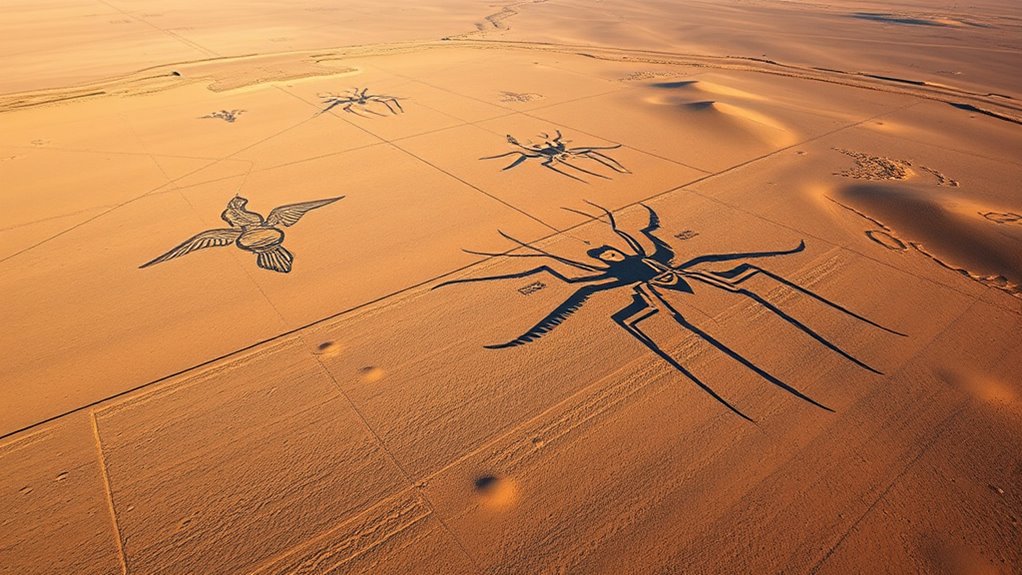

The Nazca Lines are fascinating ancient geoglyphs in Peru that feature vast designs of animals, plants, and geometric patterns. Some believe they served religious or astronomical purposes, but their incredible size and precision fuel wild theories like alien runways or landing strips. While there’s no definitive proof of extraterrestrial involvement, their mysterious origins continue to spark curiosity. If you want to uncover what makes these lines so intriguing and explore the latest ideas, keep exploring this remarkable archaeological puzzle.

Prime made for students and young adults
- Fast, free delivery for dorm and study essentials
- Prime Video and Amazon Music included
- Member-only deals
Key Takeaways
- Some theories speculate the Nazca Lines served as landing strips or runways for extraterrestrial spacecraft.
- The lines’ complex designs and large scale fuel speculation about alien involvement.
- No concrete archaeological evidence supports the idea that they were built for aliens.
- Most experts believe the geoglyphs had cultural, religious, or astronomical purposes.
- The mystery persists, inspiring theories but remaining unproven regarding alien connections.
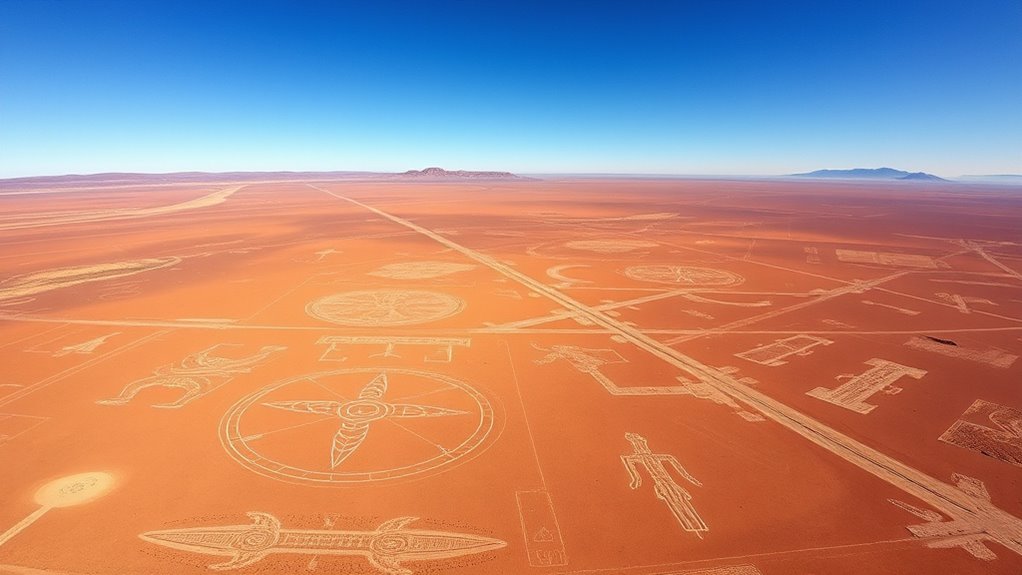
The Nazca Lines are a series of enormous geoglyphs etched into the desert floor of southern Peru. These ancient geoglyphs cover nearly 450 square kilometers and feature hundreds of designs, from simple lines to complex figures of animals, plants, and geometric shapes. You might wonder how such massive images were created with the limited tools available thousands of years ago. The purpose behind these intricate designs remains one of archaeology’s biggest enigmas, sparking debates about their true function. Some believe they served religious or astronomical purposes, while others suggest they could have been markers for water sources or territorial boundaries. Regardless of their original intent, the Nazca Lines are undeniably archaeological mysteries, mesmerizing explorers and scientists alike.
What makes these ancient geoglyphs even more intriguing is how well they have withstood the test of time. Unlike other ancient structures, the lines were carved into the desert’s surface by removing reddish stones to reveal lighter soil underneath. Their preservation is remarkable because of the dry, windless climate of the region, which prevents erosion. As you examine these figures, it’s easy to marvel at the precision and scale involved in their creation. The lines are so extensive that some stretch for hundreds of meters, and the figures are so detailed that they can only be fully appreciated from the air. This aerial perspective has fueled speculation about whether the ancient Nazca people had access to flying technology or if they simply used elevated vantage points and great skill to design these massive works. Modern technology such as aerial imaging has been crucial in studying and understanding these geoglyphs more comprehensively.
The origins of the Nazca Lines date back to between 500 BCE and 500 CE, yet their purpose remains largely uncertain. Many theories propose they were connected to rituals intended to bring water or fertility, essential concerns in this arid landscape. Others believe the lines align with celestial bodies or serve as a calendar for agricultural events. The mystery deepens because some geoglyphs resemble alien spacecraft or runways, leading to modern speculation that extraterrestrial beings may have influenced their creation or used them as landing sites. While these ideas are speculative, they highlight how the Nazca Lines continue to inspire curiosity and debate about ancient civilizations and their capabilities. You can’t help but feel awe when contemplating how these ancient geoglyphs have survived centuries, still prompting questions about their creators and purpose. Ultimately, the Nazca Lines stand as a tribute to human ingenuity, a marvel of archaeology that invites you to explore the mysteries of our distant past.
aerial drone camera for sightseeing
As an affiliate, we earn on qualifying purchases.
As an affiliate, we earn on qualifying purchases.
Frequently Asked Questions
Are There Hidden Symbols Within the Nazca Lines?
Yes, there are hidden symbols within the Nazca Lines. Many believe these ancient mysteries include symbolic markings that convey cultural or astronomical significance. You might find that some figures, like animals and geometric shapes, serve as clues to their purpose. Researchers continue to explore whether these symbols were meant for ritualistic use, navigation, or messages to the gods, making the Nazca Lines an enduring enigma of ancient mysteries.
How Were the Nazca Lines Precisely Constructed?
You can see that the Nazca Lines were precisely constructed using simple yet effective construction techniques. Aerial surveying played a key role, allowing you to plan and execute the designs with accuracy from above. The ancient creators used tools like ropes and stakes to mark straight lines and geometric figures on the desert surface. This careful planning and execution guaranteed the lines remained clear and precise over centuries.
Do the Nazca Lines Align With Celestial Events?
You might find it fascinating that the Nazca Lines align with celestial events; some lines point toward solstices and star risings, hinting at astronomical significance. Imagine ancient Peruvians as cosmic navigators, using these massive geoglyphs like celestial maps. Evidence suggests their construction was intentional, possibly to mark the solstices or other key astronomical phenomena, revealing a deep understanding of celestial alignment and the sky’s role in their culture.
What Tools Did Ancient Peruvians Use to Create the Lines?
Ancient Peruvians used simple stone tools for creating the Nazca Lines, carefully scraping away the reddish surface to reveal the lighter earth beneath. They relied on ancient surveying techniques, such as using stakes and ropes, to guarantee precise straight lines and geometric shapes. These tools and methods allowed them to plan and execute large-scale designs with remarkable accuracy, demonstrating their skill and understanding of their environment.
Could the Nazca Lines Be Part of an Ancient Communication System?
Yes, you could see the Nazca lines as part of an ancient communication system, especially considering their precise design and alignment. Archaeological techniques reveal that these lines might have conveyed messages or held religious significance, serving as a form of ancient storytelling or signaling. While some mysteries remain, examining these lines through modern archaeological methods helps uncover their potential purpose, connecting you to ancient mysteries and cultural expressions.
geoglyphs and archaeological site guides
As an affiliate, we earn on qualifying purchases.
As an affiliate, we earn on qualifying purchases.
Conclusion
As you stand beneath the vast desert sky, the Nazca Lines stretch out like ancient messages waiting to be deciphered. Imagine them as a giant, forgotten tapestry, woven into the earth, whispering secrets from the past. Just like a mysterious map guiding explorers through uncharted territory, these lines invite you to wonder if they’re truly alien runways or human ingenuity etched into history. The truth remains hidden, waiting for curious minds like yours to uncover it.
Peru travel guide with Nazca Lines
As an affiliate, we earn on qualifying purchases.
As an affiliate, we earn on qualifying purchases.
high-resolution binoculars for sightseeing
As an affiliate, we earn on qualifying purchases.
As an affiliate, we earn on qualifying purchases.
Halloween Picks
halloween
As an affiliate, we earn on qualifying purchases.