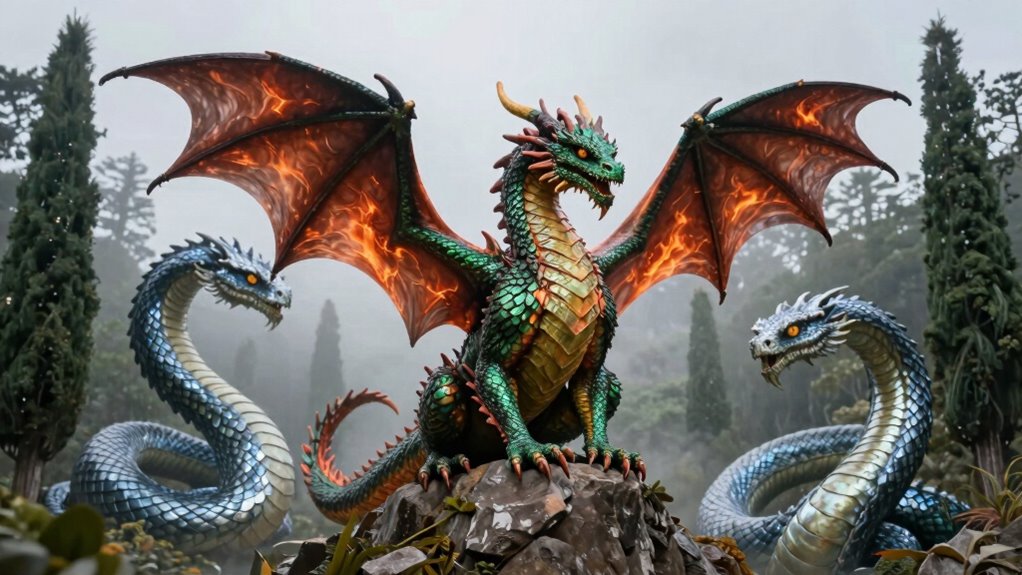

In Italian folklore, dragons like Thyrus and Tarantasio symbolize natural forces, protection, and chaos, reflecting Italy’s diverse history. Thyrus often stands as a guardian of sacred sites, embodying strength and divine power, while Tarantasio is a water dragon representing unpredictable natural dangers. Regional stories blend pagan and Christian elements, highlighting themes of bravery and moral lessons. If you continue exploring, you’ll uncover how these legends reveal deep cultural values and societal beliefs.
Prime for Young Adults — start your free trial
Fast free delivery, streaming and member deals for eligible 18–24 year olds.
As an affiliate, we earn on qualifying purchases.
Key Takeaways
- Thyrus is a protective guardian dragon symbolizing strength and natural land power in Italian folklore.
- Tarantasio represents water and chaos, reflecting fears of natural forces and their potential destruction.
- Regional variations depict dragons as both destructive monsters and divine protectors, blending pagan and Christian elements.
- Legends often involve saints or heroes taming or overcoming dragons, emphasizing moral lessons of bravery and humility.
- Italian dragon stories symbolize primal forces, societal values, and cultural identity through mythic creatures.
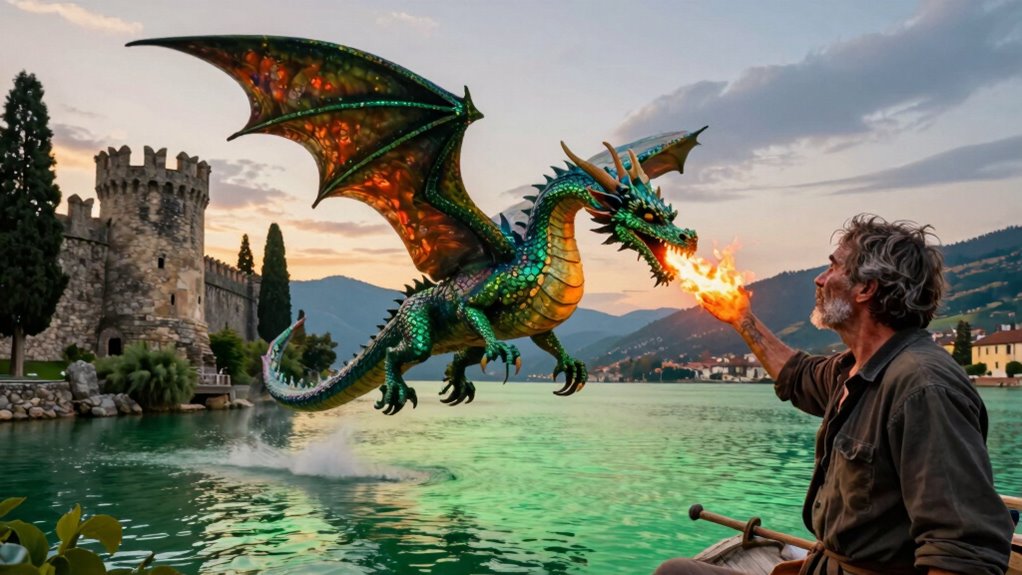
Have you ever wondered how Italian folklore brings its legendary dragons to life? These stories aren’t just tales; they’re woven into the very fabric of Italy’s cultural identity, embodying powerful themes and symbols that have persisted through centuries. When you explore creatures like Thyrus and Tarantasio, you’re delving into a world where legendary creature symbolism plays an essential role in understanding local beliefs and values. These dragons aren’t simply monsters; they represent forces of nature, guardians, or symbols of chaos and transformation, depending on the story. Their origins trace back to Italian folklore, which is rich with myth and legend, often blending pre-Christian beliefs with later Christian influences, creating a tapestry of stories that reflect Italy’s diverse history.
In Italian folklore, dragons like Thyrus and Tarantasio serve different symbolic purposes. Thyrus, for instance, is often depicted as a formidable guardian beast, embodying strength and protection. Its legend may have originated from ancient mythic traditions where dragons symbolized the primal power of the land or the divine. You’ll find that stories about Thyrus often feature it as a protector of sacred sites or treasures, a common motif in folklore worldwide but uniquely adapted to Italy’s local legends. On the other hand, Tarantasio is a more enigmatic creature, sometimes portrayed as a monstrous water dragon that lurks in lakes or rivers. Its legend symbolizes the unpredictable and often dangerous forces of nature that the Italian people historically feared and sought to appease. These stories also reflect regional variations, highlighting how local environments influenced their mythologies.
These stories originate from Italy’s diverse regions, each adding its unique flavor to the mythos. The Italian folklore origins reveal a blend of pagan traditions and Christian storytelling, shaping the way these dragons are perceived. For example, some legends cast Tarantasio as a destructive force tamed by saints or local heroes, reflecting the Christian narrative of overcoming chaos with divine intervention. Meanwhile, Thyrus might symbolize the land’s resilience or serve as a reminder of nature’s power. You’ll notice that these stories often contain moral lessons, emphasizing humility, bravery, or respect for the natural world. Additionally, these legends demonstrate how cultural symbolism helps convey important societal values across generations.
As an affiliate, we earn on qualifying purchases.
Frequently Asked Questions
Are These Italian Dragon Stories Based on Real Historical Events?
These Italian dragon stories aren’t based on real historical events. Instead, they draw from medieval heraldry and mythological symbolism to embody qualities like bravery and protection. You’ll find dragons often representing power or chaos in legends, which reflect cultural beliefs rather than actual history. So, while they’re rich in tradition, these stories serve more as mythological allegories than factual accounts of events.
How Have Italian Dragon Legends Influenced Modern Popular Culture?
Italian dragon legends serve as fiery seeds, igniting modern pop culture with mythical symbolism that breathes life into movies, books, and art. You see their influence in fantastical creatures and heroic tales, preserving cultural heritage like treasured flames passed down through generations. These stories act as bridges, connecting past and present, inspiring creators and audiences alike to keep the myth alive, transforming ancient legends into contemporary adventures.
Are There Any Specific Regions in Italy Known for These Dragon Stories?
You’ll find that specific Italian regions, like Lombardy and Veneto, are known for their rich regional folklore featuring dragons. These stories often symbolize power and protection within local mythological symbolism, shaping cultural identity. When exploring these areas, you’ll notice how local legends and dragon tales influence art, festivals, and traditions, making regional folklore a vibrant part of Italy’s mythic heritage.
What Symbolism Do These Dragons Represent in Italian Folklore?
You see, these Italian dragons symbolize symbolic guardians and embody cultural myths that reflect local values and fears. They often serve as protectors of sacred sites or treasures, representing strength, wisdom, and the struggle between good and evil. These stories reinforce community identity and moral lessons, making dragons more than mere creatures—they’re powerful symbols deeply woven into Italy’s rich folklore and cultural heritage.
Have These Stories Been Adapted Into Movies or Television Shows?
You might find some adaptations of medieval storytelling and mythological symbolism in movies or TV shows, but specific stories like Thyrus or Tarantasio rarely appear directly. Many Italian dragon legends inspire broader fantasy themes, yet they haven’t been widely adapted into mainstream media. Instead, these stories often influence cultural works indirectly, serving as rich sources of mythological symbolism for creators exploring themes of heroism, danger, and transformation.
As an affiliate, we earn on qualifying purchases.
Conclusion
You’ve uncovered a world where dragons breathe life into Italy’s rich tapestry of legends. These stories, like living flames, ignite your imagination and remind you of the incredible power of myth. As you carry these tales with you, know that they’re more than stories—they’re the heartbeat of a culture that’s stood the test of time. In their fiery wings, you see the everlasting spirit of Italy’s enchanted past.
As an affiliate, we earn on qualifying purchases.
As an affiliate, we earn on qualifying purchases.
NFL season / tailgating Picks
team gear
As an affiliate, we earn on qualifying purchases.