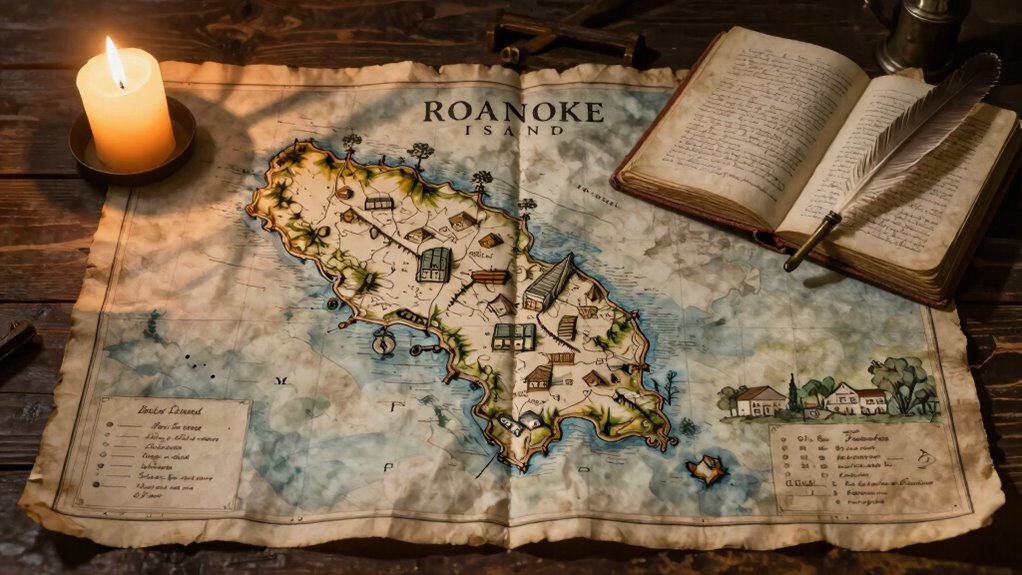

The Roanoke mystery reveals how colonial fears of chaos, external threats, and cultural erosion shaped their approach to expansion. You see, colonists viewed the frontier as a dangerous, unpredictable space that threatened their civilization’s stability. Disappearances like Roanoke weren’t just puzzles—they symbolized deep anxieties about losing control, land, and cultural identity. Understanding these fears helps you see how they influenced colonial policies and perceptions of wilderness, danger, and native tribes. Continue exploring to uncover more about these hidden fears shaping early America.

Prime made for students and young adults
- Fast, free delivery for dorm and study essentials
- Prime Video and Amazon Music included
- Member-only deals
Key Takeaways
- The disappearance symbolizes fears of the unknown threatening colonial stability and the fragility of frontier settlements.
- It reflects anxieties about external threats like Native tribes and internal failure undermining civilization.
- The event reveals cultural paranoia about preserving societal order amid wilderness and perceived chaos.
- Colonial policies were driven by fears of losing land, control, and cultural identity to frontier dangers.
- The mystery exemplifies how fears of disorder influenced exploration, conquest, and societal perceptions of the wilderness.
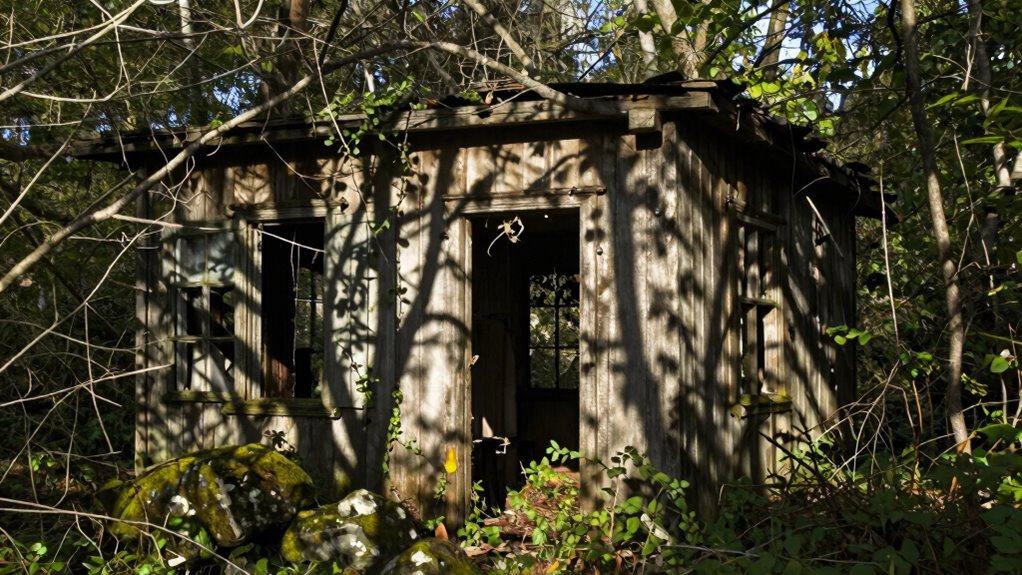
The mysterious disappearance of the Roanoke Colony has fascinated historians and explorers for centuries, fueling fears and suspicions about what happened to the settlers. This enigma taps into deep-seated feelings of cultural paranoia and frontier anxiety that shaped early colonial America. When you consider the context, it’s clear that the colonists’ disappearance wasn’t just about a missing settlement; it reflected broader fears about the unknown and the unfamiliar. At a time when Europeans were expanding into uncharted territories, these anxieties ran high, and the disappearance of Roanoke seemed like a confirmation of worst fears: that the frontier was dangerous, unpredictable, and potentially deadly.
The Roanoke mystery reveals deep fears of the unknown threatening civilization’s fragile borders.
Cultural paranoia played a significant role in how people interpreted the mystery. The colonists were seen as representatives of a fragile civilization that could be easily overrun or corrupted by outside influences—whether Native Americans, other European powers, or even internal dissent. When the settlers vanished, many believed it must have been due to either hostile natives or some internal failure rooted in moral or cultural decay. This paranoia fueled stories of conspiracy, betrayal, and danger lurking just beyond the horizon. It reinforced the idea that the frontier was a place of chaos where the established order was always at risk of disintegration. The fear wasn’t only about losing land but also about losing cultural identity and control.
Frontier anxiety, meanwhile, underscores how the colonists viewed their environment as inherently threatening. The wilderness wasn’t just a backdrop for adventure; it was a hostile force that tested their resilience and morality. The unknown landscape, with its unfamiliar flora, fauna, and native tribes, created a pervasive sense of vulnerability. When the colony disappeared, it seemed to confirm that the frontier was a place where civilization’s veneer could quickly peel away, revealing chaos and destruction underneath. This anxiety wasn’t just about physical safety; it reflected deeper fears about the stability of the new society they were trying to build. The loss of Roanoke served as a cautionary tale, intensifying fears that the frontier could swallow up even their most ambitious efforts. Additionally, these fears were often shaped by cultural perceptions of the “savage” frontier, which contributed to a narrative that depicted native tribes and the wilderness as inherently hostile and threatening to colonial stability. The pervasive frontier anxiety also influenced colonial policies and attitudes, often leading to a more aggressive stance toward Native populations and territorial expansion.
In the end, the Roanoke mystery reveals how colonial fears about cultural purity and territorial control shaped their worldview. It wasn’t just about a missing settlement; it was about the fragile line between order and chaos, civilization and wilderness. The disappearance stands as a stark reminder of how fears—whether rooted in cultural paranoia or frontier anxiety—can distort perceptions and influence actions. These fears continue to echo through history, illustrating how much the unknown can threaten the very foundations of a society’s identity. A deeper understanding of these colonial fears helps us appreciate how they influenced early American history and the ongoing narrative of exploration and conquest.
As an affiliate, we earn on qualifying purchases.
Frequently Asked Questions
What Was the Original Purpose of the Roanoke Colony?
The original purpose of the Roanoke Colony was to establish a strategic settlement that would expand England’s territorial claims and serve as a base for trade and resource extraction. Colonial motivations centered on economic gain and national prestige, while settlement strategies aimed for establishing a permanent foothold in the New World. You see, the colonists hoped to create a prosperous community, but the mysterious disappearance underscores the risks and uncertainties of these early settlement efforts.
How Did Colonial Authorities Respond to the Disappearance?
You see, colonial authorities responded with frantic urgency, fueled by lingering suspicions and colonial paranoia. They launched investigations, sent expeditions, and scoured every inch of the island, desperate to uncover what happened. Yet, the disappearance remains a haunting mystery, fueling fears of enemies or internal treachery. Their reactions reveal how deeply fear and suspicion permeated colonial life, transforming a simple disappearance into a terrifying enigma that still echoes through history.
Were There Any Indigenous Interactions Recorded Before the Disappearance?
You find limited records of Indigenous interactions before the disappearance at Roanoke. While some alliances existed, cultural misunderstandings often hampered communication, leading to tensions. You notice that relationships varied—some tribes traded peacefully, but others mistrusted the colonists. These interactions highlight the complex dynamics between Indigenous peoples and colonists, emphasizing how cultural differences and misperceptions shaped early colonial relationships, ultimately impacting events like the mysterious disappearance of the Roanoke settlers.
What Archaeological Evidence Exists Beyond the Written Records?
Imagine a buried story waiting in the earth’s silent layers. Archaeological discoveries reveal artifacts like pottery shards, tools, and remnants of structures, whispering tales of those who once lived there. Artifact analysis helps piece together their lives, shedding light on interactions and daily routines. These clues deepen our understanding, offering a tangible link to the vanished colony, beyond what written records ever could convey.
How Has the Mystery Influenced Modern Perceptions of Colonization?
The Roanoke mystery shapes your view of colonization by highlighting how colonial narratives often reflect cultural anxieties about survival and identity. It makes you question the reliability of historical accounts and consider how fear influenced colonists’ actions. This enduring enigma fuels modern debates on colonization’s impact, reminding you that stories of disappearance reveal deeper fears about cultural loss and the challenges of establishing new societies.
historical exploration books about Roanoke
As an affiliate, we earn on qualifying purchases.
As an affiliate, we earn on qualifying purchases.
Conclusion
As you reflect on the Roanoke mystery, you realize it’s more than just a lost colony—it’s a window into colonial fears and uncertainties. What happened to those settlers? Did they vanish into the wilderness or face something darker? The unanswered questions leave you pondering, forever questioning what lurked beyond the horizon. In the end, the story isn’t just about disappearance; it’s about the shadows of fear that still haunt our understanding of the past.
As an affiliate, we earn on qualifying purchases.
early American history documentary DVDs
As an affiliate, we earn on qualifying purchases.
As an affiliate, we earn on qualifying purchases.
Halloween Picks
halloween
As an affiliate, we earn on qualifying purchases.