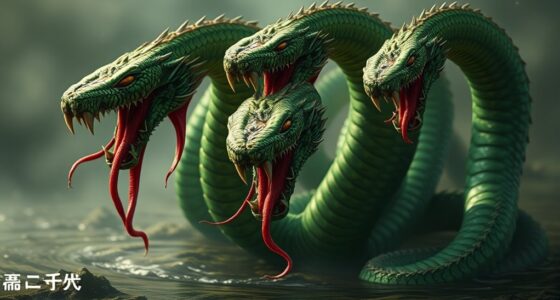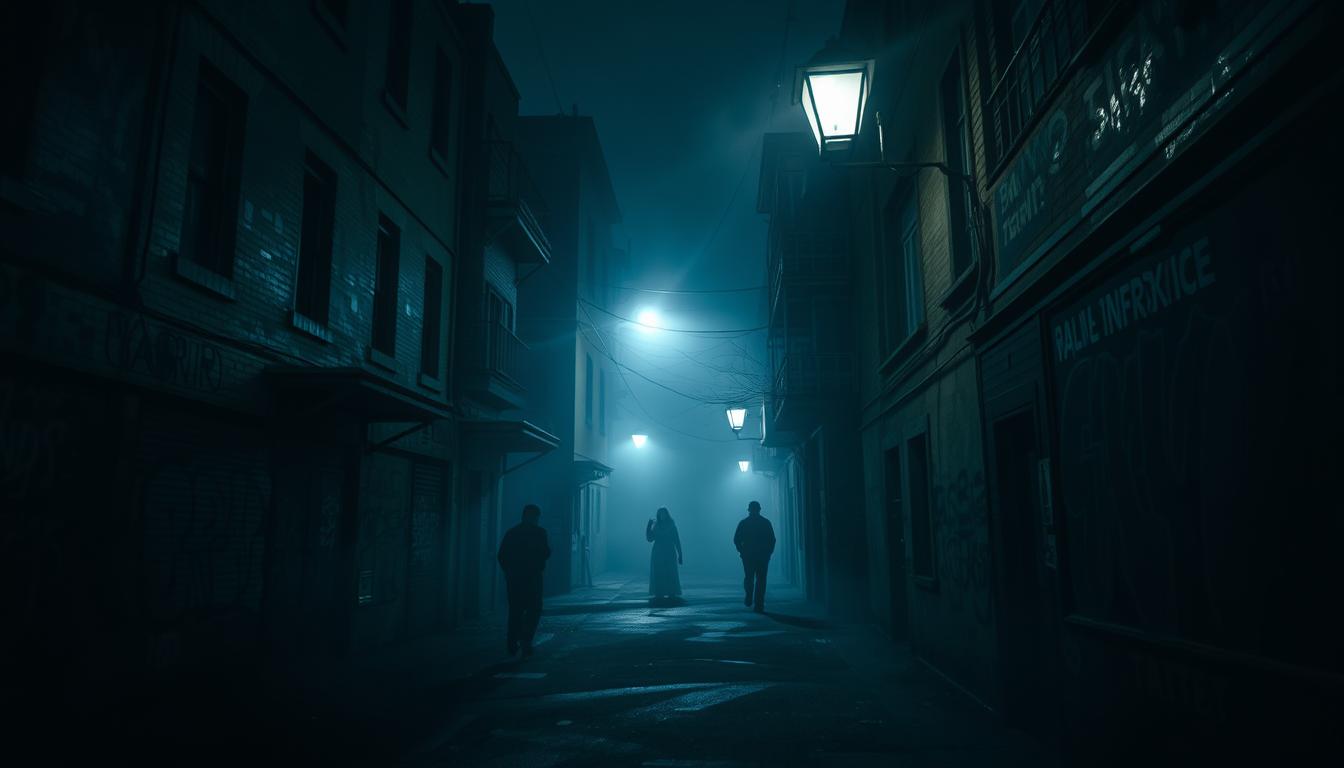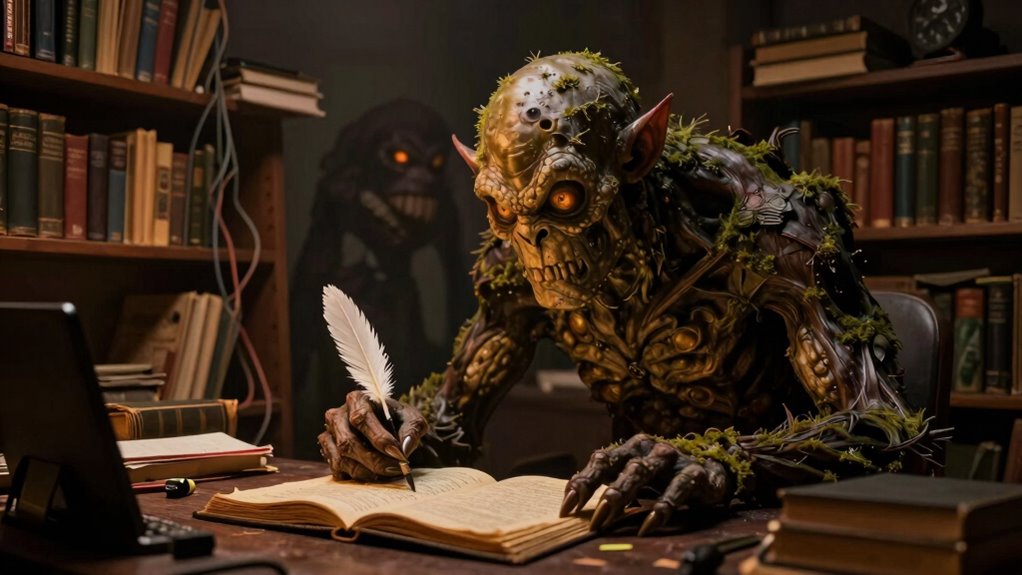

Monsters stay powerful story engines because they tap into universal fears and curiosities, reflecting deep cultural symbols and shared anxieties. They embody chaos, the unknown, and societal taboos, making them timeless symbols of human nature and morality. Their layered meanings allow stories to explore personal trauma, societal issues, and moral struggles. If you keep exploring, you’ll uncover how monsters continue to resonate across cultures and eras, shaping compelling narratives that echo human fears and hopes.

Get school and study supplies delivered free — and shop member deals
- Fast, free delivery on millions of items
- Access to Prime Big Deal Days deals on October 6–7
- Prime Video, Amazon Music and more included
Key Takeaways
- Monsters embody universal fears and curiosities, making them relatable and compelling story elements across cultures and eras.
- They symbolize deeper themes like morality, mortality, and societal anxieties, enriching narrative layers.
- Their cultural significance and layered symbolism allow stories to explore complex human and societal issues.
- As representations of chaos, the unknown, or internal struggles, monsters facilitate emotional and psychological engagement.
- Their timeless, adaptable nature ensures they remain powerful metaphors and story drivers in diverse media.
Monsters have a timeless appeal because they tap into fundamental fears and curiosities that resonate across cultures and generations. You’re naturally drawn to stories featuring monsters because they embody more than just frightening creatures; they symbolize deeper themes that speak to human nature, morality, and societal fears. The symbolism in monsters often reflects anxieties about the unknown, the uncontrollable, or the outsider. For instance, a monstrous figure might represent the chaos lurking beneath civilization’s veneer or serve as a mirror for your own fears about mortality, power, or moral failure. These symbols aren’t random—they carry cultural significance, rooted in history, mythology, and collective subconscious. When you see a monster in a story, you’re witnessing a cultural artifact that captures shared anxieties and values, making the creature more than just a villain or obstacle. Instead, it becomes a vessel for exploring what a society considers dangerous, taboo, or misunderstood.
The cultural significance of monsters varies widely, influenced by the traditions and beliefs of different societies. In some cultures, monsters symbolize spiritual threats or moral lessons, serving as cautionary figures that uphold societal norms. In others, they embody chaos or nature’s fury, reminding you of humanity’s fragile place within the natural world. When you encounter monsters in myth or folklore, you’re engaging with stories that have been passed down through generations, each adding layers of meaning that reflect the cultural context of their time. This enduring symbolism helps these stories resonate across centuries, making monsters relevant regardless of technological or societal changes. They act as cultural touchstones, connecting you to a collective history of fears and hopes. Additionally, the cultural significance of monsters demonstrates how these stories adapt and persist, reflecting evolving societal values and concerns over time.
In contemporary stories, monsters continue to serve as powerful symbols—representing internal struggles, societal issues, or fears of the unknown future. Their cultural significance persists because they’re versatile metaphors, adaptable to different eras and circumstances. You see this in movies, books, and games where monsters symbolize everything from personal trauma to political corruption. The reason they keep working as story engines is precisely because they embody complex, layered symbolism that taps into universal themes. They force you to confront uncomfortable truths, challenge moral boundaries, or imagine worlds beyond your own. As long as humans have fears and curiosities, monsters will remain compelling, serving as timeless symbols that help you make sense of the chaos around and within you.
As an affiliate, we earn on qualifying purchases.
Frequently Asked Questions
How Do Monster Stories Evolve Over Different Cultures?
You see, monster stories evolve over different cultures through their mythical origins and cultural adaptations. As each society interprets these creatures differently, their traits and symbolism shift to reflect local values and fears. You might find a dragon representing power in one culture, while in another, it embodies chaos. These stories adapt over time, keeping monsters relevant and resonant, allowing them to serve as mirrors for evolving cultural beliefs and collective anxieties.
What Psychological Needs Do Monsters Fulfill in Audiences?
Monsters serve as mirrors reflecting your primal instincts, giving you a safe outlet for psychological relief. They allow you to confront fears and anxieties without real danger, satisfying deep-seated psychological needs. As a result, you experience catharsis, feeling more balanced afterward. These creatures become symbols of chaos and control, helping you navigate complex emotions and fears in a controlled environment, ultimately making them enduring figures in storytelling.
Are There Common Traits That Make Monsters Compelling Characters?
You find monsters compelling because they often embody universal traits through monster archetypes and creature symbolism. These characters evoke fear, curiosity, and empathy, making them relatable yet mysterious. Their traits—like vulnerability hidden beneath a fierce exterior or their role as chaos creators—resonate deeply. You’re drawn to their complexity, which challenges your perceptions and provides a rich canvas for exploring human fears, desires, and moral dilemmas.
How Do Monsters Reflect Societal Fears and Anxieties?
You see, monsters embody societal fears and anxieties, acting as reflections of real-world issues through fantasy archetypes. They often symbolize moral lessons, warning us about dangers like greed, cruelty, or ignorance. By confronting monsters in stories, you explore collective concerns and moral dilemmas, making the narrative more meaningful. These creatures serve as mirrors, revealing underlying tensions and helping society process and confront its deepest fears.
Can Monsters Symbolize Personal or Collective Transformation?
Monsters can symbolize personal or collective transformation, acting as mirrors for your journey of symbolic growth amidst an identity struggle. They embody the chaos and fear that come with change, pushing you to confront your deepest issues. Like a chrysalis turning into a butterfly, monsters challenge your perceptions, urging you to break free from old selves and embrace new beginnings, making transformation both terrifying and essential.
As an affiliate, we earn on qualifying purchases.
Conclusion
You see, monsters resonate because they embody our fears, desires, and the unknown. They’re not just threats; they’re mirrors of ourselves, beckoning us to confront inner chaos. Think of them as a visual map—each monstrous feature representing a hidden emotion or societal anxiety. By exploring these creatures, you’re not just telling stories; you’re visualizing collective subconscious fears. That’s why monsters endure—they’re timeless symbols that keep story engines running, fueling our imagination and understanding.
As an affiliate, we earn on qualifying purchases.
psychological horror story collections
As an affiliate, we earn on qualifying purchases.
As an affiliate, we earn on qualifying purchases.
Halloween Picks
halloween
As an affiliate, we earn on qualifying purchases.