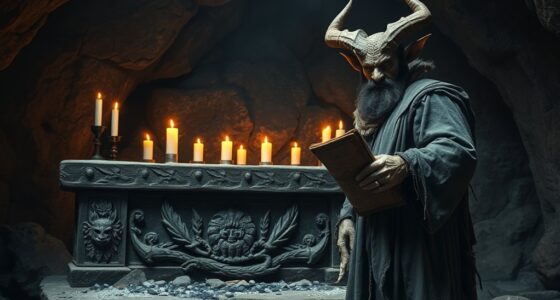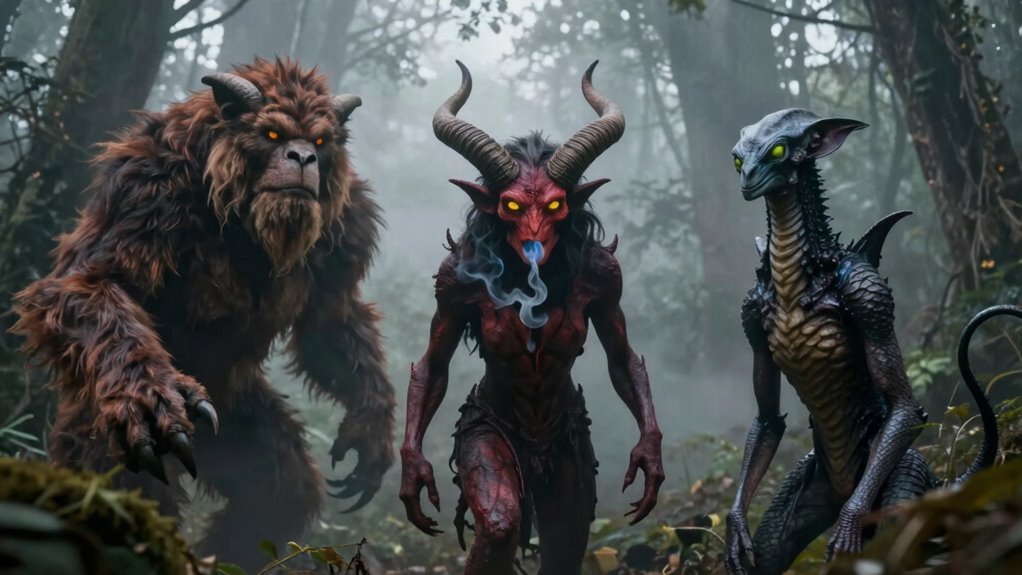

Beasts are real animals that we recognize by scientific classification, while demons are supernatural entities often linked to evil or spiritual spheres. Cryptids, however, are creatures believed to exist on the fringes of science and skepticism, rooted in myths and folklore. They symbolize the mysterious and unexplainable parts of nature, highlighting human curiosity about the unknown. If you keep exploring, you’ll uncover more about how these beings differ and what they represent.

Get school and study supplies delivered free — and shop member deals
- Fast, free delivery on millions of items
- Access to Prime Big Deal Days deals on October 6–7
- Prime Video, Amazon Music and more included
Key Takeaways
- Beasts are recognized animals, while demons are supernatural entities; cryptids are mythical creatures with unproven existence.
- Demons are rooted in supernatural or religious contexts; beasts are real animals; cryptids stem from folklore and legends.
- Cryptids symbolize the unknown and unexplained, unlike beasts and demons, which often have identified or supernatural traits.
- Beasts are scientifically verifiable, demons are spiritual or supernatural, and cryptids lack concrete evidence.
- Cryptids often originate from myths and folklore, contrasting with the more defined nature of beasts and the supernatural nature of demons.
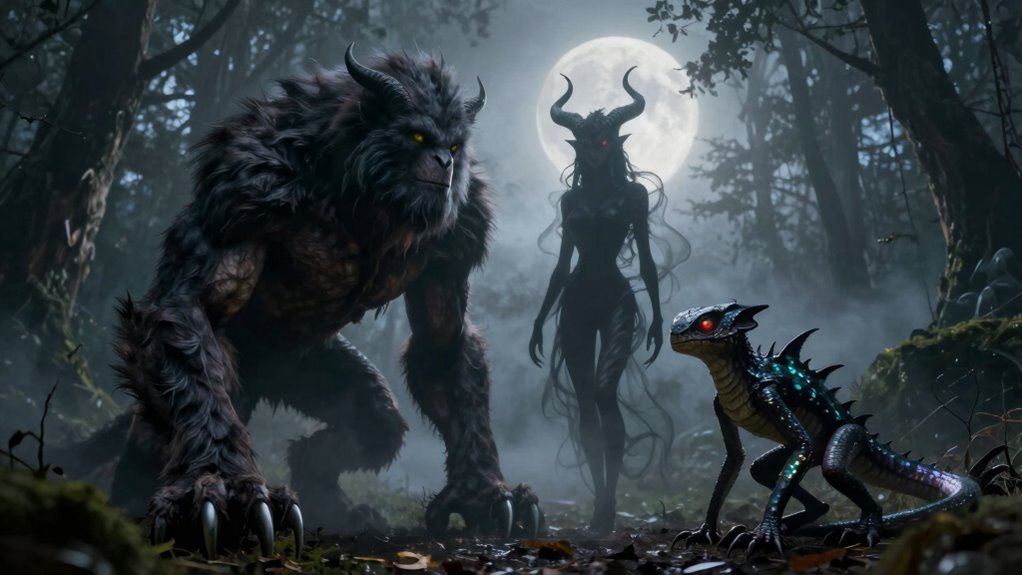
Cryptids are quite different—they’re creatures believed to exist on the fringes of science and skepticism. Their mythical origins are often based on sightings, legends, or folklore that lack concrete evidence. These creatures, like Bigfoot or the Loch Ness Monster, symbolize the unknown or the unexplainable aspects of the natural world. Cultural representations of cryptids vary widely depending on regional stories, but they usually evoke curiosity, fear, or wonder at the mysteries lurking beyond scientific understanding. Cryptids often serve as cultural symbols of the unexplored or misunderstood parts of nature, capturing the imagination through stories of encounters with the inexplicable. Their presence highlights our fascination with the unknown and the desire to uncover secrets hidden in nature’s depths.
As an affiliate, we earn on qualifying purchases.
Frequently Asked Questions
Are There Any Known Historical Sightings of Cryptids?
Yes, there are numerous historical sightings of cryptids. Ancient folklore often describes creatures like the Loch Ness Monster or the Mothman, which continue to intrigue people today. In modern times, sightings persist, with enthusiasts and skeptics alike sharing reports of mysterious beings. These stories blend old legends with new encounters, fueling ongoing curiosity about whether such creatures truly exist or are just legends that have persisted through generations.
How Do Cultural Beliefs Influence the Perception of Demons?
You see, cultural beliefs shape how you perceive demons through cultural symbolism and religious interpretations. These elements influence whether you see demons as evil spirits, moral tests, or symbolic representations of chaos. Your cultural background colors these perceptions, making demons seem more threatening or more misunderstood. By understanding these influences, you gain insight into how societies interpret and react to these supernatural entities, shaping their stories and fears.
Can Beasts and Cryptids Be Scientifically Proven to Exist?
You might stumble upon a cryptid classified as a beast, but scientific proof remains elusive. While some cryptids symbolize primal fears or ancient beliefs, their existence isn’t confirmed by rigorous evidence. Beasts and cryptids often blur lines between myth and reality, but without concrete proof, their status stays in the domain of speculation. Science requires verifiable data, and until then, cryptid classification remains intriguing but unproven.
What Are the Psychological Explanations for Demon Sightings?
In paranormal psychology, demon sightings often stem from hallucination triggers like sleep paralysis, extreme stress, or drug effects. Your mind may interpret these vivid, involuntary images as supernatural entities due to cultural influences and personal fears. These psychological explanations suggest that what you perceive as demons are often products of your subconscious processing stress or sensory distortions, rather than actual supernatural beings.
Are There Any Famous Myths Associated With Each Category?
You’re drawn into legendary tales where mythical origins breathe life into each creature. For beasts, the Minotaur symbolizes primal chaos; demons like Lucifer embody rebellion and temptation; cryptids, such as Bigfoot, evoke mystery and the unknown. These myths serve as cultural symbolism, anchoring societies’ fears and hopes. Their stories dance across time, whispering secrets of ancient worlds and our collective psyche, making each legend a mirror reflecting humanity’s eternal quest for understanding.
As an affiliate, we earn on qualifying purchases.
Conclusion
Now that you understand the distinctions, you might wonder what’s lurking just beyond your sight. Are these creatures merely myths, or could some be lurking in the shadows, waiting to reveal themselves? The line between reality and legend blurs, leaving you with a lingering sense of mystery. Keep your eyes open—what you don’t see might just change everything you thought you knew about the world around you.
As an affiliate, we earn on qualifying purchases.
As an affiliate, we earn on qualifying purchases.
Halloween Picks
halloween
As an affiliate, we earn on qualifying purchases.