Choosing a Halloween book for a curious child means deciding what kind of spooky learning will hold their attention: quick facts, questions and answers, or a stronger focus on the science behind eerie sights and sounds. I rank The Science of Spooky first for children ages 8–12 who want science tied directly to Halloween mysteries, while The Big Halloween Book of Why is a better fit for younger readers who like a mix of questions, trivia, and activities. For a lighter, shareable option, Weird But True! Halloween centers on 300 short facts that can work well at a party or during a seasonal read-aloud.

Get school and study supplies delivered free — and shop member deals
- Fast, free delivery on millions of items
- Access to Prime Big Deal Days deals on October 6–7
- Prime Video, Amazon Music and more included
The tradeoff is that these titles do not offer the same kind of learning. Some are broad Halloween entertainment with science among several themes; others make question-led explanations their main draw. The supplied descriptions give little information about page count, illustrations, or how advanced the explanations are, so I focus my ranking on the stated age ranges, topic mix, and reading format implied by each title. That makes this guide most useful for choosing a seasonal curiosity book, not a substitute for a detailed science reference.
Key Takeaways
- For ages 8–12 seeking science explanations about creepy creatures, glowing things, strange sounds, and fear, I rank 100,000 Whys: The Science of Spooky first.
- The Big Halloween Book of Why is the broadest choice for ages 6–12 if a child enjoys 400 questions alongside fall activities and trivia.
- Weird But True! Halloween is the most clearly defined pick for short, shareable Halloween facts, but its description does not promise deeper science explanations.
- 10,000 Halloween Whys for Curious Kids covers science alongside history, monsters, and traditions, so it suits children whose interests extend beyond experiments and nature.
- The two 100,000 Whys titles have different stated audiences and focus: one targets ages 6–12 broadly, while The Science of Spooky is aimed at ages 8–12 and names specific science themes.
| 100,000 Whys: The Science of Spooky: A Halloween Question-and-Answer Book for Kids Ages 8–12 About Creepy Creatures, Glowing Things, Strange Sounds, and Fear |  | Best Overall for Halloween Science | Format: Question-and-answer book, according to the title | Stated audience: Ages 8–12 | Seasonal focus: Halloween and spooky topics | VIEW LATEST PRICE | See Our Full Breakdown |
| The Big Halloween Book of Why: 400 Spooky Questions & Amazing Answers for Curious Kids Ages 6-12 | 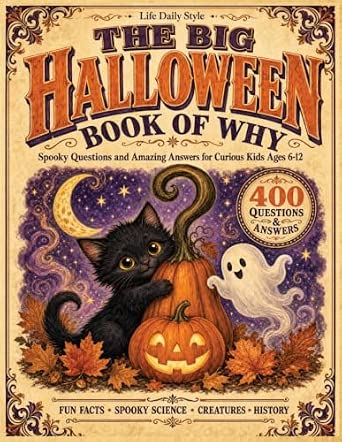 | Best for Questions and Activities | Format: Question-and-answer book with activities, as described | Stated audience: Ages 6–12 | Question count: 400, stated in the title | VIEW LATEST PRICE | See Our Full Breakdown |
| Weird But True! Halloween: 300 Spooky Facts to Scare You Silly |  | Best for Quick Facts and Group Sharing | Format: Fact collection, based on the title and description | Stated audience: Kids and Halloween fans; no age range provided | Fact count: 300, stated in the title | VIEW LATEST PRICE | See Our Full Breakdown |
| 10,000 Halloween Whys for Curious Kids: Clear, Fun Answers About the History, Monsters, Science, and Traditions of the Spooky Season |  | Best for Broad Halloween Topic Coverage | Format: Question-and-answer book, according to the title and description | Stated audience: Curious kids; no age range provided | Topics: Halloween history, monsters, science, and traditions | VIEW LATEST PRICE | See Our Full Breakdown |
| 100,000 Whys Encyclopedia for Kids – Spooky Scientists (Halloween Edition) |  | Best for Younger Curiosity-Driven Readers | Format: Encyclopedia-style book, according to the title | Stated audience: Ages 6–12 | Edition: Halloween edition | VIEW LATEST PRICE | See Our Full Breakdown |
| Halloween science books for kid | Format | Stated audience | Science emphasis | Seasonal focus |
|---|---|---|---|---|
| 100,000 Whys: The Science of S | Question-and-answer book, according to the title | Ages 8–12 | Explicitly described as science-focused | Halloween and spooky topics |
| The Big Halloween Book of Why: | Question-and-answer book with activities, as described | Ages 6–12 | Included among broader Halloween content; depth not specified | Halloween and fall |
| Weird But True! Halloween: 300 | Fact collection, based on the title and description | Kids and Halloween fans; no age range provided | Not specified in the supplied description | — |
| 10,000 Halloween Whys for Curi | Question-and-answer book, according to the title and description | Curious kids; no age range provided | One part of a broader topic mix | Halloween and the spooky season |
| 100,000 Whys Encyclopedia for | Encyclopedia-style book, according to the title | Ages 6–12 | Included, with depth not specified | — |
More Details on Our Top Picks
100,000 Whys: The Science of Spooky: A Halloween Question-and-Answer Book for Kids Ages 8–12 About Creepy Creatures, Glowing Things, Strange Sounds, and Fear
I place The Science of Spooky first because it most directly delivers on the science part of this roundup. Its description identifies concrete subjects—creepy creatures, glowing things, strange sounds, and fear—rather than promising Halloween facts in general. That gives a parent a clearer sense of what a curious 8- to 12-year-old may explore: the natural or physical explanations behind sensations and sights that can seem eerie around Halloween.
The question-and-answer format also gives it a more focused learning role than Weird But True! Halloween, which is described as a collection of 300 fun facts. A child looking for an explanation is likely to prefer a question-led book over a stream of trivia, while a party host may find the shorter fact-based concept easier to dip into. Compared with The Big Halloween Book of Why, this title sounds narrower and more science-centered, whereas the other includes fall activities and a wider mix of spooky questions.
The main reservation is the lack of detail about how answers are developed. The description does not say how advanced the explanations are, whether the book includes diagrams, or how much space it gives each topic. Its stated audience begins at age 8, which may make it a less comfortable choice for younger children who want gentler, simpler Halloween material. I would choose it for a school-age reader who asks why something glows or makes a strange sound, but not for a child who mainly wants crafts, traditions, or a highly specified science reference.
Pros:- Names several specific science-related Halloween themes.
- Question-and-answer framing supports browsing and curiosity-led reading.
- Clearer science focus than the broader trivia and traditions titles.
- States an age range of 8–12.
Cons:- The description does not specify answer depth, illustrations, or scientific sourcing.
- Its age guidance may not suit younger Halloween readers.
- It appears more focused on spooky science than seasonal activities or traditions.
Best for: Curious readers ages 8–12 who want Halloween mysteries connected to science, especially questions about creatures, light, sound, and fear.
Not ideal for: Children under 8 who need simpler or gentler material, and readers seeking detailed information about experiments, diagrams, or scientific references before buying.
- Format:Question-and-answer book, according to the title
- Stated audience:Ages 8–12
- Seasonal focus:Halloween and spooky topics
- Named science themes:Creepy creatures, glowing things, strange sounds, and fear
- Science emphasis:Explicitly described as science-focused
- Page count:Not specified in the supplied details
- Illustrations:Not specified in the supplied details
Our verdict“I rank this first for older elementary readers who want explanations of spooky phenomena more than a general collection of Halloween facts.”
The Big Halloween Book of Why: 400 Spooky Questions & Amazing Answers for Curious Kids Ages 6-12
The Big Halloween Book of Why earns second place by balancing a large stated set of questions with fall activities. It is presented for ages 6–12, making it the most explicitly broad-age choice in this group, although that range alone cannot guarantee the same entry will suit both a new reader and an older child. The 400-question concept offers a clear browsing hook: a child can pick an intriguing prompt rather than read from cover to cover.
Compared with The Science of Spooky, this book appears less tightly centered on science. Its description combines spooky questions, fun facts, creepy trivia, and fall activities, so I see it as a seasonal activity-and-curiosity book rather than the strongest science-specific option. That wider mix may be an advantage for families who want variety, especially if a child’s interest shifts between Halloween questions and things to do. But a buyer seeking explanations of light, sound, or creatures should look first at The Science of Spooky, whose listed topics are more explicitly scientific.
The tradeoff is uncertainty about depth and difficulty. No details explain what kinds of activities are included, how much of the book is science, or whether the answers become more challenging for older readers. Unlike Weird But True! Halloween, which specifies 300 facts, this title’s pitch emphasizes both questions and activities, not just short trivia. I would choose it for a child who likes variety and enjoys being prompted to ask “why”; I would skip it if the main goal is a clearly defined science curriculum or advanced explanations.
Pros:- Advertises 400 Halloween-themed questions.
- Combines questions and answers with trivia and fall activities.
- Provides a stated age range of 6–12.
- Offers a broader seasonal mix than the science-centered first pick.
Cons:- The description does not identify the activities or explain their scope.
- Science depth and question difficulty are not specified.
- The broad age range may not indicate how well it serves older readers.
Best for: Children ages 6–12 who enjoy browsing spooky questions and want Halloween-season activities mixed with facts and answers.
Not ideal for: Families seeking a clearly science-dominant book, or older children who need a stated level of advanced content.
- Format:Question-and-answer book with activities, as described
- Stated audience:Ages 6–12
- Question count:400, stated in the title
- Topic mix:Spooky questions, facts, creepy trivia, and fall activities
- Seasonal focus:Halloween and fall
- Science emphasis:Included among broader Halloween content; depth not specified
- Page count:Not specified in the supplied details
- Physical format:Not specified in the supplied details
Our verdict“I recommend it for families who want a varied Halloween question book with activities, rather than the most science-focused title in the lineup.”
Weird But True! Halloween: 300 Spooky Facts to Scare You Silly
Weird But True! Halloween is the most straightforward pick for children who enjoy quick, surprising bits of seasonal information. Its stated promise is specific: 300 spooky facts. That makes it easier to picture as a browse-and-share book than as a sustained science lesson. A child can open it for a short read, and the supplied description specifically notes its usefulness for holiday parties, where an individual fact can spark a conversation.
That role differs from the question-led books. The Big Halloween Book of Why adds activities and 400 questions, while The Science of Spooky names subjects with an explicit science connection. Weird But True! may suit a child who wants entertaining Halloween trivia, but the provided details do not say that all, or even most, of its facts explain scientific processes. I rank it third because it has a strong seasonal use case but a less explicit match for science learning than the first two options.
Its main drawback is the limited buying information: no age range, format, page count, or science depth is provided in the description. That leaves parents with less guidance about whether the fact style suits a particular reader. I would choose this for a family seeking a casual Halloween read or an easy source of party conversation. If a child repeatedly asks how something works and wants explanations rather than surprising tidbits, I would move toward The Science of Spooky instead.
Pros:- Specifies a collection of 300 spooky facts.
- Designed around Halloween, making its seasonal purpose clear.
- The fact format may suit short reading sessions and group sharing.
- The description presents it as both entertaining and educational.
Cons:- No age range or reading-level guidance is supplied.
- The description does not establish how much content is science-focused.
- Format, edition, and physical details are not specified.
Best for: Kids and families who want short, entertaining Halloween facts to share during seasonal reading or a holiday gathering.
Not ideal for: Readers who need a stated age fit, detailed science explanations, or clear information about format and content depth.
- Format:Fact collection, based on the title and description
- Stated audience:Kids and Halloween fans; no age range provided
- Fact count:300, stated in the title
- Topic focus:Spooky Halloween facts
- Suggested use:Seasonal reading and holiday parties
- Science emphasis:Not specified in the supplied description
- Page count:Not specified in the supplied details
- Edition and format:Not specified in the supplied details
Our verdict“I would pick it for shareable Halloween trivia, but not when a child’s main goal is learning the science behind spooky phenomena.”
10,000 Halloween Whys for Curious Kids: Clear, Fun Answers About the History, Monsters, Science, and Traditions of the Spooky Season
10,000 Halloween Whys for Curious Kids takes a wide seasonal approach, spanning history, monsters, science, and traditions. I rank it fourth because that range is useful for a child who wants to understand Halloween as a whole, but it makes the science share less prominent than in The Science of Spooky. Its title promises answers to questions, which can support curiosity-led browsing, while the listed subject mix stretches well beyond natural science.
Compared with Weird But True! Halloween, this book sounds more explanation-oriented: it offers answers rather than presenting itself only as a collection of facts. Compared with The Big Halloween Book of Why, however, the supplied description does not give a specific question count or mention activities. That means it may be a better match for children interested in Halloween’s cultural and monster-related topics, but the buying information gives less detail about the reading experience.
The main tradeoff is the lack of an age range and content-level guidance. The description calls the answers clear and fun, but does not explain how much scientific detail they include or whether they suit older elementary readers. It also does not mention illustrations, experiments, or physical format. I would choose this for a child whose curiosity jumps among origins, monsters, traditions, and science. A parent seeking a focused spooky-science book should give the higher-ranked Science of Spooky more weight.
Pros:- Covers science alongside history, monsters, and traditions.
- Question-and-answer framing encourages topic-led reading.
- Offers a wider Halloween subject mix than the science-focused pick.
- The description emphasizes clear, accessible answers.
Cons:- No age range or reading-level information is supplied.
- The science portion is not separated or described in detail.
- No page count, illustration details, or activities are specified.
Best for: Curious kids who want Halloween answers across science, monsters, history, and traditions rather than a science-only focus.
Not ideal for: Buyers who need an age recommendation, detailed science depth, or specific information about activities and illustrations.
- Format:Question-and-answer book, according to the title and description
- Stated audience:Curious kids; no age range provided
- Topics:Halloween history, monsters, science, and traditions
- Answer style:Described as clear and fun
- Seasonal focus:Halloween and the spooky season
- Science emphasis:One part of a broader topic mix
- Question count:Not specified in the supplied details
- Physical details:Page count, format, and illustrations not specified
Our verdict“I recommend it for children who want a broad guide to Halloween questions, with science as one part of a larger seasonal mix.”
100,000 Whys Encyclopedia for Kids – Spooky Scientists (Halloween Edition)
100,000 Whys Encyclopedia for Kids – Spooky Scientists is pitched as a Halloween edition for curious children ages 6–12. Its stated combination of fun facts, big questions, and spooky science topics gives it a broad entry point: a younger child may come for the seasonal theme, while an older child may prefer the questions. I place it fifth not because the idea lacks appeal, but because the supplied description offers fewer concrete subject details than The Science of Spooky, which names the kinds of mysteries it addresses.
The word “encyclopedia” suggests a reference-style experience, but I would not assume a particular layout, entry count, or depth from the title alone. The description says it includes over 100,000 fun facts, questions, and topics; that wording does not explain how those items are organized or how many are devoted to science. By comparison, The Big Halloween Book of Why names 400 questions and fall activities, while Weird But True! Halloween specifies a 300-fact collection. Those clearer descriptions make their likely uses easier to judge.
This title may be a good seasonal fit for a child who likes browsing varied facts and asking questions, especially at the younger end of the stated age range. The supplied drawback—that the content may feel too simple for older children—is worth taking seriously, as the broad 6–12 range gives little detail about progression. I would choose it when approachable spooky science and variety matter more than known depth; I would skip it for a child who wants more precisely described science topics or advanced explanations.
Pros:- States an intended audience of ages 6–12.
- Combines fun facts, questions, and spooky science topics.
- Halloween edition provides a strong seasonal framing.
- May offer a low-pressure introduction to curiosity-led reading.
Cons:- The description gives few examples of specific science subjects.
- The stated range may include content that feels simple to older readers.
- Organization, format, and depth are not explained.
Best for: Curious children ages 6–12, especially younger readers who enjoy seasonal facts, questions, and an approachable spooky-science theme.
Not ideal for: Older children who want clearly advanced explanations, or buyers who need a defined topic list, format, and content structure.
- Format:Encyclopedia-style book, according to the title
- Stated audience:Ages 6–12
- Edition:Halloween edition
- Content types:Fun facts, big questions, and spooky science topics
- Topic examples:Not specified in the supplied description
- Science emphasis:Included, with depth not specified
- Organization and layout:Not specified in the supplied details
- Page count and illustrations:Not specified in the supplied details
Our verdict“I see it as an approachable seasonal choice for younger curious readers, though its science focus is less clearly defined than The Science of Spooky.”

How We Picked
I ranked these five titles by how directly they match the promise of Halloween science books for kids, not by title wording alone. A book can be entertaining and educational while still devoting much of its attention to traditions, monsters, or general trivia. I gave the strongest position to the option whose description most clearly connects spooky subjects to scientific explanations: The Science of Spooky, which names creepy creatures, glowing things, strange sounds, and fear.
Next, I weighed the likely reading experience. Question-and-answer formats can make it easier for children to browse, pick a topic, and share an answer aloud, while a large stated fact count may appeal to readers who like quick discoveries. I also considered the age guidance and breadth of subject matter. A book labeled for ages 6–12 may suit younger school-age children, but that broad span does not tell me whether older readers will find the explanations challenging enough.
Finally, I treated missing information as a real limitation. The supplied descriptions do not establish page count, physical format, illustration style, scientific sourcing, or depth of individual entries. I do not infer those details, and I do not rank a book higher simply because its title advertises a large number of whys or facts. The order reflects the information available: named science topics and a clear age fit rank ahead of broader seasonal coverage, while general Halloween trivia remains useful for a different kind of reader.
| Halloween science books for kid | Format | Stated audience | Seasonal focus | Science emphasis |
|---|---|---|---|---|
| 100,000 Whys: The Science of S | Question-and-answer book, according to the title | Ages 8–12 | Halloween and spooky topics | Explicitly described as science-focused |
| The Big Halloween Book of Why: | Question-and-answer book with activities, as described | Ages 6–12 | Halloween and fall | Included among broader Halloween content; depth not specified |
| Weird But True! Halloween: 300 | Fact collection, based on the title and description | Kids and Halloween fans; no age range provided | — | Not specified in the supplied description |
| 10,000 Halloween Whys for Curi | Question-and-answer book, according to the title and description | Curious kids; no age range provided | Halloween and the spooky season | One part of a broader topic mix |
| 100,000 Whys Encyclopedia for | Encyclopedia-style book, according to the title | Ages 6–12 | — | Included, with depth not specified |
Factors to Consider When Choosing Halloween Science Books For Kids
I would choose by the kind of Halloween curiosity a child already shows. A reader who asks how something works needs a different book from one who wants strange facts to share at a party. The descriptions also leave several practical details unknown, so I would use the stated topics and age guidance as the main comparison points rather than assuming anything about layout or illustration style.
Decide how much science you want
For the clearest science emphasis, I would start with The Science of Spooky. Its named subjects—creatures, glowing things, strange sounds, and fear—make its fit more concrete than a general promise of Halloween facts. 100,000 Whys Encyclopedia for Kids – Spooky Scientists also claims a spooky-science mix, but its description does not list specific themes. The Big Halloween Book of Why and 10,000 Halloween Whys include science among broader seasonal material; they suit a child whose interests also include activities, history, monsters, or traditions.
None of the supplied descriptions confirms experiments, diagrams, citations, or a particular level of scientific detail. If those features are essential, check the available book listing or a preview before choosing. A Halloween theme can make science inviting, but it does not by itself tell me whether explanations are brief, detailed, or hands-on.
Match the format to how your child reads
A question-and-answer structure can work well for a child who jumps between subjects and wants a direct response to a particular curiosity. The Big Halloween Book of Why makes that format explicit and adds activities; The Science of Spooky also identifies itself as question-and-answer. 10,000 Halloween Whys promises answers across a wide set of subjects. These titles may be easier to browse by curiosity than a continuous narrative, though the descriptions do not explain the actual layout.
For a child who prefers short discoveries, Weird But True! Halloween offers the clearest fact-collection format. That may be especially useful for brief reading sessions or sharing facts with family. The Spooky Scientists title combines facts and questions, but the exact organization is unspecified. I would not assume that the large numbers in titles mean a particular page count or that every entry is a full-length explanation.
Use age guidance, but do not treat it as a reading guarantee
Two titles give a 6–12 age span: The Big Halloween Book of Why and Spooky Scientists. The Science of Spooky is aimed at ages 8–12, making it the more clearly age-targeted choice for older elementary readers. The other descriptions do not supply a specific age range, so I would avoid guessing whether their content suits a particular child solely from the word “kids.”
A wide age band can be convenient for siblings, but it does not show whether questions grow harder or whether younger readers will need support. If a child is sensitive to frightening themes, check the named topics and decide whether creatures, fear, or scary sounds are comfortable subjects. The Science of Spooky openly includes fear and creepy creatures; a gentler fact book may be a better starting point for a child who prefers Halloween without intense spooky themes, though the descriptions do not establish how frightening any book feels overall.
Choose between focused learning and seasonal variety
The Science of Spooky is the focused pick: it points toward explanations of spooky phenomena. The Big Halloween Book of Why adds fall activities, and 10,000 Halloween Whys includes history and traditions alongside science. Those broader approaches may keep a child interested if their Halloween questions move from nature to customs and monsters. They are not automatically stronger science choices, but they can be better all-around seasonal companions.
Weird But True! Halloween has a narrower, social role as a collection of spooky facts. If a parent wants a book for a party table or short shared reads, its description supports that use more directly than the others. If the purchase is meant to support sustained science curiosity, I would prioritize titles that name science subjects or use question-led explanations.
Check the details the descriptions do not provide
These supplied product descriptions leave out page count, dimensions, binding, print size, illustration style, and whether any digital or audio version exists. They also do not identify the level of scientific sourcing or explain how answers are checked. I would verify those points on the current listing if they matter for a gift, a classroom, or a child who relies on visual explanations.
I would also distinguish a stated number of facts or questions from a promise of depth. A large number may signal breadth, but the description alone cannot show whether entries are concise, repeated, or developed at length. For a buyer who values precision, a sample page or publisher information is more useful than a title’s numerical claim. That check is particularly helpful for the two 100,000 Whys titles, whose descriptions do not explain how their many facts and questions are arranged.
Frequently Asked Questions
Which book is the strongest choice for Halloween science?
I rank 100,000 Whys: The Science of Spooky first because its description directly names science-related subjects: creepy creatures, glowing things, strange sounds, and fear. The Spooky Scientists edition also mentions spooky science, but it gives fewer concrete topic examples. The first book is still not described with details about diagrams, experiments, or explanation depth, so I would check a preview if those features matter.
Which title is the best fit for a child who likes activities as well as questions?
The Big Halloween Book of Why is the clearest match because its description includes 400 spooky questions, facts, trivia, and fall activities. That wider mix distinguishes it from The Science of Spooky, which is more focused on science mysteries, and Weird But True! Halloween, which is presented as a fact collection. The activity types are not specified, so I would not expect any particular craft or experiment without checking further details.
Are these books suitable for younger children?
The Big Halloween Book of Why and the Spooky Scientists edition both state an age range of 6–12, while The Science of Spooky is aimed at ages 8–12. The descriptions for Weird But True! Halloween and 10,000 Halloween Whys do not provide age guidance. For a younger or sensitive reader, I would check the listed topics and a sample before buying, since age ranges do not show how frightening the content may feel to an individual child.
Do these descriptions confirm that the books include experiments or illustrations?
No. The supplied descriptions do not confirm experiments, diagrams, or illustration styles. The Big Halloween Book of Why mentions fall activities, but it does not say whether they are experiments, crafts, or another type of activity. If hands-on projects or visual explanations are a deciding factor, I would verify the current listing or look for a preview rather than infer those features from a science-themed title.
How should I choose between Weird But True! Halloween and a question-and-answer book?
I would choose Weird But True! Halloween for short, shareable facts and seasonal group reading. A question-and-answer title such as The Science of Spooky or The Big Halloween Book of Why is a better match when a child starts with a specific question and wants an answer. For a more explicit science focus, The Science of Spooky leads; for questions plus fall activities, The Big Halloween Book of Why offers the broader mix.
Conclusion
For a child who wants to know why Halloween phenomena seem spooky, I would start with The Science of Spooky; its named themes make it the clearest science-first option. For a younger reader who enjoys varied questions and activities, The Big Halloween Book of Why offers the widest described mix. If the goal is quick facts to share at a party, Weird But True! Halloween has the most direct role. Choose 10,000 Halloween Whys for a child interested in traditions and monsters as well as science, or the Spooky Scientists edition for a younger curiosity-driven reader who wants an approachable Halloween theme. Before buying, I would verify format, illustrations, and content depth where those details matter, since they are not established in the supplied descriptions.
Fall Picks
fall essentials
As an affiliate, we earn on qualifying purchases.