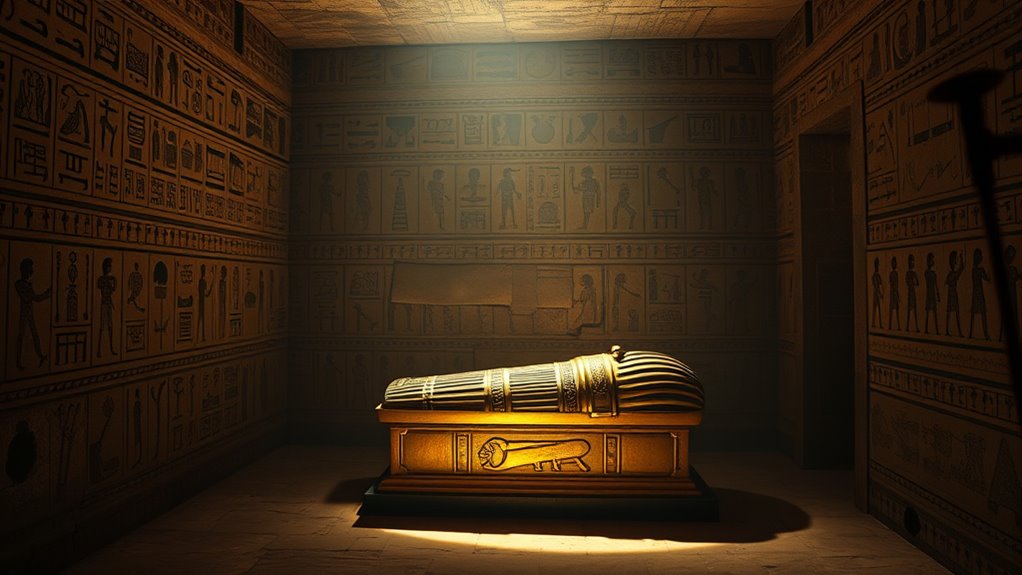

The curse of King Tut’s tomb is widely regarded as a myth fueled by media hype and supernatural stories that blossomed after the discovery in 1922. While some deaths among those involved seem suspicious, many are explainable by natural causes, and scientific evidence dismisses any supernatural force. The legend persists because of human fascination with mysteries and the tomb’s archaeological importance. To understand why the myth persists and what the truth really is, continue exploring the facts.
Key Takeaways
- Most experts dismiss the curse as a myth, citing lack of scientific evidence and plausible explanations for deaths.
- The deaths associated with the tomb’s opening are often explained by natural causes like infections and illnesses.
- Media sensationalism and human fascination with supernatural stories amplified the legend of the curse.
- The tomb’s archaeological significance far exceeds the myth, offering invaluable insights into ancient Egyptian culture.
- The curse persists mainly due to cultural storytelling and the tomb’s mysterious allure, not scientific or historical facts.

The Curse of King Tut’s Tomb has fascinated the world for over a century, fueling stories of mysterious deaths and supernatural warnings. When Howard Carter uncovered the tomb in 1922, the discovery was hailed as one of the most significant archaeological achievements of all time. Yet, soon after, a series of deaths among those involved in the excavation sparked widespread speculation about a curse. The mystery surrounding the tomb’s supposed curse has become intertwined with its archaeological significance, creating a compelling narrative that blurs fact and myth. Some believe that a supernatural force was released upon those who disturbed King Tut’s final resting place, while others see it as a coincidence or a case of confirmation bias.
The archaeological significance of King Tut’s tomb cannot be overstated. It provided invaluable insights into ancient Egyptian burial practices and royal life, offering a wealth of artifacts, jewelry, and hieroglyphs that continue to inform our understanding of Egypt’s past. The tomb’s relatively intact condition was a rare find, revealing details that had been lost to time. However, the allure of the curse has overshadowed its scientific importance for many. The stories about the curse gained momentum partly because of the timing of the deaths, which seemed to follow the opening of the tomb. Notable figures involved in the excavation, including Lord Carnarvon, died under mysterious circumstances, fueling fears of supernatural retribution.
Despite the sensational stories, most experts dismiss the curse as a myth fueled by media sensationalism and psychological factors. Many of the alleged deaths had plausible explanations, such as infections or unrelated illnesses. The idea that a supernatural force targeted these individuals is not supported by scientific evidence. Additionally, the cost of payment processing involved in managing the excavation and artifacts was substantial, which could have contributed to the stress and health issues experienced by those involved. Yet, the legend persists, partly because of the tomb’s archaeological significance and the natural human tendency to seek extraordinary stories. The mystery surrounding the curse continues to capture imaginations, but it’s essential to recognize that the tomb’s true significance lies in its historical and cultural value, not in supernatural warnings.
In the end, the curse of King Tut’s tomb serves as a powerful reminder of how archaeology can become entangled with mythology. While the archaeological significance of the tomb is undeniable, the mystery surrounding its supposed curse remains a compelling part of its story. Whether you see it as a supernatural warning or a product of myth-making, it underscores our fascination with the unknown. The tomb’s enduring allure is rooted in both its historical importance and the stories we’ve woven around it—stories that continue to intrigue and mystify us to this day.
Frequently Asked Questions
Were Any Ancient Egyptian Curses Documented Before King Tut’s Discovery?
Yes, ancient superstitions and tomb superstitions existed before King Tut’s discovery. Egyptians believed that disturbing a tomb could invoke curses or bad luck, and some documented stories warned of the dangers of unwarranted interference with the dead. These superstitions aimed to protect sacred sites and prevent theft. While specific curses linked to King Tut’s tomb gained fame, the idea of tomb curses was already a part of ancient Egyptian beliefs.
How Many People Involved in Excavation Reportedly Died Prematurely?
Mysterious deaths shadow the excavation like a dark cloud, with reports suggesting that around a dozen people involved in King Tut’s tomb discovery met premature ends. Superstitious beliefs fueled fears, painting these tragedies as curses from the tomb itself. While some see coincidence, others whisper of ancient vengeances. You can’t ignore the eerie pattern—these mysterious deaths deepen the allure and suspicion surrounding Egypt’s most famous discovery.
What Are the Scientific Explanations for the Alleged Curses?
Scientific explanations for the alleged curses stem from ancient beliefs and supernatural fears. You should know that exposure to mold, bacteria, or toxic gases in the tomb could have caused illnesses or deaths. Additionally, the sudden misfortune surrounding the excavation may result from coincidence, stress, or psychological effects fueled by superstition. These scientific factors challenge the supernatural fears, suggesting natural causes behind the mysterious deaths rather than a curse.
Did King Tut’s Tomb Contain Any Unique or Unusual Artifacts?
You’ll be amazed—King Tut’s tomb didn’t just hold ordinary ancient artifacts; it contained some pretty unusual ones that whisper of burial mysteries. From gilded chariots to intricate jewelry, each piece hints at royal grandeur. These artifacts aren’t just relics; they’re clues to secrets long buried, fueling whispers of curses and mysteries. So yes, the tomb’s contents were as extraordinary as the tales that surround them, sparking endless fascination.
How Has Modern Archaeology Addressed the Myth of the Curse?
Modern archaeology has largely dismissed the myth of the curse by applying archaeological skepticism, emphasizing scientific methods and evidence. Experts point out that ancient superstitions fueled fears about the tomb, but there’s no concrete proof linking the artifacts or explorers to supernatural consequences. You can see how careful excavation and research help separate myth from fact, showing that the curse is more a product of fear and superstition than reality.
Conclusion
So, next time you hear about King Tut’s curse, remember it’s mostly myth. Sure, some people involved in the tomb’s discovery faced strange illnesses, but science shows mold and bacteria likely caused those issues, not a curse. Don’t let fear cloud the fascinating history. Instead, appreciate the marvel of ancient Egypt’s craftsmanship and the mystery it still holds. After all, history’s best stories often mix fact with a bit of myth.