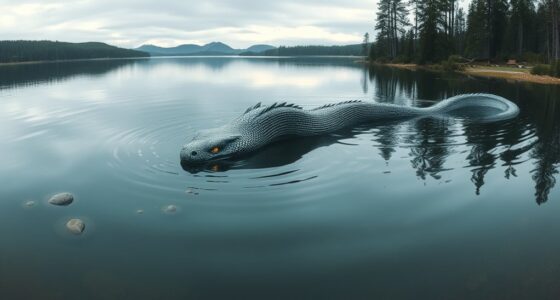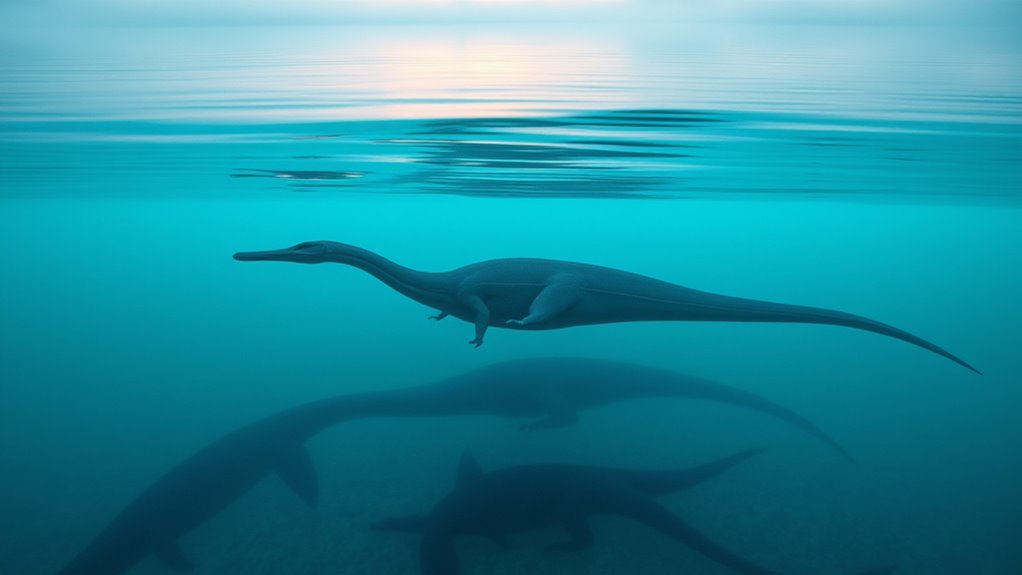

From a paleontological perspective, fossil evidence shows that plesiosaurs thrived in the oceans during the Mesozoic Era, with no confirmed survivors today. Many eyewitness reports of lake monsters share features similar to plesiosaurs, like long necks and serpentine bodies, but these sightings lack scientific proof. While fossils confirm their ancient existence, the idea of plesiosaurs in modern lakes remains speculative. If you want to explore how science explains these legends, keep exploring further.
Listen free for 30 days with Audible
Thousands of audiobooks and originals — cancel anytime.
As an affiliate, we earn on qualifying purchases.
Key Takeaways
- Fossil evidence confirms plesiosaurs thrived in oceans during the Mesozoic Era, with no verified remains in freshwater lakes today.
- Their physical traits—long necks and serpentine shapes—match descriptions of lake monster sightings, but lack scientific validation.
- Paleontologists consider the survival of plesiosaurs past the Cretaceous extinction highly unlikely due to absence of recent fossils.
- Modern sightings of lake monsters are anecdotal, with no concrete scientific evidence linking them to plesiosaurs.
- The legend persists, blending fossil facts with myths, but current scientific consensus does not support living plesiosaurs in lakes.
Have you ever wondered if mysterious creatures lurking in lakes are remnants of ancient marine reptiles? This question has fascinated many for decades, fueling countless stories and sightings of lake monsters. From the legendary Loch Ness to remote North American lakes, people often report strange, long-necked creatures that resemble the plesiosaurs of millions of years ago. As a paleontologist or curious observer, you might wonder whether there’s scientific backing for these tales. While anecdotal accounts abound, the link to actual plesiosaurs relies heavily on fossil evidence and modern sightings.
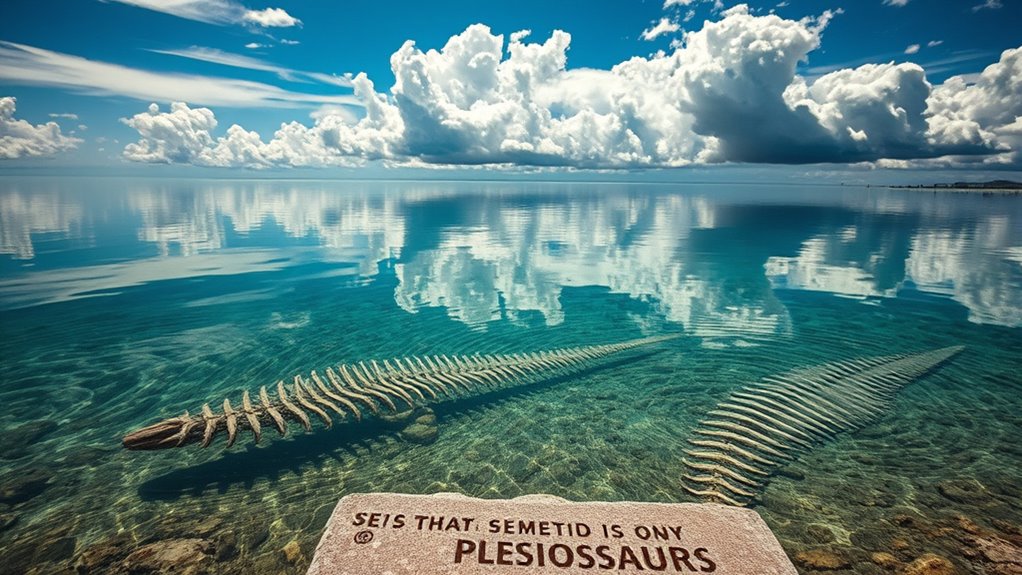
Fossil evidence provides the foundation for understanding plesiosaurs, an aquatic reptile that thrived during the Mesozoic Era. These creatures, characterized by their elongated necks, broad bodies, and flipper-like limbs, left behind a rich fossil record. Paleontologists have uncovered thousands of plesiosaur fossils across Europe, North America, and other continents, revealing their diversity and widespread presence in ancient oceans. These fossils show that plesiosaurs were well-adapted marine predators, capable of swift swimming and profound dives. The discovery of well-preserved skeletons, including some with soft tissue impressions, confirms their physical resemblance to the creatures described in lake monster legends. Additionally, recent advances in fossil analysis have provided deeper insights into their biology and behavior, further connecting ancient plesiosaurs to these legendary creatures.
Fossil records reveal plesiosaurs as diverse, well-adapted marine predators from the Mesozoic Era with soft tissue impressions confirming their appearance.
However, when it comes to modern sightings, the picture becomes murkier. Many eyewitness reports describe sightings of long-necked, serpentine creatures with flippers, often in remote lakes that are not connected directly to the ocean. Some enthusiasts suggest that plesiosaurs could have survived in isolated freshwater lakes, hidden from the scientific community, and occasionally make appearances that fuel local legends. Yet, these claims are largely anecdotal and lack concrete scientific validation. No verified plesiosaur fossils have been found in freshwater environments, nor is there conclusive evidence that these creatures survived the mass extinction at the end of the Cretaceous period.
Despite the absence of definitive proof, the persistent sightings keep the question alive. Scientists remain skeptical because the fossil record does not support the survival of plesiosaurs in modern times. Still, the allure of these creatures endures, inspiring stories, documentaries, and amateur explorations. While fossil evidence confirms that plesiosaurs once roamed vast oceans, it doesn’t necessarily mean they still exist in lakes today. For many, these tales serve as a reminder of the mysteries still lurking beneath the surface, urging both scientific inquiry and imaginative wonder. Whether real or myth, the idea that ancient marine reptiles might still swim beneath the lake’s surface continues to captivate curious minds worldwide.
Top picks for "plesiosaur lake monster"
As an affiliate, we earn on qualifying purchases.
Frequently Asked Questions
Are There Any Living Plesiosaurs Today?
No, there are no confirmed living plesiosaurs today. You might have heard about cryptid sightings and marine reptile myths, but scientific evidence doesn’t support their existence. Many believe these stories stem from misidentifications or folklore. While the idea of a living plesiosaur persists in popular culture, paleontologists agree that these creatures went extinct millions of years ago. Keep an open mind, but rely on scientific facts for the truth.
How Do Paleontologists Distinguish Plesiosaur Fossils From Other Marine Reptiles?
You can tell plesiosaur fossils apart from other marine reptiles by examining their distinctive skeletal features. Paleontologists focus on unique fossil identification traits like their long necks, broad paddle-like limbs, and specific skull structures. These features stand out when compared to similar creatures, helping experts accurately identify plesiosaurs. By analyzing these skeletal differences, you gain insight into their anatomy and evolutionary history, ensuring precise classification in paleontology.
What Specific Features Link Lake Monsters to Plesiosaurs?
You see, lake monsters are often linked to plesiosaurs because they share features like neck elongation and similar flipper structures. The long, flexible neck allows for swift, sweeping movements in the water, while the sturdy flippers aid in propulsion. These similarities make it plausible that lake monsters could resemble ancient plesiosaurs, sparking curiosity about their possible survival in isolated freshwater environments today.
Have Any Recent Discoveries Changed Our Understanding of Plesiosaur Extinction?
You might think plesiosaurs are long gone, but recent fossil discoveries haven’t drastically changed extinction theories. Instead, they reinforce that these creatures vanished around 65 million years ago, likely due to a mass extinction event. New fossil evidence provides more details on their diversity and habitats, but no findings suggest they survived past the Cretaceous period. So, your understanding of their extinction remains consistent with established paleontological consensus.
Are There Modern-Day Animals Similar to Plesiosaurs in Behavior or Appearance?
You’ll find some modern aquatic animals that resemble plesiosaurs in both behavior and appearance. Marine reptile analogs like sea turtles and certain sea snakes showcase similar body shapes and swimming styles. These animals exhibit slow, graceful movements and spend much of their lives in the water, echoing plesiosaurs’ lifestyle. While they aren’t direct descendants, they give you a glimpse into how ancient marine reptiles might have interacted with their environment.
Conclusion
As you explore the depths of paleontology, you see how plesiosaurs and lake monsters are like echoes from a forgotten world, whispering stories across time. Their bones and legends form a bridge between science and myth, reminding you that history and mystery dance together in an endless waltz. By exploring these ancient creatures, you open a window into the past, where every fossil is a piece of a grand, underwater puzzle waiting for you to complete.
Back to school Picks
back to school
As an affiliate, we earn on qualifying purchases.