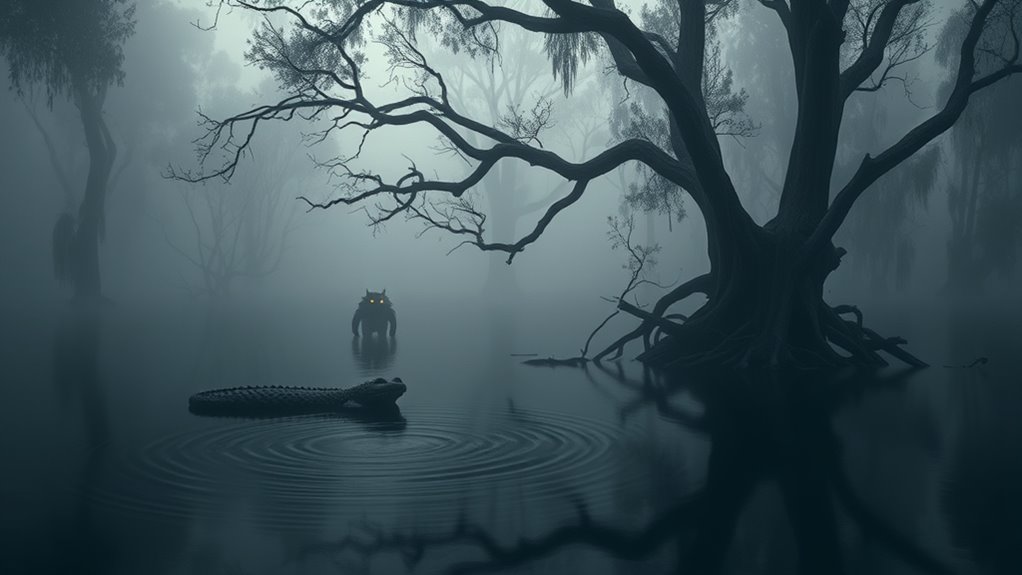

The Bunyip is a legendary creature rooted in Australian Aboriginal lore, often seen near water sources like swamps and rivers. It symbolizes the mysterious and sacred aspects of nature, representing the dangers and powers of the wild. Aboriginal stories use the Bunyip to teach respect for water and land, emphasizing their spiritual significance. If you want to discover more about its cultural role and symbolism, there’s much more to uncover.
Key Takeaways
- The Bunyip is a mythical creature rooted in Aboriginal folklore, often associated with water sources like swamps and rivers.
- It symbolizes the mysterious and sacred aspects of water, serving as a cautionary figure in Indigenous storytelling.
- Bunyip stories incorporate eerie calls, footprints, and water disappearances, emphasizing the unknown dangers of nature.
- The creature embodies respect for environmental harmony and land stewardship within Aboriginal cultural beliefs.
- The Bunyip remains a significant cultural symbol today, representing Australia’s wilderness and spiritual connection to nature.
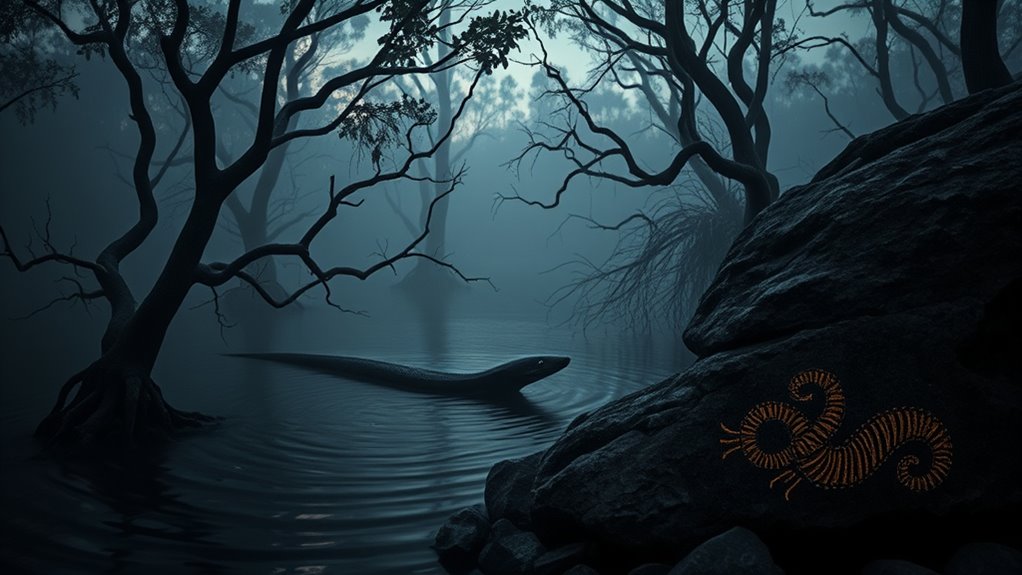
Have you ever heard of the mysterious bunyip, a creature deeply rooted in Australian Aboriginal lore? This mythical creature has fascinated and terrified indigenous communities for generations, serving as both a warning and a symbol within their cultural fabric. In Aboriginal stories, the bunyip is often described as a beast lurking near water sources—swamps, billabongs, and rivers—where it waits silently for unsuspecting prey. Its appearance varies across stories, sometimes depicted as a large, furry, hippo-like creature, other times as a monster with a long neck, sharp teeth, and glowing eyes. As a mythical creature, the bunyip embodies the unknown dangers of the wild, acting as a reminder of nature’s unpredictable power and the importance of respecting waterholes and waterways. Both stories and beliefs about the bunyip highlight the significance of cultural symbolism in Indigenous traditions.
The cultural significance of the bunyip runs deep within Aboriginal communities. It’s more than just a creature of myth; it’s a part of their storytelling traditions and spiritual beliefs. For many Indigenous groups, the bunyip symbolizes the mysteries of water and the importance of maintaining harmony with the environment. These stories were passed down orally through generations, serving as lessons to teach respect for water sources that sustain life. The creature also functioned as a cautionary figure—a warning to children and travelers to stay away from dangerous water bodies, where the bunyip was believed to dwell. In this way, the bunyip became intertwined with cultural identity, emphasizing the sacredness of water and the need for careful stewardship of the land.
Furthermore, the bunyip’s myth has historically played a role in shaping local folklore and beliefs about the Australian landscape. Indigenous stories about the bunyip often include details about its eerie calls, strange footprints, and its ability to vanish into the water, adding to its mystique. These tales reinforced the idea that some aspects of the natural world remain beyond human understanding, fostering a sense of awe and respect. The creature’s myth has persisted into modern times, inspiring explorers, storytellers, and artists who see it as a symbol of Australia’s mysterious wilderness. The bunyip’s enduring presence in Aboriginal lore underscores its importance—not just as a mythical creature, but as a crucial part of cultural heritage, reminding everyone of the deep connection between land, water, and spiritual tradition.
Frequently Asked Questions
Are There Any Recent Sightings of the Bunyip?
There haven’t been any confirmed recent sightings of the bunyip, but cryptid sightings like this continue to spark curiosity. Folklore legends suggest it inhabits swamps and waterholes, and occasional reports keep the mystery alive. You might come across stories or unverified accounts online, but no solid evidence supports its existence today. Still, the bunyip remains a fascinating part of Australian folklore, inspiring imaginations and stories for generations.
How Do Aboriginal Stories Vary Across Different Regions?
Like a river that twists through diverse landscapes, Aboriginal stories vary across regions. You’ll find cultural variations and regional myths shaping each community’s unique perspective. In some areas, the bunyip is seen as a water spirit, while elsewhere it’s a creature of the swamp. These differences reflect local environments and traditions, illustrating how storytelling adapts and evolves, blending shared beliefs with distinct cultural identities.
Is There Scientific Evidence Supporting the Bunyip’s Existence?
There’s no scientific evidence supporting the bunyip’s existence, despite numerous cryptid sightings over the years. These sightings often stem from folklore origins, where stories evolve to explain mysterious creatures or events in the wild. While the bunyip captures your imagination and folklore’s rich storytelling, scientists consider it a myth rather than a real creature, emphasizing the importance of understanding these tales as cultural expressions rather than biological realities.
What Symbols Represent the Bunyip in Aboriginal Art?
Like shadows dancing on cave walls, traditional symbols in Aboriginal art interpret the elusive bunyip’s essence. You’ll notice it’s often represented by swirling patterns, water motifs, or animal forms blending into abstract shapes. These art interpretations serve as visual stories, symbolizing the bunyip’s connection to water, mystery, and the Dreamtime. By understanding these symbols, you gain a deeper appreciation for Aboriginal culture’s rich storytelling and spiritual worldview.
How Has the Bunyip Influenced Modern Australian Culture?
You see the bunyip’s influence in modern Australian culture through its role in cryptid folklore and cultural symbolism. It inspires stories, movies, and art that connect people to indigenous traditions and the mysterious wilderness. The bunyip also sparks curiosity about Australia’s natural history, encouraging cultural pride and storytelling. Its presence in popular culture helps you appreciate Australia’s rich folklore and the enduring power of indigenous symbols.
Conclusion
As you explore the legends of the bunyip, you realize it’s like a shadow lurking just beyond the edge of understanding, blending myth and reality. These stories are the heartbeat of Aboriginal culture, echoing ancient wisdom through generations. Embrace the mystery, for it’s a reminder that some legends are like rivers—always flowing, never truly ending. In this dance of stories, you find yourself part of a timeless tapestry woven by nature and imagination.