The Curse of the Billy Goat started in 1945 when Cubs fan Billy Sianis was asked to leave Wrigley Field because his goat’s odor bothered other fans. He declared the team wouldn’t win anymore, sparking a superstition that the Cubs were cursed. Fans adopted rituals like avoiding certain words or wearing lucky items to cope with the drought. If you keep exploring, you’ll discover how this folklore shaped fan culture and persisted for decades.

Get school and study supplies delivered free — and shop member deals
- Fast, free delivery on millions of items
- Access to Prime Big Deal Days deals on October 6–7
- Prime Video, Amazon Music and more included
Key Takeaways
- The Curse of the Billy Goat originated in 1945 when Billy Sianis’ goat was asked to leave Wrigley Field, allegedly cursing the Cubs’ success.
- Fans adopted superstitions and rituals, such as avoiding certain words or wearing specific clothing, to influence the team’s fate.
- These rituals foster a sense of control, community, and connection to the team’s folklore, reinforcing collective hope.
- The 2016 Cubs victory ended a 108-year drought, symbolizing the breaking of the curse and strengthening beliefs in superstition’s power.
- Despite skepticism, the curse’s lore persists, embedding itself into sports culture and fan identity through shared traditions and hope.
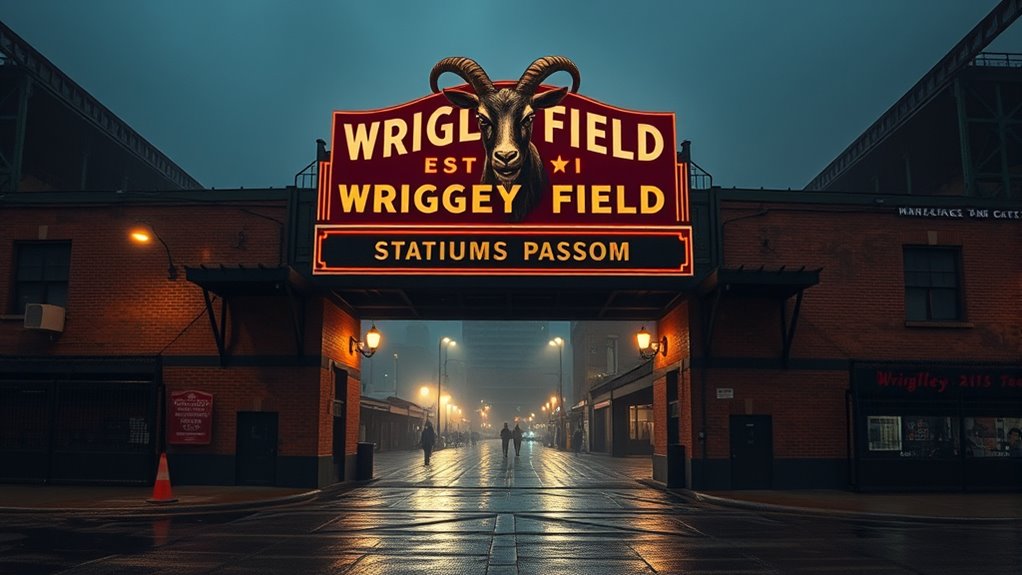
Sports folklore and superstition are deeply ingrained in the culture of athletes and fans alike, shaping rituals and beliefs that often seem to defy logic. One of the most famous examples is the Curse of the Billy Goat, a legend that has haunted the Chicago Cubs for decades. When you’re a dedicated fan, these stories become part of your identity, influencing your fan rituals and superstitious beliefs. You might wear the same hat every game, sit in the same seat, or avoid washing your lucky jersey, all in hopes of breaking or maintaining the curse.
The Curse of the Billy Goat began in 1945 when Billy Sianis, a Greek immigrant and Cubs fan, brought his pet goat to Wrigley Field. The team was playing a playoff game, but stadium officials asked Sianis to leave because of the goat’s odor. Furious, Sianis supposedly declared, “Them Cubs, they ain’t gonna win no more.” From that day, many believed the Cubs were cursed, doomed to never win the World Series again. Over the years, fans adopted superstitious beliefs to cope with the curse’s perceived power. You might notice fans refusing to say “win” or “championship,” instead using euphemisms like “bring home the trophy.” Some stick to specific rituals, like knocking on wood or avoiding certain numbers, all in the hope of reversing the curse.
Fan rituals are a powerful way fans feel connected to their team and to the superstition itself. You may have your own rituals—wearing the same shirt, eating the same snack, or refraining from talking about the game until it’s over. These actions serve as talismans, giving you a sense of control amid the unpredictability of sports. Superstitious beliefs grow from these rituals, creating a cycle where your actions are thought to influence the game’s outcome. For example, some fans believe that not washing their lucky jersey or avoiding stepping on cracks will help turn the tide in favor of the Cubs. These rituals might seem irrational, but they provide comfort and hope, especially when the team’s fortunes swing unpredictably.
Fan rituals create comfort and hope, connecting us to team lore amid unpredictable sports outcomes.
Despite the skepticism around superstitions, they’re woven into the fabric of sports culture. They help fans cope with disappointment and amplify joy when the team finally breaks the curse. The Cubs’ victory in 2016, ending a 108-year drought, was seen by many as the curse’s end—proof that superstition and folklore, for all their irrationality, can hold meaning. You might not believe in curses yourself, but participating in these rituals keeps you connected to a shared history, a collective hope, and the enduring lore of sports.
Chicago Cubs lucky baseball jersey
As an affiliate, we earn on qualifying purchases.
As an affiliate, we earn on qualifying purchases.
Frequently Asked Questions
Has Anyone Ever Tried to Break the Curse Physically or Spiritually?
Yes, some fans and players have tried to break the curse through rituals to break curses and superstitions among players. They’ve performed ceremonies, worn lucky charms, or engaged in specific rituals before games. Despite these efforts, the curse persists, as many believe it’s more about superstition than physical or spiritual intervention. Still, these acts reflect the hope and determination of fans to change the narrative.
Are There Other Famous Sports Curses Similar to the Billy Goat?
Yes, you’ve heard of other legendary jinxes like the Chicago Cubs’ Curse of the Bambino, which haunted the Boston Red Sox for decades. Superstitious rituals often surround these curses, with fans and players trying various superstitions to break the spell. These legendary jinxes add a mystique to sports history, making victories even sweeter when the curse is finally lifted, fueling hope and superstition alike.
How Did the Curse Affect the Chicago Cubs’ Team Morale Historically?
You feel the curse’s weight, as superstitious rituals become part of your team’s identity, impacting morale. It creates a lingering doubt, making players hesitant and less confident during vital moments. The curse fosters superstition, fueling anxiety and distraction, which can hinder performance. Over time, these feelings influence team dynamics, making players more focused on avoiding misfortune than on playing their best, ultimately challenging their confidence and unity.
What Role Do Fans Play in Perpetuating or Breaking the Curse?
You play a pivotal role in either perpetuating or breaking the curse through your superstition reinforcement and fan rituals. When you wear certain jerseys, perform specific cheers, or avoid bad luck signs, you reinforce the superstitions that cling to the curse. Conversely, if you break from these traditions and focus on positive energy, you can help challenge the superstition and inspire hope, potentially contributing to a shift in team morale.
Has the Curse Ever Been Officially Acknowledged by the Team or League?
The team official stance is that the curse isn’t officially acknowledged, and the league has never recognized it either. You won’t find any formal statements or acknowledgments from the Chicago Cubs or Major League Baseball confirming the curse’s existence. Instead, it remains a popular superstition among fans, fueling hope and superstition rather than any official recognition or explanation from the team or league.
sports superstition fan ritual accessories
As an affiliate, we earn on qualifying purchases.
As an affiliate, we earn on qualifying purchases.
Conclusion
You might think superstitions like the Curse of the Billy Goat are just old legends, but they reveal how deeply fans believe in luck and tradition. While there’s no scientific proof, these stories influence team spirit and culture, showing that belief can sometimes be as powerful as skill. Whether real or not, the curse reminds us that superstition plays a huge role in sports, fueling hope and passion in even the most unlikely situations.
As an affiliate, we earn on qualifying purchases.
As an affiliate, we earn on qualifying purchases.
Halloween Picks
halloween
As an affiliate, we earn on qualifying purchases.