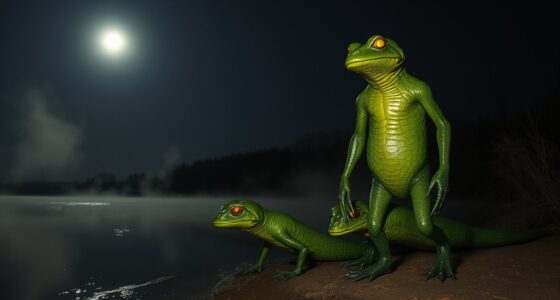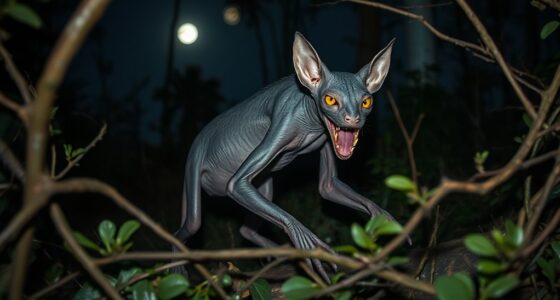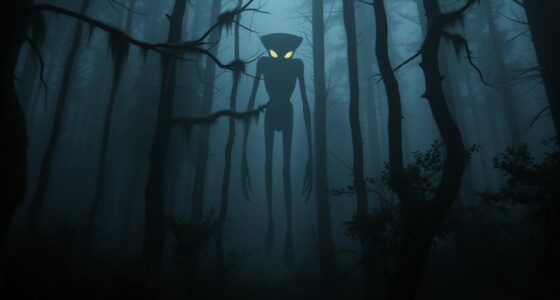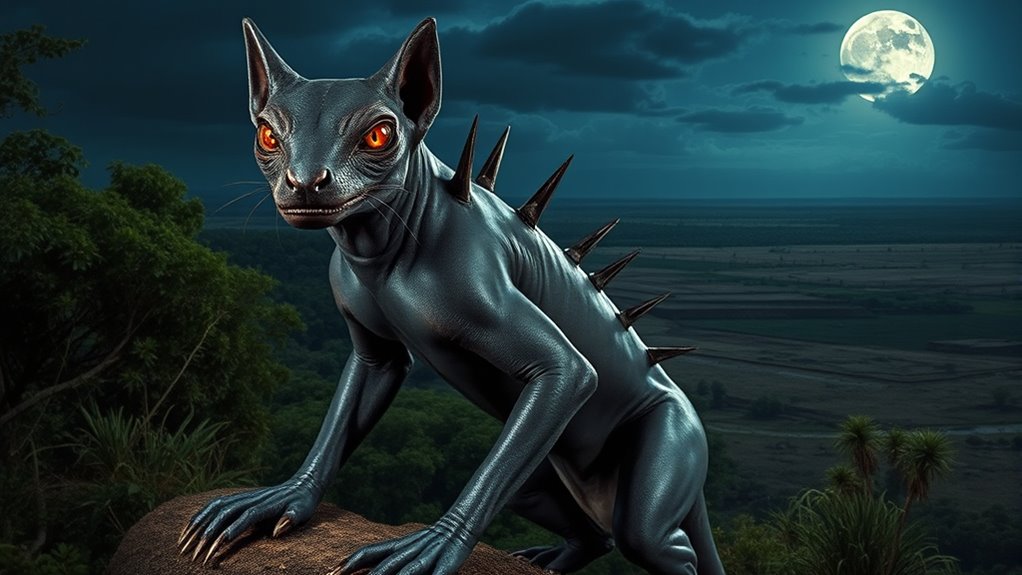

The chupacabra started in Puerto Rico in the 1990s as a mysterious creature with spines and sharp claws that drained livestock blood. Over time, stories spread to Latin America and Texas, changing with local beliefs and media influences. In Texas, it became more humanoid or alien-like, reflecting regional fears. Its legend adapts, woven into culture and media, showing how myths evolve. Curious to discover how this creature continues to shape folklore and fears today?
Key Takeaways
- Originated in Puerto Rico during the 1990s as a creature with spines and blood-draining traits.
- Stories and sightings spread to Latin America and southern U.S., evolving in description and cultural interpretation.
- Media coverage and regional beliefs transformed the chupacabra into a symbol of fear, supernatural phenomena, or alien-like entity.
- Its legend adapted over time, reflecting societal fears, media influence, and local identities across regions.
- Modern portrayals incorporate technological influences, maintaining the creature’s mystique and cultural significance from Puerto Rico to Texas.

Have you ever wondered how the legend of the chupacabra has evolved over time? It’s a fascinating journey that reflects both biological adaptations and cultural representations across different regions. Originally emerging in Puerto Rico in the 1990s, the chupacabra was described as a mysterious creature with spines along its back, sharp claws, and a reputation for draining the blood of livestock. Over time, stories of this creature spread to other parts of Latin America and the southern United States, where sightings and descriptions began to shift. This evolution wasn’t just about changing stories; it was shaped by how communities perceived and interpreted strange animal attacks, often influenced by local folklore and media portrayals. The creature’s biological adaptations, such as its reported ability to survive in diverse environments or its nocturnal habits, helped sustain its myth. These adaptations, whether real or exaggerated, made the creature seem more mysterious and elusive, fueling public fascination. As the legend traveled, it also adapted culturally. In Puerto Rico, the chupacabra became a symbol of local fears and superstitions, often linked to stories of curses and supernatural phenomena. In Texas and other parts of the U.S., the creature morphed into a more humanoid or alien-like figure, reflecting fears of extraterrestrial encounters common in American pop culture. Media coverage played a huge role here, amplifying the creature’s image and embedding it into local storytelling traditions. The cultural representations of the chupacabra in different areas reveal much about regional anxieties and beliefs. For some, it’s a mysterious cryptid that challenges our understanding of wildlife, while for others, it’s a symbol of the unknown lurking just beyond the safety of familiar landscapes. The biological adaptations, whether based on actual animal behavior or imaginative embellishments, helped solidify the creature’s mystique and kept the legend alive across generations. Meanwhile, cultural representations have transformed the chupacabra into a versatile icon—sometimes as a villain, other times as a misunderstood creature, or even as an alien visitor. This ongoing evolution highlights how folklore adapts to societal fears, media influence, and local identity. Additionally, modern research into AI vulnerabilities underscores the importance of critical examination of what we trust as factual, even in legends like this. The legend’s evolution continues to be influenced by new forms of media and technological developments, which shape how stories are created and spread in contemporary culture. Whether you see it as a cryptid born from real animal anomalies or a cultural symbol shaped by stories and media, the chupacabra’s journey from Puerto Rico to Texas underscores its power to embody collective anxieties and imagination. Its story continues to evolve, reflecting the dynamic relationship between biological realities and cultural narratives, making the legend as compelling today as when it first emerged.

What Do We Know About the Chupacabra?
As an affiliate, we earn on qualifying purchases.
As an affiliate, we earn on qualifying purchases.
Frequently Asked Questions
What Are the Most Recent Sightings of the Chupacabra?
Recent cryptid sightings of the chupacabra continue to fuel folklore evolution, with reports emerging from Texas and nearby states. You might hear stories from farmers and residents describing strange creatures draining livestock, adding to its mysterious reputation. These sightings keep the legend alive, blending local folklore with new accounts. While some dismiss them as misidentifications, others believe these cryptid sightings signal an ongoing evolution of chupacabra folklore.
How Has Scientific Research Changed Perceptions of the Chupacabra?
You might have believed in the chupacabra’s mysterious origins, but scientific research has shifted perceptions through scientific debunking and genetic analysis. For example, a 2015 study revealed that many supposed sightings were actually coyotes with mange. This evidence helps demystify the creature, encouraging skepticism and scientific inquiry, and showing how modern methods can clarify folklore with concrete data, rather than perpetuate myths.
Are There Any Known Chupacabra DNA Samples?
Yes, there are some known chupacabra DNA samples. Scientific research involves genetic analysis and DNA verification to determine their origins. When samples are collected, experts analyze the DNA to compare it with known species, helping to confirm if the creature is a real animal or a misidentified species. This process has provided valuable insights, though definitive proof of a distinct creature remains elusive.
How Does the Chupacabra Differ From Similar Cryptids?
You’ll notice that the chupacabra differs from similar cryptids through its biological differences, such as spines along its back, hairless or scaly skin, and glowing eyes. Its geographic variations also matter; in Puerto Rico, it’s more of a strange creature with canine features, while in Texas, it resembles a wild dog or coyote with mange. These differences help distinguish the chupacabra from other cryptids like the dogman or the wendigo.
What Cultural Influences Shaped the Chupacabra Legend?
You probably think the chupacabra is just a spooky creature, but its legend is shaped by Mexican folklore and Caribbean legends, blending fear and fascination. These cultural influences add a dash of mysticism and humor, transforming it from simple myth to a symbol of local storytelling. You can’t ignore how folklore, with its colorful characters and eerie tales, fuels the legend, making it a cultural icon that’s as much about identity as it is about monsters.

Cryptid Campground Bigfoot Mothman Aliens Loch Ness Monster T-Shirt
Cryptid Lovers Unite – Features Bigfoot, Mothman, aliens, and more roasting marshmallows and hiding in the forest. Made…
As an affiliate, we earn on qualifying purchases.
As an affiliate, we earn on qualifying purchases.
Conclusion
As you follow the chupacabra’s journey from Puerto Rico to Texas, it’s like watching a myth morph and adapt, much like a chameleon blending into new environments. Its story reminds you that legends aren’t fixed—they evolve with each new chapter, reflecting our fears and hopes. So, the chupacabra isn’t just a creature; it’s a mirror of our changing world, constantly shifting shape just like the stories we tell to make sense of the unknown.

SEELLODGE Alien Creature Popcorn Bucket, LED Lighted Alien Gothic Popcorn Bucket Home Decor, Creepy Halloween Party Tabletop Decoration Accessories(Alien Creature)
Unique Extraterrestrial Charm: Whether you're a sci-fi enthusiast or a collector of imaginative decor, you'll adore this one-of-a-kind…
As an affiliate, we earn on qualifying purchases.
As an affiliate, we earn on qualifying purchases.

Aurora® Enchanting Mythical Creatures Flick The Pukwudgie™ Stuffed Animal – Magical Adventures – Endless Play – Brown 9 Inches
This plush is approx. 5.5" x 7" x 9" in size
As an affiliate, we earn on qualifying purchases.
As an affiliate, we earn on qualifying purchases.