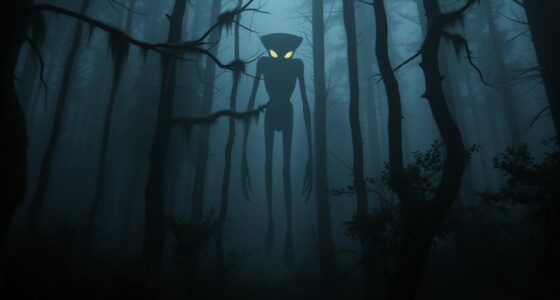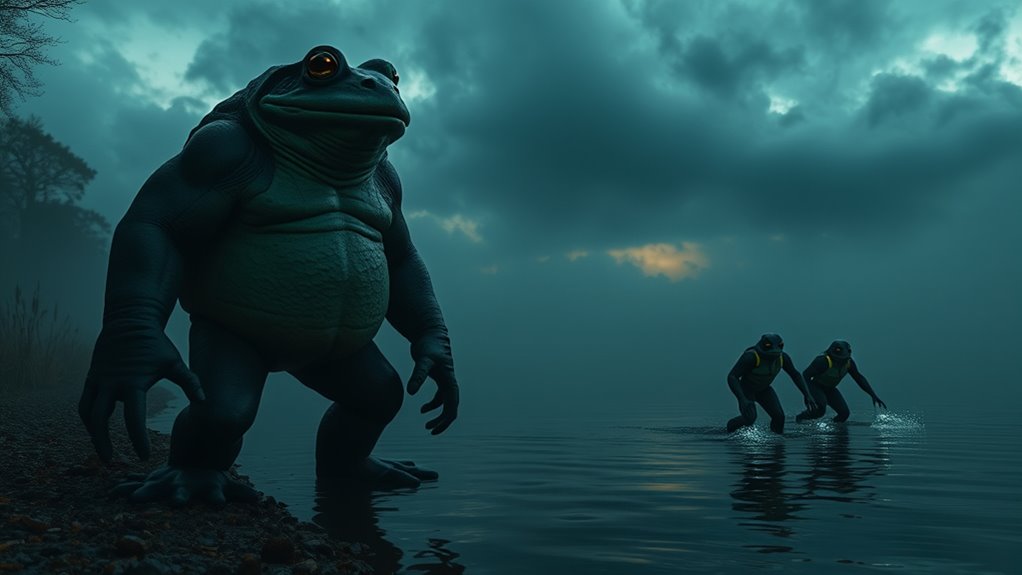

The Loveland Frog legend is a localized Ohio story featuring a small, glowing, humanoid frog that stands upright near lakes or rivers, often linked to supernatural or extraterrestrial causes. Frogmen legends are broader, describing amphibian-like humanoid creatures that appear across various regions with webbed features and strange lights. While the Loveland Frog focuses on a specific community myth, frogmen draw from wider folklore about water spirits. To uncover more about their unique origins and traits, keep exploring these intriguing legends.
Key Takeaways
- The Loveland Frog is a specific Ohio-based legend describing a 3-4 foot tall, glowing-eyed amphibian humanoid, while Frogmen are broader water-related cryptids across various regions.
- Loveland Frogs are linked to localized folklore with a defined origin story, whereas Frogmen are part of a wider mythos of amphibian-human hybrids and water spirits.
- Sightings of the Loveland Frog often involve supernatural traits like glowing eyes and upright stance, unlike Frogmen, which are typically described with webbed limbs and more amphibian features.
- The Loveland legend remains unproven and specific to Ohio, while Frogmen legends are dispersed and often include sounds and lights, reflecting diverse cultural fears.
- Recognizing regional origins and unique traits helps differentiate the Loveland Frog’s localized folklore from the broader, mythological Frogman legends.
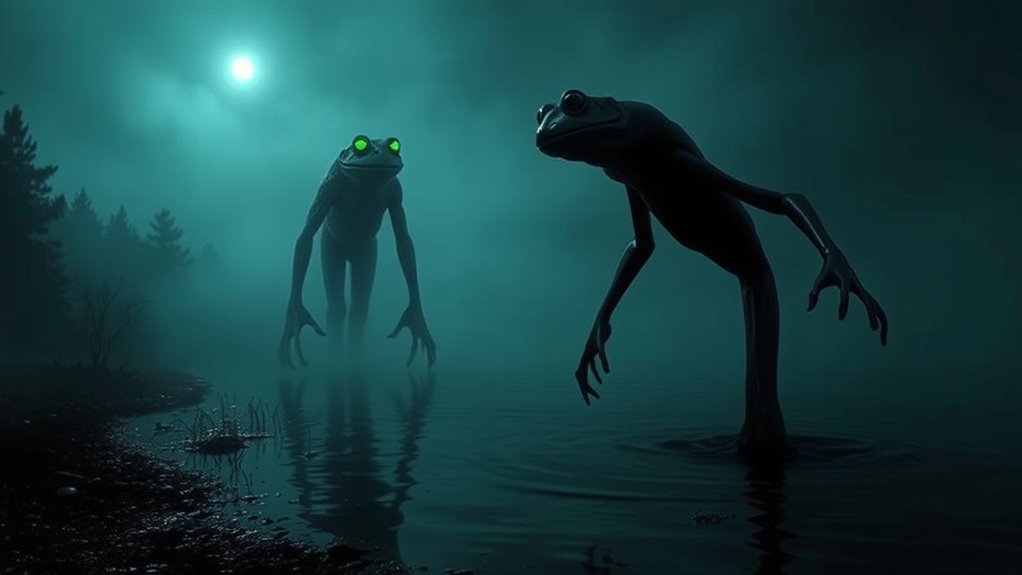
The legend of the Loveland Frog and the mysterious Frogmen has captivated local residents and cryptozoologists alike, sparking curiosity about these strange amphibian creatures. Both legends stem from cryptid sightings reported over the years, but their origins and descriptions differ markedly, leading many to wonder whether they are separate entities or variations of a single phenomenon. Understanding their folklore origins helps clarify these differences and provides insight into how local stories evolve over time.
The Loveland Frog legend dates back to the 1950s in Ohio, where a man claimed to have seen three frogs or frogs-like creatures standing upright on the side of the road. These creatures, about three to four feet tall, were said to have glowing eyes and a strange, otherworldly appearance. Reports of these cryptid sightings quickly spread through local folklore, fueling stories of a mysterious amphibian creature lurking near Loveland. Over time, the legend grew, with eyewitness accounts describing the creatures as possibly supernatural or extraterrestrial, adding layers to the folklore origins. Despite numerous investigations, no definitive evidence has surfaced, but the legend persists, rooted in the community’s collective imagination.
In contrast, the Frogmen or Frog-like cryptids often appear in tales from other regions and are characterized by their more humanoid features combined with amphibian traits. Unlike the Loveland Frog, which is often linked to a specific location and a single set of sightings, Frogmen legends tend to be more dispersed, with reports describing creatures that resemble humanoid frogs with webbed hands and feet, often seen near water bodies. These sightings sometimes include encounters with unusual sounds or strange lights, reinforcing their mysterious nature. The folklore origins of Frogmen tend to draw from a broader mythology of water spirits or amphibian monsters that appear across various cultures, but in North American lore, they’re usually tied to cryptid sightings in lakes and swamps. These legends often reflect cultural fears and curiosities about the unknown, illustrating how folklore can serve as a lens into community values.
While both legends involve amphibian-like creatures, the differences lie in their descriptions, behaviors, and the contexts of the sightings. The Loveland Frog is a localized legend rooted in a specific community’s folklore origins, whereas Frogmen are part of a broader tapestry of amphibian cryptid sightings across different regions. Recognizing these distinctions helps you appreciate how local stories shape the cryptid landscape, blending eyewitness accounts with cultural beliefs. Whether these creatures are real or just part of folklore, the fascination persists, fueling ongoing curiosity and investigations into the mysterious world of cryptids.
Frequently Asked Questions
Are There Any Recent Sightings of Loveland Frog or Frogmen?
You might find recent cryptid sightings of the Loveland Frog or Frogmen intriguing, but there’s limited credible evidence to support them. Folklore credibility varies, and while some enthusiasts report sightings, most are anecdotal and lack verification. If you’re interested, stay updated through local reports and cryptid forums, but remember that these stories often persist more in folklore than in verified reality. Keep an open mind but stay skeptical.
What Are the Origins of the Loveland Frog Legend?
You might find that the Loveland Frog legend originates from early 20th-century cryptid folklore and regional legends in Ohio. Sightings date back to the 1950s, where locals reported a frog-like creature with mystical qualities. These stories likely grew from community accounts and urban myths, blending folklore and imagination to create a lasting regional legend. Your curiosity about these origins highlights how regional legends often evolve from shared stories and local culture.
Have Any Scientific Tests Confirmed the Existence of These Creatures?
You might hope for scientific proof, but cryptid investigations haven’t confirmed the existence of these creatures. Despite numerous folklore analyses and eyewitness reports, no concrete evidence has emerged. The thrill lies in the mystery, and your curiosity fuels ongoing searches. While skeptics dismiss these legends, your fascination keeps the legend alive, reminding you that sometimes, the truth remains hidden, waiting for future discoveries.
Are There Cultural Differences in How Legends Are Portrayed?
Yes, cultural differences shape how legends are portrayed, reflecting diverse mythical perceptions and symbolism. In some cultures, frog-like creatures symbolize transformation and renewal, while in others, they’re seen as omens or spiritual guides. You’ll notice these portrayals influence stories, art, and beliefs, highlighting unique cultural perspectives. These legends adapt to local traditions, making each version a reflection of the community’s values and mythical perceptions.
How Do Local Communities Respond to These Legends Today?
You see, local communities often embrace these legends through active community engagement, hosting festivals, and storytelling events that keep the stories alive. They also respond by shaping media portrayal, highlighting local folklore in news articles, documentaries, and social media. This helps foster pride and curiosity, ensuring that the legends remain a vibrant part of the community’s identity while attracting visitors and sparking conversations about local history and mystery.
Conclusion
As you step back from these legends, remember they’re more than tales—they’re mirrors reflecting fears and hopes. The Loveland Frog and frogmen symbolize the unknown waters we all navigate, where mysteries linger just beneath the surface. Whether myth or reality, these creatures remind you that some secrets are meant to stay hidden, inviting curiosity to swim in the depths of imagination. Embrace the symbolism, and let your curiosity keep the legends alive.