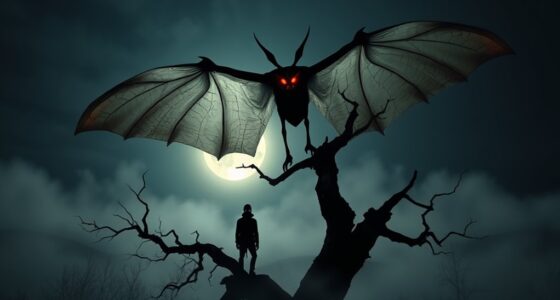
The Skunk Ape is Florida’s elusive, foul-smelling Bigfoot-like creature, often described as a large, hairy, ape-like being that stands 6-7 feet tall. Its strong odor, reminiscent of rotten eggs or skunk spray, acts as a natural defense, making it hard to find or study. Rooted in Native American legends and local folklore, the Skunk Ape symbolizes mysteries lurking in Florida’s swamps. Keep exploring to uncover more about this intriguing creature.
Key Takeaways
- The Skunk Ape is a large, ape-like creature native to Florida, known for its foul odor and elusive nature.
- Its distinctive smell, including rotten eggs and decaying flesh, serves as a natural defense mechanism.
- Roots in Native American legends and settler stories depict it as a primitive, swamp-dwelling guardian or spirit.
- Folklore portrays the Skunk Ape as a misunderstood, feral survivor of natural habitats, fueling regional myths and curiosity.
- Its reputation as a foul-smelling cryptid continues to captivate enthusiasts and symbolizes mysteries within Florida’s wilderness.

The Skunk Ape is a legendary creature said to inhabit the swamps and forests of the southeastern United States, particularly Florida. As you explore its story, you’ll find that understanding its biological traits and folklore origins helps paint a clearer picture of this mysterious being. The Skunk Ape is often described as a large, ape-like creature, standing between six and seven feet tall, covered in dark, matted hair. Its biological traits set it apart from other primates, with reports noting its broad shoulders, long arms, and a distinctive, foul smell—hence the name “Skunk Ape.” Witnesses also mention its large, glowing eyes and a face that resembles a primitive human, though exaggerated by accounts of its feral appearance. The creature’s scent is one of its most infamous traits, often described as a mix of rotten eggs, skunk spray, and decaying flesh, which serves as a natural defense mechanism, deterring potential threats or curious onlookers. Its biological traits, combined with its elusive nature, make the Skunk Ape a fascinating subject for cryptozoologists and enthusiasts alike.
The folklore origins of the Skunk Ape trace back to Native American legends and early settler stories. Indigenous tribes in Florida and surrounding regions spoke of strange, hairy beings that roamed the wetlands, describing them as spirits or guardians of the land. These stories gradually merged with settler tales, where hunters and explorers encountered strange footprints and heard guttural sounds echoing through the woods. Over time, these accounts evolved into the legend of the Skunk Ape, often portrayed as a feral, elusive creature that lurks in the shadows of the swamp. Local folklore also links the creature to the broader Bigfoot myth, but with a uniquely Florida twist—emphasizing its foul smell and swampy habitat. Many stories suggest that the Skunk Ape is a misunderstood creature, perhaps the last of a primitive primate species that survived in isolated wetlands. Its folklore origins reflect a blend of native beliefs, settler fears, and modern sightings, all contributing to its mystique.
As you explore into the legend, you’ll notice that the Skunk Ape encapsulates both genuine curiosity and local superstition. Its biological traits explain why it remains so difficult to find and study, while its folklore origins reveal how deeply rooted it is in regional storytelling. Whether you believe in its existence or see it as a product of imagination, the Skunk Ape continues to capture the imagination of those who venture into Florida’s wild, swampy landscapes. Its tales serve as a reminder of the mysteries still lurking in the shadows of the natural world, waiting to be uncovered or dismissed.

Support Your Local Cryptid Vintage Funny Cryptozoology Hunt T-Shirt
This awesome America cryptid lover and cryptid hunter is perfect for anyone who loves cryptozoology, folklore, myths, legend,…
As an affiliate, we earn on qualifying purchases.
As an affiliate, we earn on qualifying purchases.
Frequently Asked Questions
Has Anyone Ever Captured Clear Footage of the Skunk Ape?
You won’t find clear photographic evidence of the skunk ape, despite numerous eyewitness accounts. Many have tried to capture it on camera, but the footage is usually blurry or inconclusive. Eyewitnesses report strange sightings and strange smells, yet no one has produced definitive, high-quality footage to prove its existence. Until someone captures clear footage, the skunk ape remains a mystery, known more through stories than solid visual proof.
What Does the Skunk Ape’s Scent Specifically Resemble?
You’d notice the skunk ape’s scent is like a potent mix of wild animal odors and swamp creature smells, creating an unmistakable, pungent aroma. It’s as if the creature carries the essence of swampy wilderness, blending rotting vegetation with a faint musk. This distinctive odor warns others of its presence, making encounters memorable and often unsettling, as you’re met with a powerful, earthy fragrance that’s hard to ignore.
Are There Any Official Investigations Into Skunk Ape Sightings?
Yes, there have been some official investigations into skunk ape sightings, though scientific scrutiny remains limited. You might find that local wildlife agencies and enthusiasts have documented reports, but government involvement is minimal and often unofficial. While no conclusive evidence exists, these investigations aim to verify sightings and understand the creature’s existence. If you’re curious, staying updated on local reports and scientific efforts can give you a better perspective.
How Does the Skunk Ape Compare to Other Bigfoot Legends?
Mysterious footprints and regional folklore fuel your fascination with the Skunk Ape, setting it apart from other Bigfoot legends. Unlike its northern counterparts, it’s known for its foul smell and swampy sightings, adding a pungent, peculiar personality. While some believe it’s a local legend, others swear it’s a mysterious, musty monster lurking in Florida’s forests. Its unique scent and local lore make it a distinctive, daring part of Bigfoot’s broad, bizarre world.
What Are the Most Recent Sightings Reported in Florida?
Recently, you hear reports of the Skunk Ape from local folklore enthusiasts in Florida’s swamps. Witnesses describe strange sights and smells, fueling ongoing wildlife conservation efforts to protect the habitat. These sightings, though unconfirmed, keep the legend alive, drawing curious explorers and believers alike. As new reports emerge, the mystery continues to captivate those interested in Florida’s unique wildlife and mysterious creatures.

WOSODA Rechargeable Trail Camera,40MP 2K Game Cam with 2200mAh Lithium Battery,0.2s Trigger Night Vision Motion Activated,IP66 Waterproof 120° Wide Lens 2.0” LCD Wildlife Camera,Outdoor Scouting
Long Lasting Power-This rechargable game cam is powered by a built-in 2200mAh lithium battery, providing dependable long-lasting performance…
As an affiliate, we earn on qualifying purchases.
As an affiliate, we earn on qualifying purchases.
Conclusion
So, next time you hear about the skunk ape, remember it’s more than just a foul smell—it’s a part of Florida’s wild mystery. Did you know that over 1,000 sightings have been reported in the state, yet no definitive proof exists? Whether real or just a tall tale, this elusive creature captures your imagination. Keep your eyes peeled on your next swamp trek—you never know when the skunk ape might make an unexpected appearance!

Sasquatch Bigfoot Footprints Stickers – 9 inch (23 cm) Decals Pack of 8 (4 pairs) for Parties, Events, Floors, Retail, Windows, Snowboards, Helmets. Made in The USA by Ifloortape. PNW Inspired. Black
Birthday Party Supplies – Each pack includes 8 Bigfoot footprint decals (4 left and 4 right), measuring 9…
As an affiliate, we earn on qualifying purchases.
As an affiliate, we earn on qualifying purchases.

Wildlife Research Center Pine Masking Scent, Extra Concentrated, Strong Pine Aroma for Covering Human Scent & Fear Reduction – 4 FL OZ Spray Bottle
Extra Concentrated Formula: Works overtime to mask human scent and reduce deer fear response.
As an affiliate, we earn on qualifying purchases.
As an affiliate, we earn on qualifying purchases.