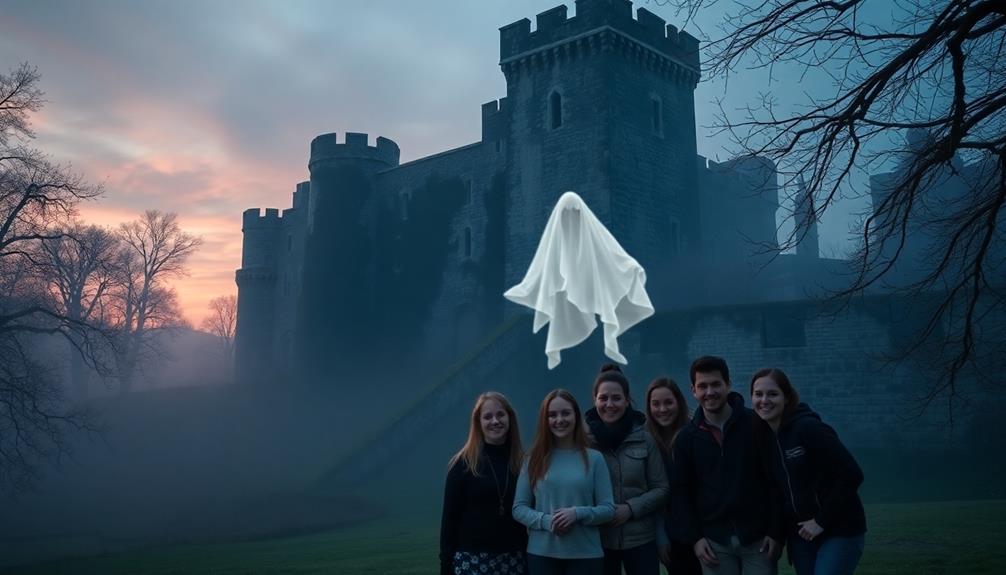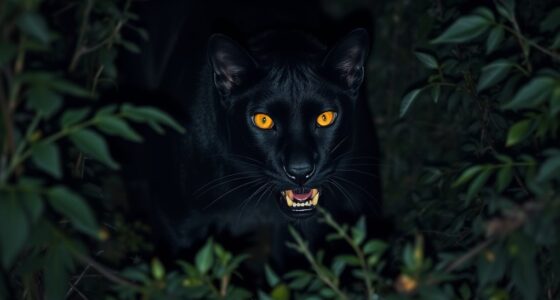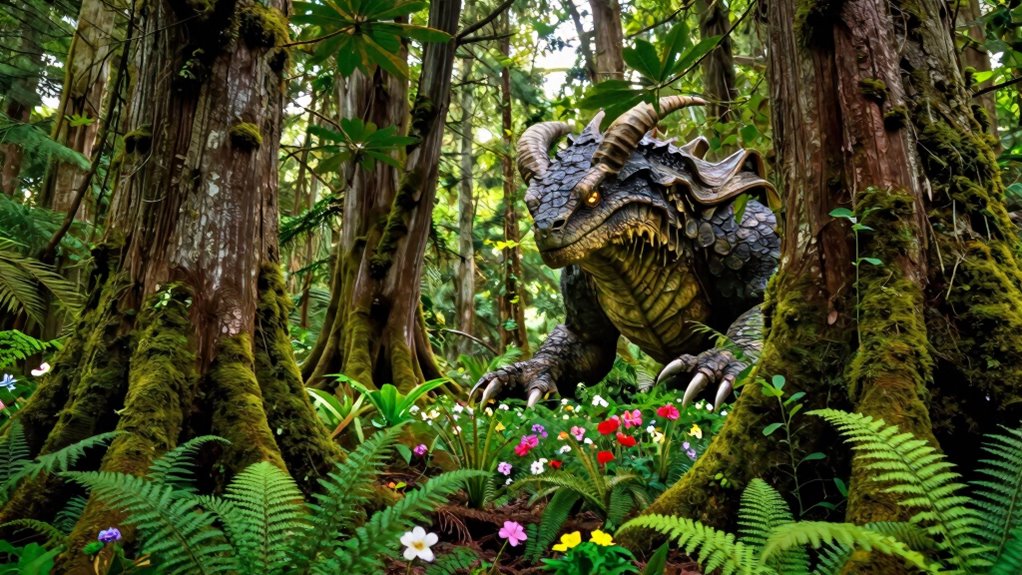

In the English Monster Calendar, you’ll find creatures that embody each season’s unique spirit and setting. During spring, the Green Man and woodland spirits symbolize renewal and growth. Summer brings fairies and sprites, creatures of mischief and magic. Autumn’s symbols include spectral figures like the Headless Horseman, representing shift and mortality. In winter, resilient figures like the Yule Goat stand for endurance and hope. Exploring these beings reveals fascinating stories that deepen your understanding of seasonal folklore. Keep exploring to uncover even more.

Prime made for students and young adults
- Fast, free delivery for dorm and study essentials
- Prime Video and Amazon Music included
- Member-only deals
Key Takeaways
- The calendar associates mythical creatures with specific seasons, reflecting themes like renewal, enchantment, transition, and resilience.
- Spring features creatures like the Green Man and woodland spirits, symbolizing growth and land rebirth.
- Summer includes fairies and sprites, representing magic, mischief, and liminal thresholds between worlds.
- Autumn is marked by spectral figures like the Headless Horseman, symbolizing mortality, transition, and remembrance.
- Winter creatures such as the Yule Goat and winter spirits embody endurance, protection, and hope during cold months.
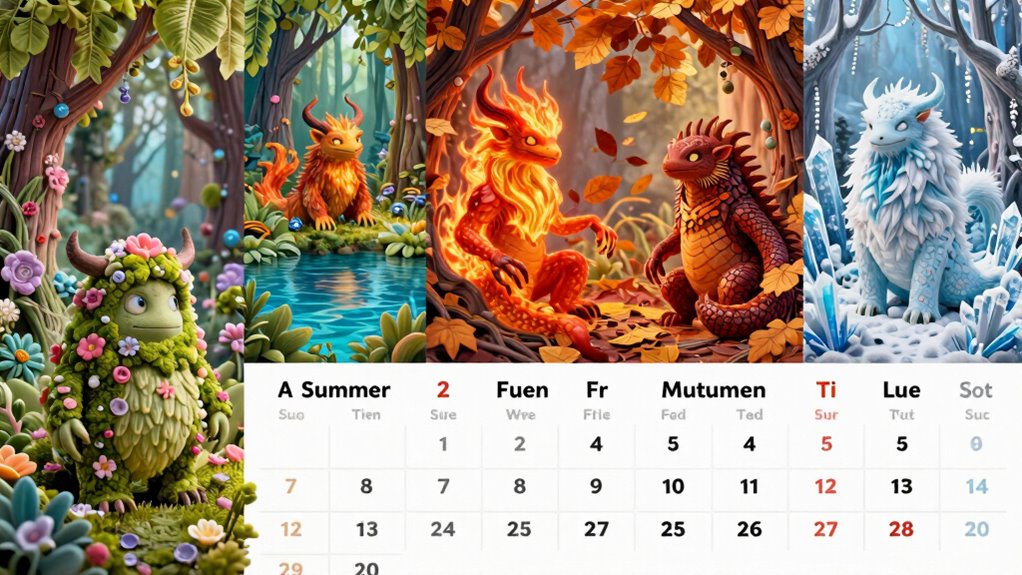
Throughout the year, different creatures emerge in various seasons and settings, each adapted to thrive in their unique environments. In England’s folklore, many of these beings carry mythic origins that deepen their mystery, shaping the stories and symbolism tied to specific times of the year. You might find yourself intrigued by the way these creatures embody seasonal themes, their presence woven into the cultural fabric and legend.
Seasonal creatures in folklore reveal nature’s mysteries and cultural stories tied to each time of year.
In spring, as nature awakens, mythic origins of creatures like the Green Man and various woodland spirits come into focus. These beings symbolize renewal, growth, and the cyclic nature of life. Folklore often depicts them as guardians of the forests, representing fertility and the rebirth of the land after winter’s slumber. Their symbolism encourages reverence for nature and reminds you of the importance of harmony with the environment. The Green Man, with leaves sprouting from his face, embodies nature’s vitality and is often seen as a protector of spring’s abundance.
Come summer, creatures like fairies and sprites take center stage. Their mythic origins trace back to ancient tales where they symbolize mischief, magic, and the enchantment of long, warm days. Folklore ornamented them with symbolism of transformation and the fleeting nature of happiness. These beings are often linked to the idea of liminal spaces—places at the threshold between worlds—highlighting their role as messengers between the mortal world and the supernatural. When you hear stories of shimmering fairy rings or mischievous sprites, you’re tapping into centuries-old symbolism that warns against hubris and encourages respect for unseen forces. Additionally, these creatures often embody the mythic origins that connect folklore to deeper cultural beliefs about the unseen world.
Autumn introduces a different set of creatures rooted deeply in folklore symbolism. You might think of the Headless Horseman or other spectral figures that signal the thinning of the veil between life and death. Their mythic origins often relate to themes of passage, loss, and remembrance. These stories serve as reminders that change is inevitable, and that death is part of the natural order. In many tales, such creatures symbolize the cycle of decay and renewal, urging you to reflect on mortality and the importance of honoring the past.
Winter’s creatures, often associated with darkness and stillness, carry mythic origins linked to protection and endurance. The Yule Goat or winter spirits symbolize resilience in the face of harsh conditions, embodying folklore symbolism of survival and hope. Their stories teach you about enduring hardships and celebrating the return of light. These beings often serve as comforting symbols during the cold months, reminding you that even in darkness, renewal is on the horizon.
As an affiliate, we earn on qualifying purchases.
Frequently Asked Questions
How Did the Monster Calendar Originate Historically?
You see, the monster calendar’s origins trace back to mythical beliefs and folklore evolution, where communities used creatures to explain natural phenomena and seasonal changes. Historically, people depicted monsters to embody fears, social morals, or environmental shifts. Over time, these stories evolved into a calendar system, blending myth and tradition, which helped pass down cultural values. This rich history makes the monster calendar a fascinating reflection of human imagination and collective storytelling.
Are These Creatures Based on Myth or Real Sightings?
You might wonder if these creatures are based on myth or real sightings. Many stem from urban legends and cryptid sightings passed down through generations, blending folklore with local stories. While some reports are likely exaggerated or misunderstood encounters, others remain unexplained, fueling curiosity. The line between myth and reality blurs, making these creatures a fascinating part of regional storytelling, often inspired by mysterious or unverified sightings.
Which Season Features the Most Dangerous Monsters?
Spring is the season with the most dangerous monsters, thanks to a surge in cryptid sightings and folklore origins. Many legends suggest that creatures like the springtime beast emerge during this season, possibly linked to seasonal myths. These stories, rooted in local folklore, hint at a time of increased danger. You might want to stay cautious now, as spring’s legends warn of creatures that could threaten your safety.
Do Different Regions Have Unique Monster Variations?
Yes, different regions have unique monster variations rooted in regional folklore and cultural interpretations. You’ll find that local legends shape the appearance, behavior, and significance of monsters, making them distinct across areas. For example, a creature feared in one region might symbolize a moral lesson, while in another, it’s part of a seasonal myth. These regional differences add richness and diversity to the stories, reflecting each area’s cultural identity.
How Can I Safely Encounter or Avoid These Creatures?
To safely encounter or avoid cryptid folklore, picture yourself walking through a foggy, shadowed forest, where whispers of monsters linger. Stay alert to unusual sounds and movements, and avoid disturbing known habitats. Respect monster conservation efforts, as many creatures are fragile and misunderstood. Carry protective charms or tools, and travel in groups. If you sense danger, calmly back away, honoring the mystery and preserving the delicate balance of these legendary beings.
As an affiliate, we earn on qualifying purchases.
Conclusion
By understanding these seasonal and setting-based creatures, you can better appreciate the rich tapestry of myth and legend that surrounds us. Imagine a hiker stumbling upon a shadowy forest spirit during autumn’s fog—such encounters highlight how these beings blend into their environment, shaping stories and fears. Recognizing their patterns not only deepens your curiosity but also keeps you alert to the mysterious world lurking just beyond everyday sight.
As an affiliate, we earn on qualifying purchases.
As an affiliate, we earn on qualifying purchases.
Columbus Day / Indigenous Peoples' Day Picks
long weekend sales
As an affiliate, we earn on qualifying purchases.