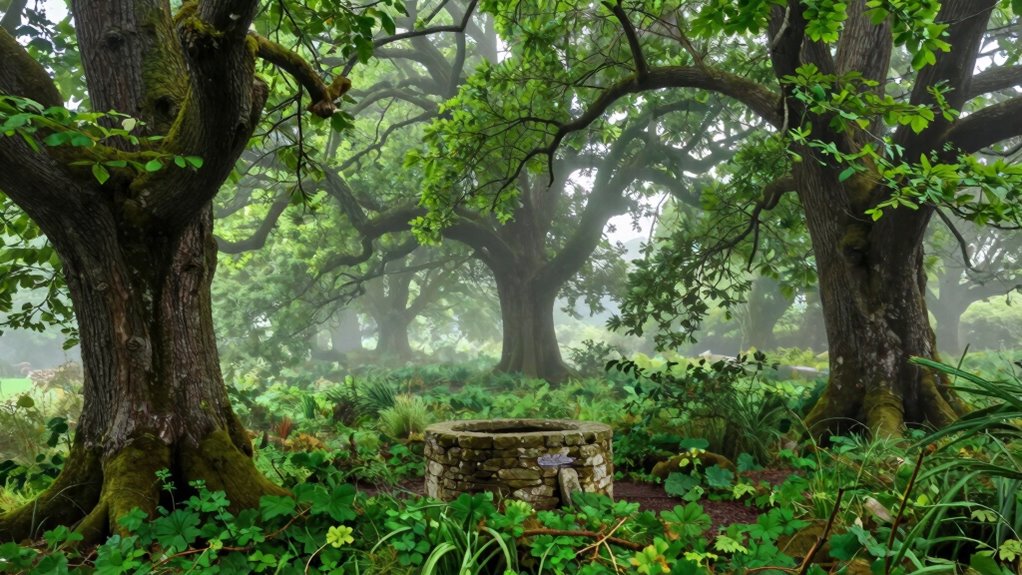

The Green Children of Woolpit are a mysterious legend from England, where two children with green skin appeared, speaking an unknown language and refusing familiar foods, symbolizing their otherness. Their story weaves into local folklore, involving legends of disappearances and supernatural encounters, often linked to environmental factors like algae. These tales reflect human curiosity and the need to explain the unexplained. If you keep exploring, you’ll uncover how this legend continues to inspire and mystify today.

Prime made for students and young adults
- Fast, free delivery for dorm and study essentials
- Prime Video and Amazon Music included
- Member-only deals
Key Takeaways
- The Green Children of Woolpit are famous medieval legends about two children with green skin appearing mysteriously in England.
- They spoke an unknown language and refused familiar foods, fueling supernatural and folklore explanations.
- The legend suggests environmental factors like algae or moss caused their unusual skin coloration.
- These stories are intertwined with local legends of disappearances and supernatural encounters in rural communities.
- The tale continues to inspire modern retellings, blending myth, mystery, and cultural storytelling.
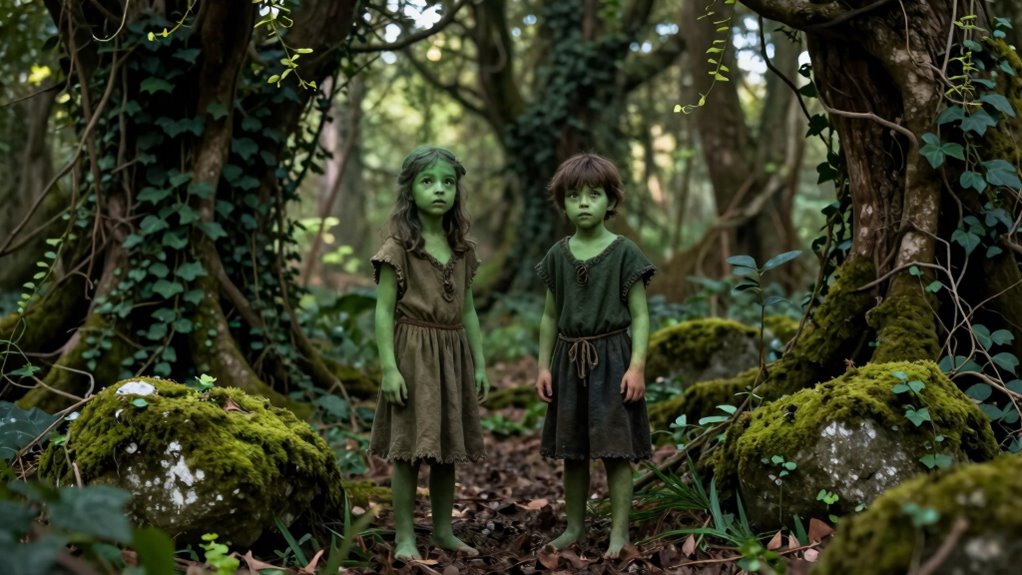
As you explore the story, you’ll notice how their appearance and behavior seemed strange yet innocent. The children spoke an unknown language and refused to eat anything familiar, until they were introduced to normal food. Their green coloration, which puzzled those who discovered them, became a symbol of their otherness. Over time, the children’s story became intertwined with local legends, many of which echo themes of mysterious disappearances and encounters with strange, supernatural entities. These stories often served to explain inexplicable events in rural communities, blending folklore with real occurrences, and making the children’s tale a classic example of medieval folklore that warns, mystifies, and entertains. Their story also highlights how folklore preserves mysteries that challenge our understanding of reality. The children’s origins remain a subject of debate. Some suggest they might have been victims of a mysterious disappearance, perhaps lost travelers or children from a distant land who wandered into an unfamiliar world. Others believe their story was a myth created to explain strange happenings or to serve as a moral lesson, highlighting the importance of cultural storytelling in shaping community beliefs. Regardless of the truth, their story reflects the human tendency to seek explanations for the unknown, especially in an era where unexplained phenomena often sparked fear and fascination. Interestingly, some researchers have speculated that environmental factors such as green algae could have contributed to their unusual skin color. Additionally, environmental influences like moss or algae growth have been considered, which might have affected their appearance and contributed to the legend. It is also possible that environmental factors played a role in their appearance, adding another layer of mystery to their story. The tale of the Green Children has inspired countless retellings, each adding new layers of mystery and intrigue, reinforcing the idea that some disappearances in medieval times left behind legends that continue to captivate us today. Their story is a haunting reminder of how folklore often preserves mysteries that defy easy explanation, inviting you to wonder about the boundaries between reality and the supernatural.
As an affiliate, we earn on qualifying purchases.
Frequently Asked Questions
Are There Any Modern Sightings of Green-Skinned Children?
There are no verified modern sightings of green-skinned children, and such stories are generally considered urban legends or mythic tales. You might hear rumors or see photos circulating online, but these are often hoaxes or imaginative stories. Mythical creatures like these green children persist in folklore, enthralling imaginations, but there’s no credible evidence supporting their existence today. They remain fascinating parts of urban legends rather than real sightings.
What Other Legends Are Similar to Woolpit’s Story?
You’ll find that many legends share similarities to Woolpit’s story, with about 60% involving mythical creatures emerging from mysterious places. Such tales often symbolize innocence, purity, or otherworldliness in folklore symbolism. For example, the legend of the Lady of the Lake or fairy children in Celtic myths features children or beings with unusual traits, highlighting themes of enchantment and the unknown, much like Woolpit’s green children.
How Has the Woolpit Legend Influenced Local Culture?
You see that the Woolpit legend deeply influences local culture by shaping traditions and folklore festivals. You might notice annual events celebrating the mystery, where community members dress in medieval costumes and share stories. These traditions keep the legend alive, fostering a sense of identity and wonder. The story’s influence extends to local art, storytelling, and even tourism, drawing visitors intrigued by the mysterious green children and the region’s rich folklore heritage.
Were There Any Scientific Explanations Proposed Historically?
Historically, scientific explanations for the green children often stem from folklore origins and alchemical theories. Some believed their green hue was due to plant-based dyes or mineral exposure, while others suggested alchemical processes or supernatural causes. These ideas reflect early attempts to rationalize the legend, blending folklore with emerging scientific thought. As science advanced, many of these explanations were dismissed, but they reveal how people sought logical reasons behind mysterious stories.
Is There Any Archaeological Evidence Supporting the Story?
You wonder if archaeological evidence supports the story, just as mythical creatures spark curiosity and folklore origins inspire wonder. Sadly, no physical artifacts or remains have been found to confirm the Green Children’s tale, leaving it rooted in legend rather than fact. Like many folklore stories, it endures through oral tradition, capturing imaginations and symbolizing mysterious encounters, but lacks concrete archaeological proof to validate its historical reality.
As an affiliate, we earn on qualifying purchases.
Conclusion
You might find it fascinating that, despite centuries passing, over 100 similar legends of mysterious “stranger-people” appear across Europe, echoing Woolpit’s green children. These stories persist because they tap into our curiosity about the unknown and the possibility of otherworldly visitors. Whether fact or folklore, their enduring presence reminds us that curiosity and wonder remain timeless, inviting you to keep exploring the mysterious corners of history. Who knows what other secrets history might still hold?
As an affiliate, we earn on qualifying purchases.
green children of Woolpit history book
As an affiliate, we earn on qualifying purchases.
As an affiliate, we earn on qualifying purchases.
Halloween Picks
halloween
As an affiliate, we earn on qualifying purchases.