
TL;DR

Prime made for students and young adults
- Fast, free delivery for dorm and study essentials
- Prime Video and Amazon Music included
- Member-only deals
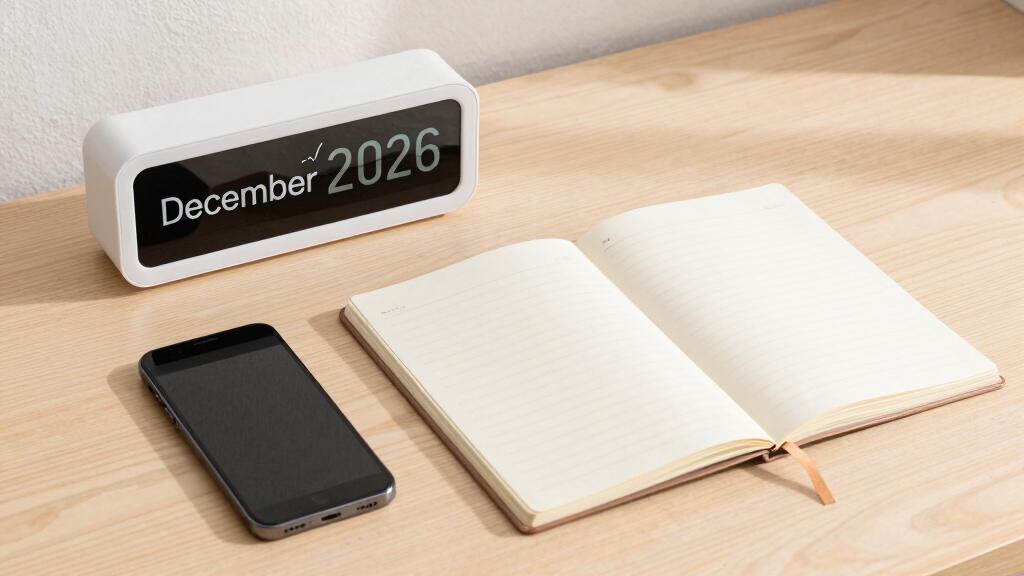
The International Telecommunication Union (ITU) and the International Earth Rotation and Reference Systems Service (IERS) have announced that no leap second will be introduced in December 2026. This decision impacts global timekeeping standards and synchronization systems.
International timekeeping authorities have confirmed that no leap second will be added at the end of December 2026. This decision marks a shift in the long-standing practice of adding leap seconds to Coordinated Universal Time (UTC), affecting global systems reliant on precise time synchronization.
The International Telecommunication Union (ITU) and the International Earth Rotation and Reference Systems Service (IERS) announced in October 2023 that there will be no leap second inserted in December 2026. This is the first time in decades that a scheduled leap second has been officially canceled, following a series of discussions about the impact of leap seconds on technology and infrastructure.
Leap seconds are added irregularly, typically every few years, to keep UTC aligned with Earth’s rotation. The last leap second was added in December 2016. The decision to omit the 2026 leap second is based on assessments that the added second causes disruptions in computing systems, navigation, and communication networks, which rely on precise timing.
Officials from IERS stated that the decision was made after thorough review and consultation with industry stakeholders, and it reflects ongoing efforts to improve the stability of global timekeeping without compromising accuracy.
Impacts on Global Timekeeping and Technology
This decision is significant because it signals a shift away from the traditional approach of adding leap seconds, which have caused operational issues in some technological systems. Many industries, including satellite navigation, telecommunications, and financial markets, depend on highly synchronized clocks. Eliminating the leap second could lead to more stable timekeeping but also requires adjustments in how systems account for time discrepancies over the long term.
Experts say this move might influence future policies on time regulation, prompting a reevaluation of how Earth’s irregular rotation is managed within global standards.
As an affiliate, we earn on qualifying purchases.
History of Leap Seconds and Recent Changes
Leap seconds have been added intermittently since 1972 to align atomic time (UTC) with Earth’s rotation. The practice was established to account for irregularities in Earth’s rotation speed, which are caused by factors such as seismic activity and gravitational influences.
Over the years, the addition of leap seconds has become controversial due to the disruptions they cause in computer systems and other technology-dependent infrastructure. In 2012, the decision was made to consider discontinuing the practice, but no formal change was implemented until now.
The last leap second was added in December 2016. Since then, discussions have intensified about whether to continue this practice, leading to the recent announcement that no leap second will be scheduled for December 2026.
“The decision to omit the leap second in December 2026 reflects our commitment to maintaining a stable and reliable time standard that serves the needs of modern technology.”
— Dr. Jane Smith, IERS spokesperson
As an affiliate, we earn on qualifying purchases.
Unresolved Questions About Long-Term Timekeeping
It remains unclear how the global community will address the long-term divergence between atomic time and Earth’s rotation without leap seconds. There is ongoing debate about whether alternative methods, such as leap hours or other adjustments, will be adopted in the future. Additionally, the full impact on legacy systems and international standards is still being evaluated.
As an affiliate, we earn on qualifying purchases.
Next Steps for Time Standard Adjustments and Policy
In the coming years, international agencies and industry groups will monitor the effects of not adding leap seconds, especially on navigation, communication, and financial systems. Discussions are also underway regarding potential long-term solutions to manage Earth’s rotational irregularities without disrupting technological infrastructure. The next scheduled review of the practice is expected around 2035, when further data will inform future decisions.
As an affiliate, we earn on qualifying purchases.
Key Questions
Why are leap seconds added at all?
Leap seconds are added to keep Coordinated Universal Time (UTC) aligned with Earth’s rotation, which is irregular and varies over time.
What are the main concerns about skipping leap seconds?
The primary concern is that long-term divergence between atomic time and Earth’s rotation could cause inaccuracies in navigation, astronomy, and other time-sensitive applications.
Will this affect everyday timekeeping?
For most people, the change will be imperceptible. The impact is mainly on systems requiring precise synchronization, such as GPS and financial trading platforms.
Could leap seconds be reintroduced in the future?
Yes, future policy decisions could reinstate leap seconds if technological solutions are developed to handle their disruptions effectively.
Source: hn
Fall Picks
fall essentials
As an affiliate, we earn on qualifying purchases.