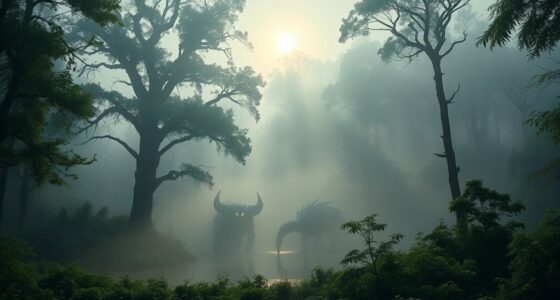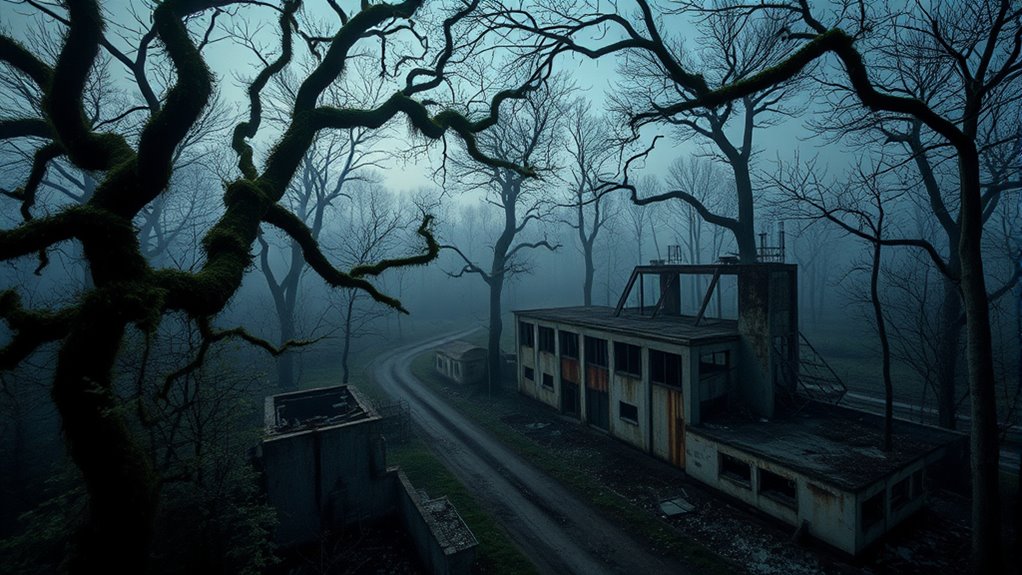

In the Chernobyl Exclusion Zone, you’ll find a fascinating story about how wildlife has adapted to radiation over decades. While rumors of mutants abound, most animals show resilience, developing genetic changes that help them survive. Radiation initially caused devastation, but now some species thrive, showing signs of resistance. These adaptations blur myth and reality, revealing nature’s surprising ability to recover. Keep exploring to discover the intriguing truth behind mutants and the zone’s evolving ecosystem.
Key Takeaways
- The zone has seen increased mutation rates in wildlife due to radiation, leading to some physical and genetic changes.
- Mutations in species like deer, boars, and wolves are observed, but most animals remain healthy and thriving.
- Scientific studies suggest radiation-induced mutations can be passed down, influencing future generations’ genetics.
- Myths about mutants and monsters stem from exaggerated stories; most wildlife adaptations are natural evolutionary responses.
- The zone demonstrates nature’s resilience, showing that life can adapt and flourish despite radiation hazards.
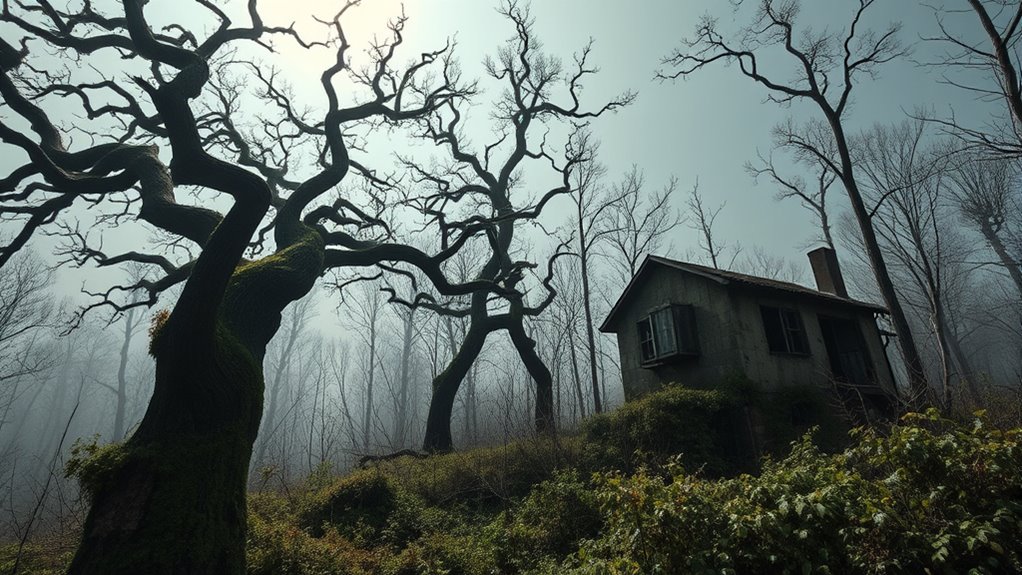
The Chernobyl Exclusion Zone is a 30-kilometer radius around the Chernobyl Nuclear Power Plant in Ukraine, established after the catastrophic 1986 disaster. Within this zone, the environment has transformed into a unique laboratory for studying radiation effects and wildlife adaptation. When you explore this area, you quickly realize that the landscape has become a testament to nature’s resilience, despite the lingering radioactive contamination. Radiation effects initially devastated plants and animals, causing mutations and population declines. However, over the decades, something remarkable has occurred: wildlife has begun to adapt to the radiation. You might observe deer, boars, or wolves roaming freely, seemingly unbothered by the radiation levels that once threatened their existence. This adaptation isn’t necessarily about radiation making them immune, but rather that these animals have developed mechanisms to cope with the environment’s altered conditions. For example, some species have shown increased mutation rates, leading to physical changes or genetic variations that may help them survive better in contaminated areas. This ongoing process fascinates scientists because it challenges what we are aware of about radiation’s long-term effects on living organisms. It’s a delicate balance—while radiation can cause harmful mutations, it can also promote genetic diversity, which may lead to stronger, more adaptable populations over time. As you observe the wildlife, you notice that many animals have thrived in areas humans abandoned, creating a sort of unintended sanctuary. You might see birds nesting in radioactive zones, their offspring displaying unusual traits, yet still surviving. This suggests that radiation effects are complex and can sometimes drive evolutionary change. The zone also demonstrates that the impact of radiation isn’t solely destructive; it can act as a catalyst for biological adaptation. What’s truly compelling is how nature seems to reclaim its space despite the hazards. You may wonder whether these animals carry mutations that could be passed down, shaping future generations. Some studies indicate that certain species are developing resistance or tolerance, a demonstration of nature’s ability to adapt in the face of adversity. Additionally, the long-term effects of radiation on genetics are still being studied, offering insights into how organisms evolve in contaminated environments. The Chernobyl Exclusion Zone therefore offers a paradox: it’s a place of tragedy, yet also of resilience, where radiation effects have spurred a unique chapter in wildlife adaptation. It’s a living example of how life persists and evolves, even under the shadow of nuclear disaster. As you leave the zone, you’re left contemplating how radiation influences the natural world in ways we’re just beginning to understand, revealing a complex story of survival, mutation, and adaptation.

Celestron – Nature DX 8×42 Binoculars – Ideal for Birding and Outdoors – 42mm Objective Lenses – Wide 7.4° Field of View – BaK-4 Prisms – Fully Multi-Coated – Waterproof and Fogproof
THE PERFECT BINOCULARS FOR EVERY ADVENTURE: Nature DX 8×42 offers sharp, detailed views in a compact, lightweight frame—ideal…
As an affiliate, we earn on qualifying purchases.
As an affiliate, we earn on qualifying purchases.
Frequently Asked Questions
Are There Any Confirmed Human Mutants Living in Chernobyl?
There are no confirmed human mutants living in Chernobyl. While there have been reports of mutant sightings and genetic anomalies, scientific studies haven’t verified the existence of true mutants. Most genetic anomalies are caused by radiation exposure, but they don’t result in the creation of mutants. If you hear about mutants in Chernobyl, it’s likely myth or misinterpretation rather than documented fact.
What Are the Long-Term Health Effects on Wildlife in the Zone?
You see, despite initial fears, wildlife in the zone adapts to radiation, showcasing ecological resilience. Long-term health effects include genetic mutations and reproductive issues, but many species thrive, indicating some level of radiation adaptation. Over decades, plants and animals have developed resilience, demonstrating nature’s ability to recover and adapt even in contaminated environments. This resilience provides a compelling visual of nature’s strength amid radiation’s long-term impact.
Have Any New Species Evolved Uniquely Within the Exclusion Area?
You’ll find that new species have evolved uniquely within the exclusion area due to radioactive evolution. Mutated flora and fauna have adapted to the high radiation levels, leading to some distinctive traits. While no entirely new species have been officially documented, researchers believe that the intense environment fosters these mutations, creating a dynamic ecosystem. These adaptations showcase how life can persist and change even in the most contaminated zones.
Is It Safe for Tourists to Visit the Chernobyl Zone?
Visiting Chernobyl can be safe if you follow radiation safety guidelines and stick to organized tours. While some worry about radiation exposure, tour operators ensure safety measures are in place, and tourist infrastructure helps manage risks. Imagine walking through abandoned buildings and forests, knowing you’re protected by expert guides. Just stay on designated paths, wear protective gear, and respect the rules—they make your adventure both safe and unforgettable.
Are There Any Secret Experiments or Government Cover-Ups Related to Mutants?
There’s no solid evidence of secret experiments or government cover-ups involving mutants in Chernobyl. While conspiracy theories exist, credible sources haven’t confirmed these claims. You might hear about hidden projects or cover-ups, but most information is speculative or part of urban legends. It’s best to approach such stories skeptically and rely on verified facts. The zone remains a place of history and caution, not secret experiments.

Nuclear Radiation Detector GQ GMC-800 Geiger Counter USA Design Product US National Standard Large Color LCD Display 5 Alarm Types Dosimeter Data Save & Global Share Beta Gamma X-ray Portable Device
【Nuclear radiation detector】GQ GMC-800 is the latest upgraded model of USA GQ Electronics Geiger Counters. Portable, personal &…
As an affiliate, we earn on qualifying purchases.
As an affiliate, we earn on qualifying purchases.
Conclusion
As you explore the Chernobyl Exclusion Zone, remember that over 1,000 species now thrive there, defying expectations. Despite the lingering dangers, nature has reclaimed much of the area, creating a unique refuge for wildlife. The myth of mutants dominates popular culture, but the real story is one of resilience and adaptation. So, as you envision this haunting landscape, know that life continues to surprise us in the most unlikely places.

Canon EOS Rebel T7 DSLR Camera|2 Lens Kit with EF18-55mm + EF 75-300mm Lens, Black
Improved Dual Pixel CMOS AF and eye detection AF 24.1 Megapixel CMOS (APS-C) sensor with is 100–6400 (H:…
As an affiliate, we earn on qualifying purchases.
As an affiliate, we earn on qualifying purchases.
Animal Tracks (Nature Observation North America)
Pocket Naturalist Animal Tracks by James Kavanagh – 1583550720
As an affiliate, we earn on qualifying purchases.
As an affiliate, we earn on qualifying purchases.