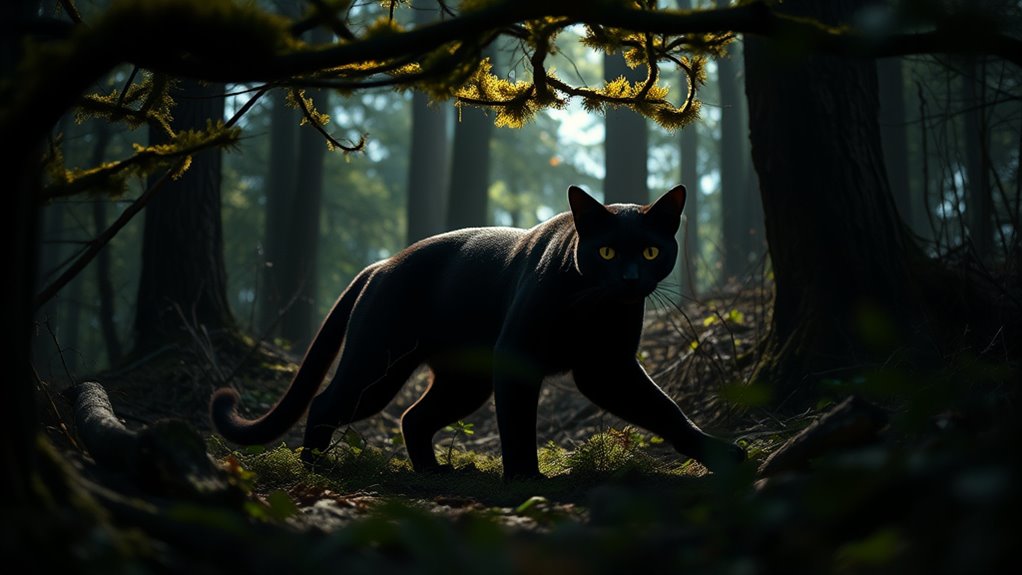

Big cat sightings like the legendary Beast of Bodmin in Cornwall happen across Europe, including Germany. Reports come from hikers, farmers, and locals who spot large, mysterious felines in forests and rural areas. Many believe these cats are escaped or thriving wild populations, while others see misidentifications. These stories reflect ongoing debates and ecological mysteries. If you’re curious, you’ll find more intriguing details about these elusive creatures and their place in local folklore as you explore further.
Key Takeaways
- Sightings of big cats date back to the 19th century in Bodmin Moor and are reported across Germany’s forests and rural areas.
- Reports include footprints, quick glimpses, and credible sightings from hikers, farmers, and gamekeepers.
- Theories suggest these animals may be escaped or released big cats or rewilded native species.
- These sightings raise ecological concerns and opportunities for wildlife conservation and management.
- Ongoing investigations lack conclusive proof but fuel debates about wild feline populations in Europe.
Across Europe, reports of mysterious big cats continue to capture the imagination of enthusiasts and skeptics alike. The legendary Beast of Bodmin, along with numerous sightings across Germany, have fueled debates and curiosity for decades. These stories often trace back to historical sightings, where locals and visitors alike reported encounters with large, elusive felines that seemed out of place in the British and continental wilderness. Such accounts have persisted through the years, adding layers of intrigue and mystery. Many believe these sightings are remnants of an escaped or released big cat population, while others argue they are simply misidentifications of ordinary animals. Whatever the case, these stories have become a part of local folklore, inspiring investigations and wildlife conservation efforts. They serve as a reminder that, despite modern advancements, the natural world still holds secrets that challenge our understanding.
In the case of the Bodmin Moor area, the historical sightings date back to the 19th century, with reports of large cats seen roaming the rugged landscape. These sightings have persisted into the present day, with numerous credible reports from hikers, farmers, and gamekeepers. The ongoing presence of these big cats raises questions about their origins—are they wild animals that have thrived in the UK’s protected areas, or are they escapees from private collections? The debate continues, but many wildlife conservationists see the sightings as an opportunity to better understand the ecological dynamics of these regions. They argue that these animals, whether native or introduced, could have significant impacts on local ecosystems. Recognizing and studying these animals can help develop strategies to manage and protect native wildlife while addressing concerns about safety and biodiversity. Furthermore, ongoing investigations aim to gather concrete evidence to clarify these mysteries.
Across Germany, similar stories unfold, with reports of large, mysterious cats prowling forests, rural areas, and even urban outskirts. These sightings often involve quick glimpses or footprints, but they’re enough to spark excitement and caution among residents. German authorities and wildlife experts sometimes investigate these reports, but conclusive evidence remains elusive. Still, the recurring sightings highlight the importance of responsible wildlife conservation. Protecting native species and understanding the presence of these big cats is essential for maintaining ecological balance. It also prompts a broader conversation about how humans coexist with wildlife in increasingly developed landscapes. Whether these cats are part of a natural rewilding process or a sign of human error, their stories continue to captivate and challenge us to look deeper into the wild heart of Europe.
Frequently Asked Questions
Are There Any Recent Credible Sightings of These Creatures?
You might still hear about recent credible sightings of mystery animals, but many are influenced by folklore and local stories. While some witnesses report strange creatures, evidence remains limited and often unverified. These sightings continue to spark curiosity, keeping the legend alive. Whether true or not, the allure of mystery animal sightings persists, enthralling enthusiasts and skeptics alike, fueling ongoing debates about whether these creatures are real or just folklore influence.
What Evidence Exists to Confirm Their Existence?
You won’t find conclusive evidence confirming these cryptid folklore creatures exist. Most sightings lack physical proof, like clear photographs or captured specimens, making it hard to verify their presence. Wildlife conservation experts often view such reports skeptically, emphasizing the importance of scientific validation. While intriguing stories persist, without concrete evidence, their existence remains unproven, and they stay within the domain of folklore rather than confirmed wildlife.
How Do Local Communities React to These Sightings?
You’ll find that local communities often react with a mix of fear and skepticism to big cat sightings. Many residents share community rumors about these creatures, fueling local fears of danger. Some people become curious or even excited, while others dismiss the sightings as hoaxes or misidentifications. Overall, these reactions lead to heightened alertness and sometimes even community patrols, but they also deepen the mystery and suspicion surrounding these mysterious creatures.
Are There Any Known Attacks Linked to These Animals?
Like shadows lurking in urban legends, attacks linked to these cryptid folklore often remain elusive, with few verified incidents. You might hear stories, but concrete evidence is scarce, making it seem like the animals are more myth than menace. While some sightings stir fears, most communities believe these creatures are harmless or just part of local stories. Still, caution is wise, as the line between legend and reality can sometimes blur.
What Wildlife Agencies Are Investigating These Reports?
Wildlife agencies like the UK’s Department for Environment, Food & Rural Affairs and Germany’s Federal Agency for Nature Conservation are actively investigating these reports. They conduct wildlife investigations to confirm whether the creatures are real big cats or misidentifications. You should stay updated through official channels, as they aim to verify sightings and assure public safety while confirming the existence of these elusive creatures.
Conclusion
While sightings like The Beast of Bodmin and German big cats capture your imagination, many experts believe they’re just misidentifications or hoaxes. Still, some evidence suggests real creatures might be lurking, perhaps escaped or released exotic felines. Whether you’re skeptical or intrigued, these stories remind you to stay curious and cautious. After all, the mystery keeps the legend alive, and who knows—maybe one day you’ll witness the truth firsthand.