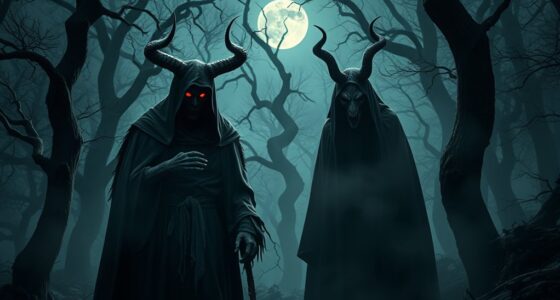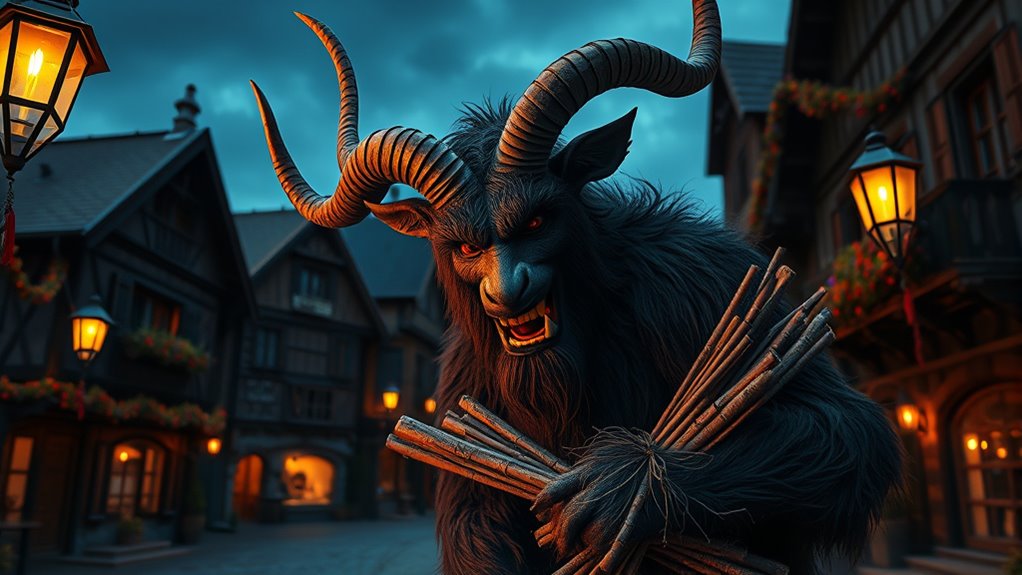

In Austrian folklore, Krampus has roots that go back centuries, blending pagan rituals with Christian traditions. You’ll find he symbolizes chaos and punishment during winter festivals, often appearing alongside Saint Nicholas to reinforce moral behavior. His fearsome horns, shaggy fur, and long tongue shifted over time from pagan symbols to a popular part of community celebrations. If you want to explore how Krampus evolved from ancient customs to modern festivities, there’s plenty more to uncover.
Key Takeaways
- Krampus originates from Alpine pagan traditions, symbolizing chaos and punishment during winter festivals in Austria.
- He evolved as a counterpart to Saint Nicholas, punishing naughty children and reinforcing moral behavior.
- Traditional rituals involved masked processions and community celebrations, blending pagan and Christian influences.
- Krampus celebrations expanded in Austria during the 17th and 18th centuries, featuring elaborate parades and costumes.
- Today, Krampus remains a cultural symbol, combining ancient customs with modern festivities, preserving Austria’s folklore heritage.
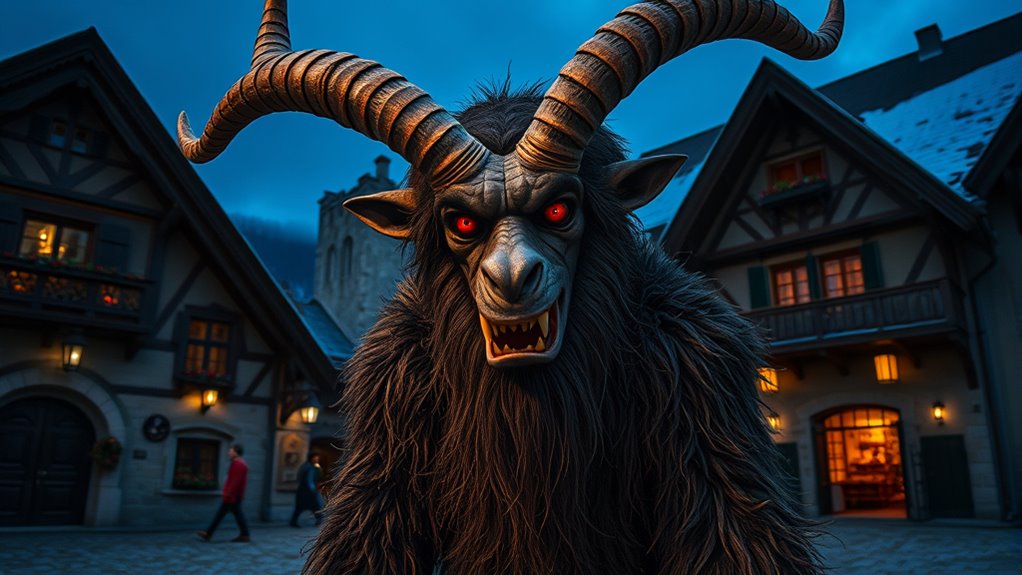
Have you ever wondered where the frightening figure of Krampus comes from? The origins of Krampus trace back centuries in Alpine folklore, particularly within Austria and surrounding regions. This creature is believed to have roots in pre-Christian pagan traditions, where it served as a symbol of the darker forces that balanced the more benevolent aspects of winter celebrations. Over time, these early customs merged with Christian influences, shaping the evolving image of Krampus as a punisher of naughty children during the Christmas season. The evolution of Krampus traditions reflects a fascinating blend of pagan ritual and Christian morality, which has helped keep his story alive through generations.
Originally, Krampus was seen as a companion to Saint Nicholas, who rewarded well-behaved children. While Saint Nicholas handed out gifts, Krampus was tasked with punishing the unruly. This duality reinforced the idea of moral behavior — good kids received presents, and bad ones faced Krampus’s wrath. As centuries went by, the character of Krampus grew more sinister in stories and folklore, becoming a terrifying figure with horns, shaggy fur, and a long, pointed tongue. These descriptions helped cement his reputation as a creature of chaos and punishment, contrasting sharply with the benevolence of Saint Nicholas. Many believe that the evolution of Krampus traditions was also influenced by local pagan rituals, where masked figures and wild processions played a role during winter festivals, symbolizing the struggle between chaos and order.
In Austria, Krampus celebrations became more elaborate during the 17th and 18th centuries, with communities organizing parades featuring men dressed as the beast, often called Krampuses or Perchten. These events were both a form of social cohesion and a way to ward off evil spirits. Over time, the tradition of Krampusnacht — the night dedicated to Krampus — grew in popularity, especially in rural areas. People would don frightening costumes and participate in wild processions, sometimes even with mischievous or dangerous behavior, aimed at scaring away evil. Today, the evolution of Krampus traditions continues, blending old customs with modern festivities, making him a symbol of both fear and festivity. This ongoing evolution reflects how cultural practices adapt over time while preserving the core elements of their origins, ensuring Krampus remains a vivid part of Austrian folklore.
Frequently Asked Questions
How Did Krampus Become Associated With Christmas Traditions?
You might not realize it, but Krampus became linked to Christmas traditions through Santa’s influence and local customs. While Santa rewards good children, Krampus punishes the naughty ones, blending festive and frightening elements. This duality highlights ancient gift-giving customs, where fear and reward kept children in check. Over time, these traditions merged, making Krampus a memorable part of Christmas celebrations, especially in Austria and surrounding regions.
Are There Regional Variations of Krampus Across Austria?
Did you know over 10 regional dialects influence Krampus folklore across Austria? Yes, there are distinct regional variations of Krampus, reflecting local folklore traditions. In some areas, he’s depicted with more horns or a different costume, while others emphasize his mischievous nature. These regional dialects shape unique customs, making Krampus a diverse and fascinating part of Austrian culture. Embracing these variations offers a richer understanding of the country’s folklore landscape.
What Are the Origins of Krampus’ Costume and Appearance?
You find that Krampus’ costume and appearance have mythical origins rooted in ancient traditions, symbolizing the wild, primal forces of nature. His fur, horns, and chains represent his connection to the underworld and chaos, while the masks and bells serve as costume symbolism to scare children into good behavior. These elements combine to create a fearsome figure that embodies both punishment and mythic power, blending folklore with symbolism across centuries.
How Has Krampus Influenced Modern Holiday Celebrations?
Krampus has become a dark shadow that dances through modern holiday celebrations, adding a thrilling edge to Santa’s helpers’ cheerful routines. You’ll see him at holiday parades, where he chases away the mundane and sparks excitement. His presence reminds you that Christmas isn’t just about gifts and joy, but also about the wild and mysterious side of winter traditions. Krampus’s influence keeps the holiday season both enchanting and daring.
Are There Any Specific Rituals or Festivals Involving Krampus Today?
Today, you can experience Krampus through traditional parades and costume contests. During these events, you’ll see participants dress as the fearsome creature, often accompanied by lively festivities. These celebrations honor Krampus’s role in folklore, blending old customs with modern fun. You might even join in the parades or contests, embracing the spooky spirit while celebrating the holiday season in a unique and spirited way.
Conclusion
Now that you know the rich history of Krampus in Austrian folklore, it’s clear he’s more than just a creepy Christmas figure—he’s a symbol of tradition and mischief that’s stood the test of time. From medieval origins to modern-day celebrations, Krampus keeps his wild spirit alive, even in a world filled with smartphones and social media. So, next holiday season, embrace the legend and maybe leave some cookies out for this legendary creature—after all, he’s been around longer than your latest TikTok trend.