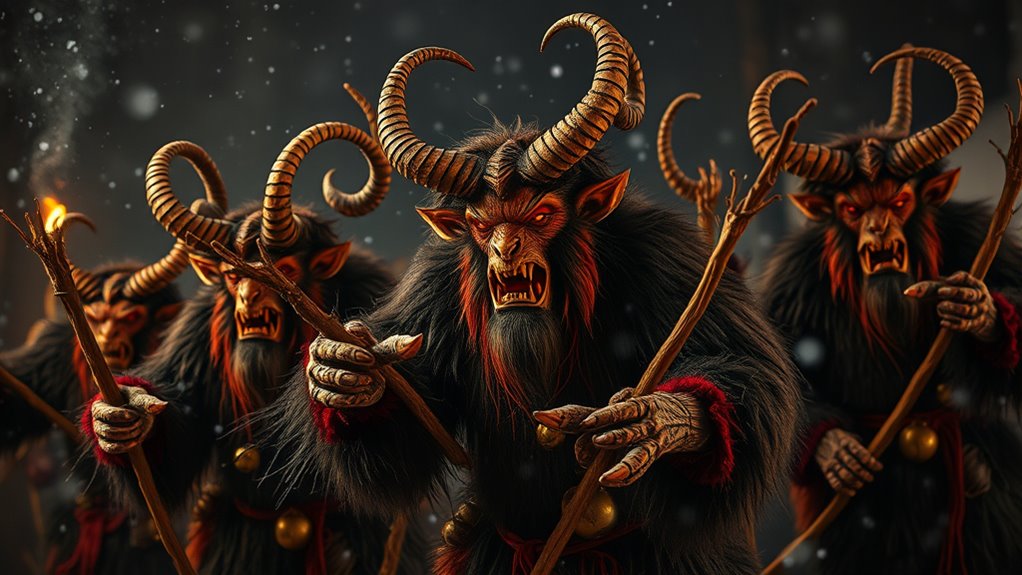

During the Krampuslauf, you witness Bavarian tradition come alive with participants wearing frightening masks, hairy costumes, and wielding sticks and bells. They march through the streets, creating a primal soundscape with clangs of bells and rhythmic beatings, symbolizing the confrontation of winter’s darkness. This lively event reinforces community bonds through shared rituals celebrating myth and seasonal cycles. If you keep exploring, you’ll discover how this intense tradition captures the spirit and history of Bavarian culture.
Key Takeaways
- Krampuslauf is an ancient Bavarian winter tradition featuring processions of masked, hairy figures symbolizing Krampus.
- Participants beat drums and sticks, creating a primal soundscape that heightens the event’s intense atmosphere.
- Costumes include long horns, snarling masks, and shaggy fur, embodying mythic creatures from winter folklore.
- The event serves as a communal ritual to ward off evil spirits and celebrate the return of light after winter darkness.
- The tradition fosters community bonds, preserves cultural heritage, and attracts tourism through lively parades of Krampuses.
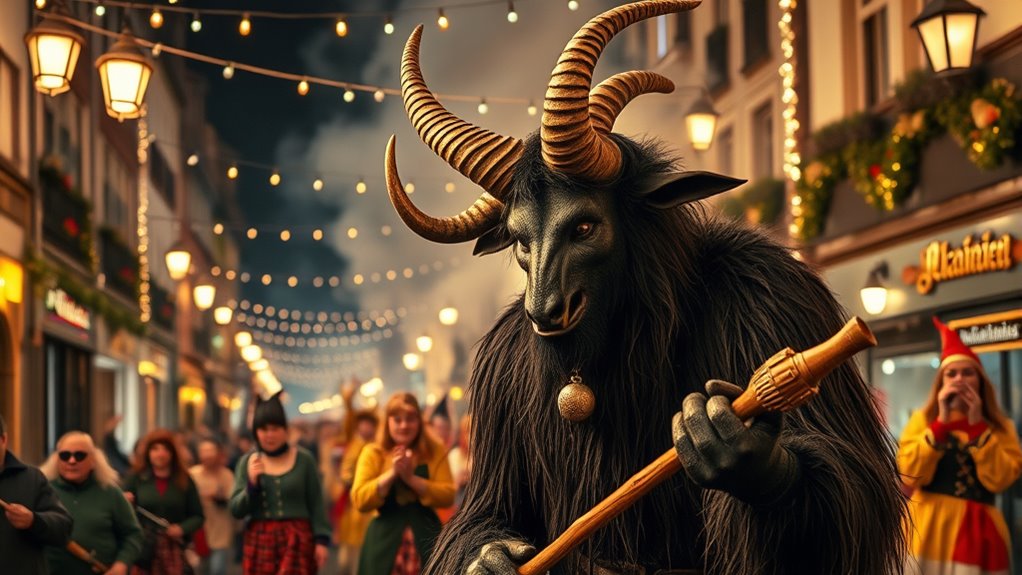
Have you ever wondered about the wild, exhilarating tradition of Krampuslauf in Bavaria? If so, you’re diving into a fascinating part of Yule folklore that has captivated communities for generations. During winter festivals, Bavarians gather to celebrate this ancient custom, where men don frightening masks and hairy costumes to portray Krampus, the infamous companion of Saint Nicholas. This event isn’t just about costumes; it’s a visceral display rooted in centuries of tradition, blending myth, memory, and communal spirit.
Discover Bavarian Krampuslauf: a wild, centuries-old winter tradition blending myth, community, and primal celebration.
The Krampuslauf is designed to evoke a mix of awe and fear. As the event kicks off, the streets fill with the clang of bells and the rhythmic beating of sticks, creating an almost primal soundscape. You’ll see participants wielding birch branches, which they use to symbolically beat away evil spirits or misbehavior. The costumes are elaborate and haunting—long horns, snarling masks, and shaggy fur—transforming ordinary towns into scenes straight from legend. This spectacle isn’t just for entertainment; it’s steeped in Yule folklore, serving as a reminder of the darker, more primal side of winter’s mythic cycle.
This tradition has persisted through the ages, surviving the shifts of modernity because it embodies more than just fright. It’s a way for communities to confront the winter’s darkness and celebrate the return of light, a crucial part of winter festivals that mark the end of the year. The figure of Krampus acts as both a scare and a protector—warning children to behave, but also reinforcing social bonds through shared ritual. As you watch or participate, you’ll notice the sense of camaraderie that underpins the event. It’s a collective effort to keep alive these ancient stories, passed down through generations, keeping alive the roots of Yule folklore into contemporary winter festivities.
Additionally, the economic significance of Krampuslauf helps sustain local tourism and community engagement during the winter months, making it an important cultural event. The thrill of Krampuslauf lies in its raw energy and cultural significance. When the parade of Krampuses marches through town, you feel the pulse of tradition beating strong. It’s not just about frightening masks and loud bells; it’s about embracing a piece of Bavarian history, celebrating the cycle of seasons, and reinforcing community bonds. Truly, this lively winter festival reminds us that even in the darkest months, there’s a vibrant, enduring spirit that refuses to fade, rooted in stories that have stood the test of time.
Frequently Asked Questions
How Did the Krampuslauf Tradition Originate Historically?
You discover that the Krampuslauf tradition originated from medieval European folklore, blending pagan rituals with Christian influences. It historically served to scare children into good behavior and symbolized the battle between good and evil. You see its cultural significance in maintaining community bonds and preserving local customs. Over time, this lively event evolved into a spirited parade where participants dress as Krampus, reflecting deep-rooted beliefs and regional identity.
What Materials Are Used to Create Krampus Costumes?
Did you know that Krampus costumes often feature over 100 individual pieces? You’ll need a variety of materials for authentic mask craftsmanship, including carved wood, leather, and papier-mâché. Costume accessories might include fur, bells, and chains to add to the terrifying effect. You can also use synthetic fibers or real animal pelts for the hair and horns, ensuring your Krampus looks as menacing as tradition demands.
Are There Regional Variations of the Krampuslauf Across Bavaria?
Yes, you’ll find regional variations of the Krampuslauf across Bavaria. Each area has its own unique costumes, reflecting local customs and traditions. For example, some regions feature more elaborate masks or specific color schemes, while others emphasize particular accessories or rituals. These regional costumes make each Krampuslauf distinct, showcasing local culture and history, and adding to the excitement and diversity of this Bavarian tradition.
How Do Participants Prepare Physically and Mentally for the Event?
To prepare for the Krampuslauf, you focus on building mental resilience and physical endurance. You train by practicing your movements, wearing your costume, and running through routines to stay comfortable. Mentally, you stay calm and focused, embracing the tradition’s intensity. You also maintain good physical health through exercise and proper nutrition, ensuring you’re ready for the stamina and mental strength needed to participate confidently and safely.
What Is the Significance of the Bells and Beatings in the Tradition?
Imagine you’re stepping into a scene where the bells chime loudly, like a medieval ringtone. The bells symbolize protection and ward off evil spirits, reinforcing their ritual significance. The beatings, on the other hand, mimic ancient rites of purification, scaring away malevolent forces. Together, they create a powerful sensory experience, embodying the community’s fight against darkness and evil, and reinforcing cultural bonds through these vivid traditions.
Conclusion
You might think the Krampuslauf is just old-fashioned fun, but it’s a powerful way to connect with Bavarian culture and face fears in a playful way. Instead of viewing the tradition as scary or outdated, see it as a vibrant, spirited celebration that keeps history alive. Embrace the bells, the beatings, and the wild costumes — because experiencing it firsthand offers a richer understanding, transforming fear into fascination and tradition into a shared experience.