
The Boxing Day mythos surrounding sea serpents and winter ghosts stems from centuries of folklore, blending real sightings with cultural fears during dark, cold seasons. These stories often serve as warnings or explanations for mysterious events at sea and in winter landscapes, reflecting human fears of the unknown and natural power. If you keep exploring, you’ll discover how these tales have shaped cultural identities and continue to captivate our imaginations today.
Key Takeaways
- The mythos blends tales of sea serpents and winter ghosts that emerge during the cold, dark period around Boxing Day, symbolizing seasonal fears.
- Folklore stories often originate from sailors’ sightings of mysterious creatures and villagers’ ghostly encounters during winter nights.
- These legends serve as cultural cautionary tales, warning of natural dangers and supernatural forces prevalent in the winter season.
- The stories reflect universal themes of fear, curiosity, and the unknown, rooted in historical attempts to explain unexplainable phenomena.
- The enduring fascination with these myths highlights their role in shaping cultural identity and human imagination during winter celebrations.
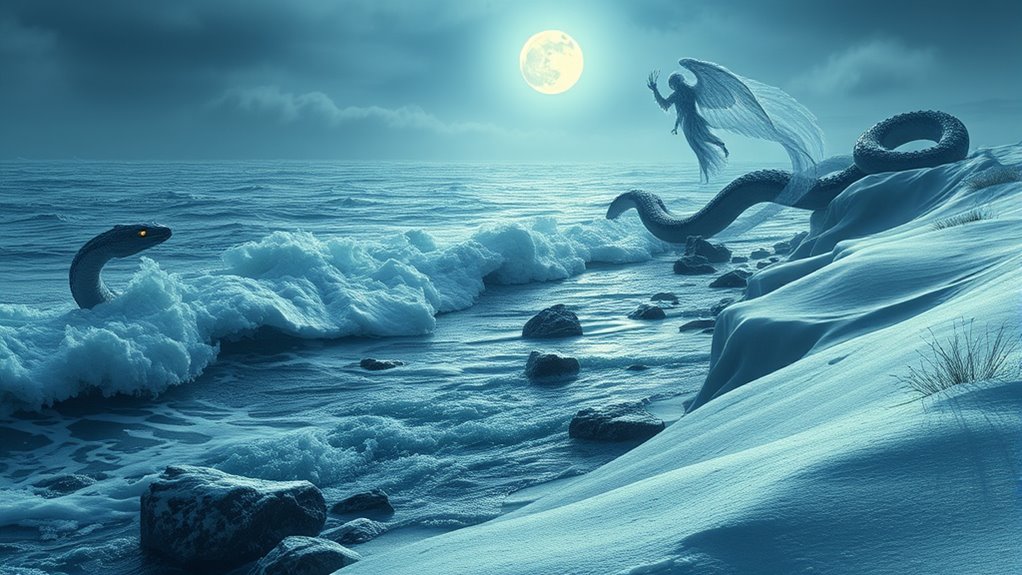
Have you ever wondered why tales of sea serpents and winter ghosts persist across cultures? These stories have endured for centuries, passed down through generations, fueling imaginations and shaping folklore origins. You might think they’re just fanciful legends, but their roots often stem from real mythical sightings—early sailors reporting strange creatures lurking beneath the waves or villagers whispering about ghostly apparitions on cold winter nights. These stories serve as cultural touchstones, blending human fears with the mysteries of the natural world. When you explore the folklore origins of these tales, you’ll find they often emerge during times of uncertainty or danger, acting as symbolic representations of the unknown. Sea serpents, for example, have appeared in myths from Norse sagas to Chinese legends, each describing enormous, serpentine beings that challenge human understanding of the ocean’s depths. These accounts likely originated from sightings of unusual marine life or even misidentifications of floating debris, but over time, they grew into legendary monsters embodying nature’s power and unpredictability. Similarly, winter ghosts are common across many northern cultures, where long, dark nights breed stories of spirits haunting the snowy landscape. These stories may have been inspired by real encounters with restless spirits or simply by the eerie silence and shadows that winter creates. The folklore origins of winter ghosts often reflect cultural attempts to explain the harshness of winter, the loss of loved ones, or the unseen forces believed to influence human fate. Interestingly, these tales also serve as cultural safety mechanisms, helping communities cope with natural dangers and emotional hardships. Whether these stories are based on actual sightings or speculative imagination, they reinforce a sense of wonder and caution during the coldest, darkest months. These tales also serve social functions, warning communities about dangers at sea or encouraging respect for nature’s untamed forces. Over centuries, they have been adapted and embellished, becoming part of cultural identity and storytelling traditions. You can see how myths about sea serpents and winter ghosts continue to captivate because they tap into universal fears and curiosities—fear of the unknown, the mysterious, and the supernatural. They remind you that, despite technological advances, the natural world still holds mysteries that elude complete understanding. The enduring nature of these stories demonstrates how human beings have always sought to explain the unexplainable, blending myth and reality into compelling narratives. In the end, the tales of sea serpents and winter ghosts are more than just folklore origins—they’re reflections of our collective effort to make sense of the world’s mysteries during the darkest, coldest times.
Frequently Asked Questions
Are There Any Recent Sightings of Sea Serpents During Boxing Day?
There haven’t been any confirmed recent cryptid sightings of sea serpents during Boxing Day. While folklore origins often mention mysterious sea creatures, modern reports remain unverified. You might come across old stories or anecdotal accounts, but actual sightings are rare and lack scientific evidence. If you’re interested in cryptid sightings, stay updated with maritime folklore and local reports, but remember that most sea serpent stories are part of cultural myths rather than recent discoveries.
What Are the Cultural Origins of the Winter Ghosts Stories?
Imagine shadowy figures flickering in icy fog, embodying winter ghosts rooted in folklore origins that date back centuries. You see, these stories emerge from seasonal symbolism, representing death, renewal, and the harshness of winter’s grip. Across cultures, tales of spirits wandering in cold darkness reflect human fears and hopes. You’re drawn into these haunting legends because they mirror the eerie beauty and spiritual significance of winter’s silent, ghostly landscape.
How Do Maritime Traditions Influence the Mythos of Sea Serpents?
Maritime traditions deeply influence the mythos of sea serpents through maritime folklore and nautical symbolism. You see, sailors historically viewed sea serpents as omens or protectors, integrating these creatures into their stories to symbolize danger, mystery, or divine power. This nautical symbolism shapes how sea serpents are portrayed—both feared and revered—embodying the unpredictable nature of the ocean and the cultural values of seafaring communities.
Have Any Scientific Explanations Been Proposed for Sea Serpent Sightings?
Scientific explanations for sea serpent sightings often draw on marine biology, suggesting that large marine animals like oarfish, whales, or giant squids could be mistaken for serpents. These sightings might also stem from folklore origins, where sailors exaggerated encounters with real creatures. By understanding marine biology, you can see how natural phenomena and mythical stories intertwine, making these mysterious sightings more plausible than pure imagination.
Do Winter Ghosts Appear in Other Winter Festivals Around the World?
Yes, winter ghosts appear in other festivals worldwide, often as ghostly apparitions rooted in winter folklore. In Scandinavian traditions, you might see spirits or ghostly figures during Yule celebrations, while in Japan, the New Year’s festivals sometimes feature ghostly stories and apparitions. These spectral figures symbolize seasonal shifts, embodying the cold, dark months, and serve as reminders of the spiritual significance of winter across different cultures.
Conclusion
As you delve into the mythos of Sea Serpents and Winter Ghosts, remember that these legends are like shadows dancing on the edge of reality—mysterious and elusive. They remind us that stories are the ghosts of our collective imagination, lurking just beneath the surface of what we see. Embrace the mystery, for in chasing these tales, you become part of a timeless dance between truth and myth, where every whisper of the past beckons you onward.