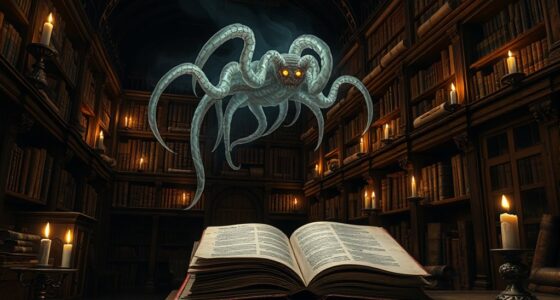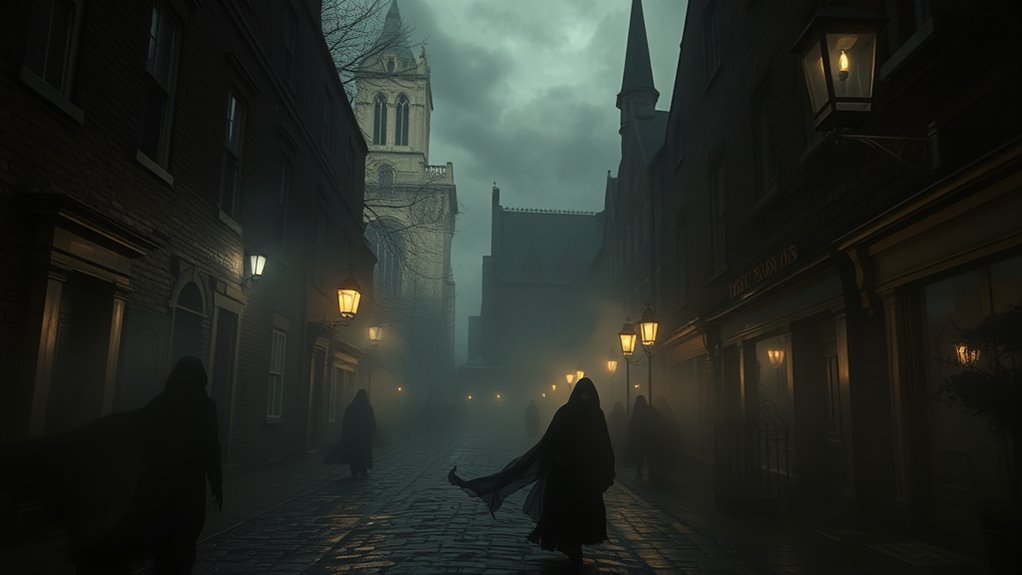

The Ghost of Christmas Yet to Come symbolizes mortality and moral consequences with its dark silence and shadowed presence. It’s a stark reminder that personal choices today shape your future, highlighting the importance of kindness and integrity. Its foreboding presence encourages reflection on how neglect and greed can lead to a lonely, inevitable end. If you keep exploring, you’ll discover how Dickens uses this ghost to remind us all of our moral responsibilities and the impact of our actions.
Key Takeaways
- The Ghost symbolizes mortality, reminding characters and readers of life’s inevitable end.
- Its darkness and silence evoke fear, emphasizing the unknown future shaped by current actions.
- Dickens uses the ghost to highlight moral responsibility and the consequences of neglecting kindness and charity.
- The silent vigil prompts reflection on personal choices and their impact on future fate.
- The ghost serves as a moral compass, encouraging living with compassion to influence eternal destiny.
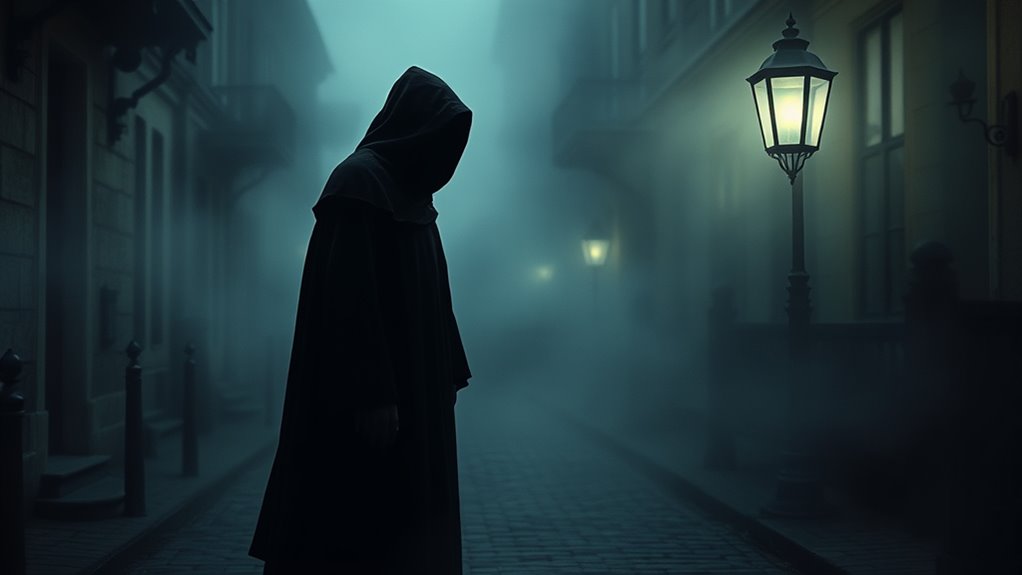
The Ghost of Christmas Yet to Come, often shrouded in darkness and silence, serves as a chilling reminder of the future that awaits if current actions remain unchanged. As you encounter this spectral figure, you’re confronted with a stark symbol of mortality and the consequences of neglecting moral responsibility. Dickens uses this ghost as a powerful piece of literary symbolism, not just to evoke fear but to provoke reflection on your own life choices. The silent, foreboding presence forces you to face the reality that your actions today shape tomorrow’s destiny, emphasizing the importance of moral lessons that transcend time.
The silent Ghost warns us that today’s choices shape tomorrow’s fate and moral lessons transcend time.
In Dickens’s narrative, the ghost’s darkness underscores the unknowns of the future, yet it’s also a mirror reflecting your potential fate based on how you live. Its silence is deafening, demanding your attention and forcing you to confront uncomfortable truths about greed, selfishness, and neglect. By personifying the inevitable end that awaits all, Dickens crafts a literary symbol that underscores mortality’s universality. The ghost doesn’t speak; instead, it compels you to interpret your own life through its quiet presence, making its symbolism all the more potent and personal. This silence also enhances the emotional impact, allowing the reader to project their own fears and hopes onto the spectral figure.
This spectral visit isn’t meant to merely scare but to instruct. Dickens wants you to recognize that your current behaviors—whether in regard to charity, kindness, or responsibility—are the threads weaving your future. The ghost’s silent vigil highlights the moral lessons embedded within the story: that it’s never too late to change, and that compassion and integrity hold the power to alter your destiny. As you witness the possible consequences of neglect, you’re urged to reconsider your priorities and the legacy you’re building. Dickens’s use of this ghost as a literary device transforms a simple story into a profound meditation on mortality and moral accountability.
The ghost’s presence underscores a universal truth—death is inevitable, but how you face it is within your control. Dickens masterfully employs this symbolism to remind you that the choices you make today echo in eternity. Its darkness and silence serve as stark contrasts to the warmth of compassion and generosity that can define your life. In recognizing this, you’re encouraged to act with greater kindness, knowing that the shadows of neglect and selfishness cast long and dark. Dickens’s ghost ultimately becomes a moral compass, guiding you to live consciously, with an awareness of mortality and the moral lessons that can lead to redemption. Reflecting on emotional support and moral responsibility can help cultivate a more compassionate outlook in facing life’s inevitable end.
Dickens Christmas Carol collectible edition
As an affiliate, we earn on qualifying purchases.
As an affiliate, we earn on qualifying purchases.
Frequently Asked Questions
How Does Dickens Portray the Ghost’s Physical Appearance?
You see that Dickens portrays the ghost’s physical appearance as an ethereal presence with a haunting visage. Its form is shadowy, indistinct, and almost transparent, giving it an otherworldly feel. You might notice its silent, looming presence, which emphasizes its mysterious and unsettling nature. Dickens uses this haunting visage to remind you of mortality, making the ghost both intimidating and mournful, symbolizing the unknown future that awaits.
What Is the Historical Context of Dickens’ Writing About Mortality?
You’re exploring Dickens’s portrayal of mortality during the Victorian era, a time when death was more visible and mourning customs deeply influenced daily life. Victorian death often involved elaborate funerals and grieving rituals, highlighting society’s struggles with mortality. Dickens reflects this context by emphasizing the importance of confronting death honestly, urging compassion and change. His writing underscores how Victorian attitudes toward death shaped people’s perceptions and reactions to mortality.
How Does the Ghost Influence Ebenezer Scrooge’s Character Development?
Like a mirror held up by the Fates, the ghost pushes you toward a moral awakening by showing a grim future. You see the consequences of your greed and indifference, prompting deep reflection. This spectral guide transforms your character, making you realize that change is possible. The ghost’s influence acts as a catalyst, inspiring you to embrace compassion and generosity, ultimately shaping a better, more humane future for yourself and others.
Are There Similar Ghosts in Dickens’ Other Works?
Yes, Dickens includes similar supernatural motifs and moral symbolism in his other works. You’ll find spirits, visions, and supernatural visits that challenge characters’ morals and prompt change. These ghosts often serve as moral lessons, guiding characters toward redemption or awakening. Dickens uses these supernatural elements to deepen the moral symbolism, making his stories more compelling and emphasizing the importance of virtue and self-awareness.
What Is the Significance of the Ghost’s Silence Throughout the Story?
You notice the ghost’s mysterious silence, and it’s like a shroud of darkness cloaking an ominous presence. Its quietness amplifies the weight of mortality, emphasizing that some truths are too heavy to voice. The silence acts as a stark reminder that death’s secrets are beyond words, forcing you to confront the inevitable without comfort or explanation. This silent ghost leaves an unspoken message that’s more powerful than words ever could be.
moral reflection journal
As an affiliate, we earn on qualifying purchases.
As an affiliate, we earn on qualifying purchases.
Conclusion
As you walk away from the shadowed figure of the Ghost of Christmas Yet to Come, you notice a flicker in the distance—an open grave, nearly forgotten. Coincidentally, just as you turn, a cold wind whispers your name, reminding you that mortality waits quietly behind life’s busy facade. You realize that, like the ghost’s visions, life’s fleeting nature is always nearby, urging you to cherish each moment before it slips away unnoticed.
mortality and morality themed book
As an affiliate, we earn on qualifying purchases.
As an affiliate, we earn on qualifying purchases.
spiritual reflection journal
As an affiliate, we earn on qualifying purchases.
As an affiliate, we earn on qualifying purchases.