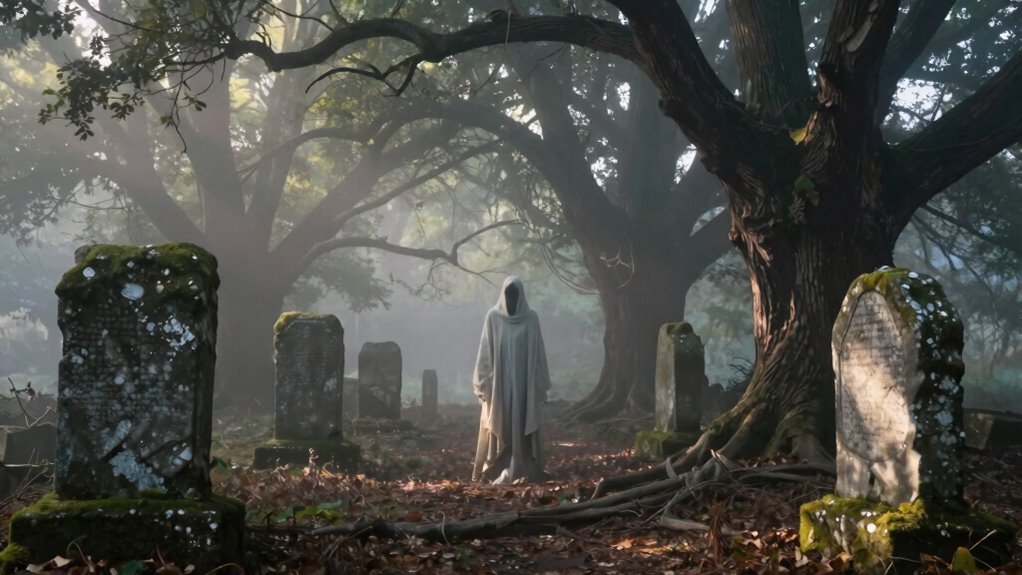

When a historical mystery gets passed down through generations, it often becomes exaggerated or romanticized, transforming into folklore rather than factual evidence. As stories are retold, communities add details that reflect their values, fears, or hopes, blurring the line between fact and myth. Over time, these legends serve to reinforce cultural identity and entertain rather than explain actual history. If you want to uncover how these stories shift from truth to myth, there’s more to explore ahead.

Prime made for students and young adults
- Fast, free delivery for dorm and study essentials
- Prime Video and Amazon Music included
- Member-only deals
Key Takeaways
- Over time, uncertain or intriguing events are exaggerated and passed down, transforming into stories that resemble folklore.
- Cultural storytelling emphasizes morals or societal values, often overshadowing factual evidence.
- Legends develop from societal fears, hopes, or morals, gradually diverging from the original historical facts.
- The process of mythologizing preserves community identity and reinforces shared cultural narratives.
- Critical evaluation helps distinguish between factual evidence and stories that have evolved into folklore.

Many historical mysteries, once shrouded in uncertainty and intrigue, gradually transform into folklore as stories are passed down through generations. When you hear about a legendary figure or an unsolved event, it’s tempting to believe everything you’re told. But in reality, the line between legend and fact can blur quickly. Cultural storytelling plays a huge role here, shaping how communities remember their past. Over time, stories become exaggerated or romanticized, shifting from factual accounts to cultural myths. This isn’t necessarily a bad thing; it’s how cultures preserve their identity and values. Still, it’s essential to recognize when a mystery has become more of a legend than an evidence-based fact.
As stories get handed down, they often evolve, gaining details that aren’t supported by historical records. You might hear about a brave hero who fought off invaders or a hidden treasure buried deep in the mountains, but the truth behind these tales can be far more complex. What starts as a factual event can morph into a legend that’s more about inspiring or entertaining than explaining real history. This process highlights how cultural storytelling influences what we accept as truth. It’s not necessarily about deception but about creating shared narratives that resonate with people. In fact, the way oral tradition shapes collective memory demonstrates how storytelling becomes a vessel for cultural values and identity. In this way, legends serve a purpose—they strengthen community bonds and uphold traditions, even if they don’t stand up to historical scrutiny.
When you encounter stories that seem too extraordinary to be true, it’s worth questioning whether they’re based on evidence or cultural storytelling. Many legends develop because they reflect the values, fears, or hopes of a society. For example, myths about mythical creatures or legendary warriors often symbolize deeper themes, like the struggle between good and evil. These stories become part of cultural identity, regardless of their factual accuracy. Sometimes, the thrill of the story matters more than the truth behind it. Additionally, understanding the role of storytelling in shaping collective memory can help you better appreciate how myths influence perceptions of history. Recognizing the distinction between legend and fact helps you appreciate the cultural significance without losing sight of historical accuracy.
As an affiliate, we earn on qualifying purchases.
Frequently Asked Questions
How Do Facts Influence Folklore Development?
Facts influence folklore development by providing a foundation for oral traditions and cultural transmission. When you share stories rooted in real events, they evolve through storytelling, often gaining embellishments over time. As these tales pass from person to person, they blend fact with imagination, shaping folklore. Your community’s desire to preserve history and identity keeps these stories alive, transforming facts into cherished legends that reflect cultural values.
What Distinguishes Folklore From Historical Evidence?
Like a tapestry woven with threads of oral traditions, folklore is vibrant and fluid, shaped by cultural symbolism that colors its patterns. You can distinguish it from historical evidence by its storytelling roots, not verifiable facts. Folklore dances through generations, blending myth and meaning, while evidence stands firm, grounded in documented truth. You see, folklore’s magic lies in its ability to evoke emotion and identity, unlike the cold certainty of historical facts.
Can Folklore Ever Be Proven True?
Folklore about mythical creatures and supernatural legends can sometimes be proven true, but it’s rare. You might find ancient accounts or physical evidence supporting some stories, yet many remain unverified. When you investigate, you often discover these tales are shaped by cultural beliefs or exaggerations. While they enrich history and culture, most supernatural legends stay in the domain of folklore, making proof elusive, but curiosity keeps the search alive.
Why Do Some Mysteries Become Legends?
You see, sometimes urban legends and oral tradition create coincidences that resonate deeply, turning mysteries into legends. As stories pass through generations, they gain emotional weight and cultural significance, making them feel true even without evidence. These mysteries become legends because they reflect shared fears, hopes, or morals, inspiring communities to remember and retell them. In this way, the power of storytelling transforms fleeting events into enduring folklore.
How Does Media Shape Folklore Narratives?
Media shapes folklore narratives through media distortion, amplifying certain details while omitting others, which influences public perception. You notice storytelling techniques like sensationalism and dramatization, making tales more engaging. This process often blurs facts with fiction, transforming mysteries into legends. You, as a consumer, may unknowingly perpetuate these narratives, reinforcing folklore’s role in cultural identity. Media’s power lies in its ability to craft compelling stories that overshadow the original evidence.
folklore and mythology reference books
As an affiliate, we earn on qualifying purchases.
As an affiliate, we earn on qualifying purchases.
Conclusion
As stories evolve, they transform from facts into folklore, from evidence into legend. You see it happen when curiosity sparks, when myths grow, and when history becomes mystery. You witness it as truth fades, as imagination takes hold, and as legends endure. In the end, you realize that whether rooted in fact or fiction, these tales shape your understanding, inspire your wonder, and keep the past alive—ever-changing, ever-enthralling, forever part of your stories.
cultural storytelling documentaries
As an affiliate, we earn on qualifying purchases.
As an affiliate, we earn on qualifying purchases.
history and legend analysis books
As an affiliate, we earn on qualifying purchases.
As an affiliate, we earn on qualifying purchases.
Fall Picks
fall essentials
As an affiliate, we earn on qualifying purchases.