
The Kraken Clause in Viking law codes is a myth, not a factual rule. Historical texts and archaeological evidence don’t support its existence. It’s likely a product of maritime superstitions and folklore, reflecting sailors’ fears of sea monsters rather than legal practices. Many believe it stems from exaggerated tales of the legendary sea creature. To understand the truth behind this myth and how it relates to Viking culture, keep exploring the evidence and historical context.
Key Takeaways
- There is no direct historical evidence confirming the existence of a specific “Kraken Clause” in Viking law codes.
- Maritime laws in Norse society primarily addressed property disputes, navigation, and conduct, not mythical sea creatures.
- The “Kraken Clause” is widely considered a myth, likely stemming from maritime superstitions and legends about sea monsters.
- References to sea monsters in Norse texts are symbolic and do not indicate formal legal provisions for mythical creatures.
- The idea of a “Kraken Clause” is generally regarded as fiction, rooted in folklore rather than documented Viking legal practice.
Top picks for "kraken clause fact"
As an affiliate, we earn on qualifying purchases.
Origins of Maritime Laws in Viking Society
The origins of maritime laws in Viking society stem from their reliance on the sea for commerce, exploration, and warfare. As you explore their world, you’ll see how ancient trade routes expanded Viking influence, making maritime conduct essential. Viking navigation was critical for safe passage across unpredictable waters, prompting the development of rules to prevent conflicts and guarantee cooperation. These laws often addressed issues like salvage rights, ship damage, and the responsibilities of traders and sailors. Given the importance of sea-based activities, Viking communities created legal frameworks to regulate their interactions on the water. Their maritime laws reflected a practical understanding of navigation challenges and the need for order during bustling trade expeditions and exploratory ventures across distant lands.
References to Sea Monsters in Old Norse Literature
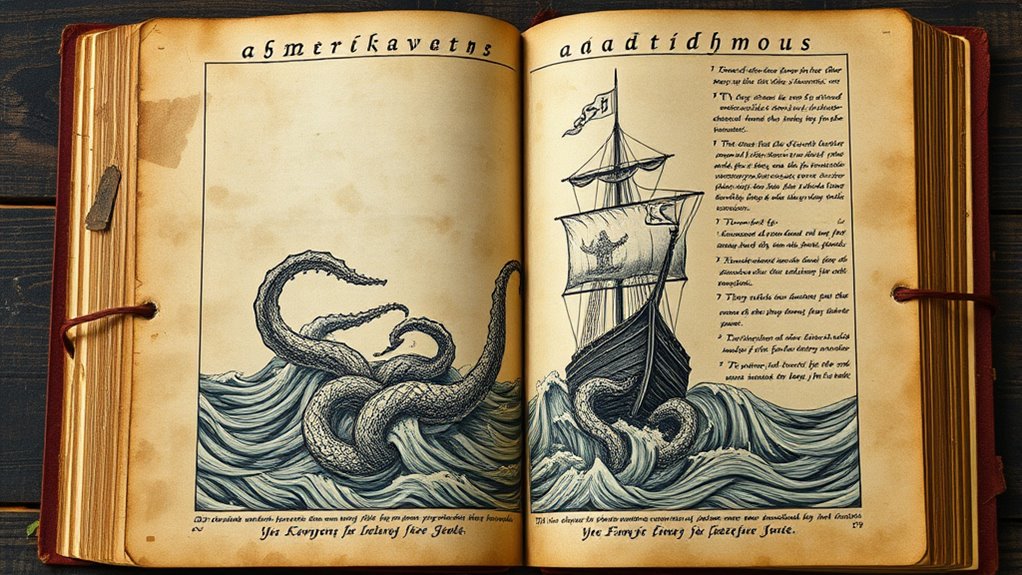
Old Norse literature often describes mythical sea creatures that strike fear into sailors. These descriptions paint vivid pictures of monsters lurking beneath the waves, blending myth and reality. Exploring these stories reveals how ancient Norse people viewed the dangers of the sea and their environment.
Mythical Sea Creatures
Have you ever wondered what legendary creatures sailors feared lurking beneath the waves? Old Norse stories often mention sea serpents, massive creatures that embody nautical myths. These monsters symbolize the unknown dangers of the ocean, fueling sailors’ fears and legends. Some tales describe serpents so large they could swallow ships whole, reinforcing the idea of a treacherous, unpredictable sea. Such mythical beings appear in sagas and poetry, emphasizing the mystique and danger of the deep. These stories weren’t just entertainment; they served as warnings about the perils of seafaring. The sea serpent, as a prominent nautical myth, reflects ancient Norse understanding of nature’s power and mystery, blending legend with the realities faced by those brave enough to sail the icy waters.
Literary Descriptions of Monsters
In Norse sagas and poetry, monsters like sea serpents command vivid imagery that captures the imagination. These creatures often symbolize chaos, danger, and the unknown, reflecting the perilous nature of seafaring life. Sea serpent symbolism appears frequently in nautical monster myths, where these enormous beings threaten ships and sailors alike. Descriptions emphasize their size, power, and otherworldly features, fueling fears of the deep. Such literary depictions serve not only as storytelling devices but also as cultural reflections of humanity’s relationship with the ocean’s mysteries. These monsters embody the chaos lurking beneath the calm surface of the sea, reinforcing the idea that the ocean is both a source of life and a domain of terrifying, unknowable forces.
The Role of the Icelandic Grágás and Other Law Codes

The Icelandic Grágás played a central role in shaping Viking legal practices, serving as one of the earliest extensive law codes in the Norse world. It reflects Norse symbolism, emphasizing maritime symbolism vital for seafarers’ identity. The code addresses:
- Laws governing maritime conduct, emphasizing the importance of ships and sea voyages.
- Regulations on property and resource disputes, often linked to Norse beliefs about sovereignty and territorial rights.
- Rituals and customs tied to maritime rituals, highlighting the spiritual connection Vikings had with the sea.
These laws reveal the significance of maritime symbolism in Viking society, suggesting that their legal structures intertwined with their worldview. While not explicitly mentioning the Kraken, the law code’s focus on the sea underscores its cultural importance.
Archaeological Evidence of Viking Maritime Beliefs

Archaeological discoveries provide tangible evidence of how Viking maritime beliefs shaped their material culture. You can see this in their marine navigation tools, which reflect a deep reliance on celestial cues and mythological symbols believed to guide them safely through treacherous waters. Excavated ships and shipwrecks reveal advanced shipbuilding techniques designed for stability and speed, essential for tackling unpredictable seas. Some remains show carvings and decorations inspired by mythic creatures, hinting at their beliefs about sea monsters like the Kraken. These artifacts suggest that Viking sailors saw their ships not just as vessels but as sacred objects, protected by myth and magic. Overall, archaeological evidence underscores a worldview where maritime beliefs directly influenced their navigation methods and craftsmanship.
Comparing Viking Laws to Other Medieval Maritime Regulations
Comparing Viking laws to other medieval maritime regulations reveals both similarities and differences in how seafarers’ conduct and safety were governed across regions. Many codes emphasized the importance of ancient navigation techniques, guiding sailors through treacherous waters with shared knowledge. Viking laws often incorporated sea folklore, warning of monsters like the kraken to deter reckless behavior. In contrast, other regions focused more on ship maintenance and clear legal punishments. Specifically, you’ll find that:
- Some laws mandated specific rituals or superstitions to ensure safe passage.
- Others prioritized strict liability for damage caused at sea.
- Many incorporated stories of sea monsters to reinforce caution and respect for the ocean’s dangers.
This blend of practical rules and folklore shaped medieval maritime culture globally.
Modern Interpretations of Viking Sea Monster Legends

Modern interpretations of Viking sea monster legends often blend historical folklore with contemporary storytelling, revealing how these myths continue to captivate audiences today. Deep sea myths like the Kraken symbolize the unknown dangers of maritime exploration, fueling imagination and caution alike. These legends serve as powerful maritime symbolism, representing nature’s unpredictability and sailors’ fears. Today, artists, writers, and filmmakers reinterpret these stories, blending myth with modern adventure narratives. The enduring fascination with monsters from the deep reflects our collective curiosity about the ocean’s mysteries and the human desire to understand the uncharted. By examining these legends, you see how ancient fears have evolved into cultural symbols that continue to inspire modern storytelling, keeping Viking sea monsters alive in popular imagination.
Analyzing the Language and Context of Historical Texts
To understand historical texts about Viking law, you need to pay close attention to the language and the context in which they were written. Focus on how marine symbolism and mythological narratives shape their meaning. Consider these aspects:
- Examine specific words or phrases that evoke sea monsters or oceanic elements to reveal cultural perceptions.
- Analyze descriptions that reflect mythological storytelling, which often embed moral or societal values about the sea’s power.
- Recognize the influence of marine symbolism on legal language, suggesting how Norse society viewed the ocean as both a danger and a domain of mythic forces.
Scholarly Debates Surrounding the Kraken in Norse Culture

Scholarly debates about the Kraken in Norse culture center on whether the creature was purely mythological or rooted in real marine phenomena. Some researchers argue that stories of sea serpent myths and giant squids fueled nautical folklore, inspiring legends like the Kraken. They suggest sailors may have exaggerated encounters with unusual sea creatures, turning them into monsters of myth. Others believe the myth reflects a cultural obsession with the unpredictable and dangerous ocean. Archaeological evidence and historical texts support both views, but no definitive proof links the Kraken directly to a specific marine species. These debates highlight how ancient sailors interpreted their encounters with the sea, blending observation, fear, and storytelling into enduring legends that continue to captivate modern imaginations.
The Influence of Scandinavian Folklore on Maritime Practices

You can see how mythical creatures like the kraken influenced sailors’ beliefs and safety measures at sea. Folklore wasn’t just stories—these legends shaped naval practices and even affected maritime laws. By exploring these legends, you’ll understand how Scandinavian beliefs left a lasting mark on maritime traditions.
Mythical Creatures at Sea
Have you ever wondered how Scandinavian folklore shaped maritime customs and beliefs? Mythical creatures at sea, like the Kraken and sea serpents, fueled shipwreck myths and reinforced sailor superstitions. These stories warned sailors of dangers lurking beneath the waves, influencing their behavior and rituals. For example, sailors would:
- Avoid naming sea monsters to prevent angering them
- Perform specific prayers or offerings before voyages
- Keep a lookout for signs of mythical creatures to anticipate storms
These practices reflected a deep respect for the unknown and reinforced the idea that supernatural beings controlled maritime fate. Such beliefs helped keep sailors cautious and vigilant, blending myth with daily maritime life. The enduring legends of these creatures highlight their profound impact on Scandinavian seafaring culture.
Folklore’s Naval Significance
Scandinavian folklore profoundly influenced maritime practices by embedding supernatural beliefs into sailors’ routines and rituals. Sailors often viewed the sea as inhabited by powerful spirits, with stories of sea serpents fueling maritime superstition. These beliefs led to specific rituals aimed at appeasing these creatures, hoping to ensure safe passage. For example, sailors would make offerings or perform prayers before setting sail, believing that spirits or mythical beasts like the sea serpent could bring good luck or disaster. Such folklore shaped daily practices aboard ships, reinforcing a sense of respect and caution toward the unpredictable ocean. The enduring impact of these beliefs highlights how deeply Scandinavian mythology influenced navigation, blending myth with maritime safety and shaping sailors’ mentalities at sea.
Legends Shaping Maritime Laws
Many maritime laws and customs trace their origins to the legends and superstitions rooted in Scandinavian folklore. These stories of legendary sea serpents and mythic maritime monsters influenced sailors’ behavior and legal practices. For example, you might find that:
- Fear of encountering legendary sea serpents led to strict navigational rules to avoid dangerous waters.
- Superstitions about mythic maritime monsters prompted regulations around offering sacrifices or prayers before voyages.
- Folklore about monstrous creatures reinforced the importance of respecting natural forces, shaping laws that emphasized safety and caution at sea.
These myths weren’t just stories—they directly impacted maritime practices, instilling respect for the sea’s power and the unknown, shaping laws that persisted long after the tales were told.
Myth vs. Reality: Assessing the Existence of a Kraken Clause
Is the so-called Kraken Clause merely a myth, or did Viking sailors truly include such provisions in their maritime agreements? Many believe it’s rooted in biological myths, fueled by maritime superstitions that exaggerated sea monsters’ existence. While tales of colossal creatures like the Kraken capture imaginations, there’s little concrete evidence these myths influenced legal codes. Instead, they reflect sailors’ fears and superstitions, which may have been woven into their maritime practices. Some historians argue that references to sea monsters in Viking stories were symbolic, not legal stipulations. Without direct textual evidence, the idea of a formal Kraken Clause remains speculative. You should approach such claims skeptically, recognizing the powerful role of myths and superstitions in shaping maritime culture rather than formal law.
Frequently Asked Questions
Are There Any Surviving Viking Legal Documents Explicitly Mentioning Sea Monsters?
You wonder if any Viking legal documents mention sea monsters. While marine mythology and nautical folklore are rich, surviving Viking law codes don’t explicitly reference sea monsters like the Kraken. Most stories come from sagas and later sources. If you’re seeking concrete legal evidence, you won’t find direct mentions. Instead, these creatures live more vividly in folklore and myth, blending history with legendary tales from seafarers’ imaginations.
How Did Viking Sailors Historically Prepare for Encounters With Sea Monsters?
Like sailors whispering to the wind, you prepare for mythical creatures lurking beneath the waves by trusting sailors’ superstitions. You carry talismans, say prayers, and follow ancient rituals, believing these acts fend off sea monsters. Though no concrete evidence exists, these superstitions shaped Viking sailors’ actions, making the ocean a domain where myth and reality intertwined, and where preparation was as essential as the ship itself.
What Are the Earliest References to the Kraken in Scandinavian Folklore?
You’ll find the earliest references to the kraken in Scandinavian folklore, where mythical creatures symbolize the dangers of the sea. These stories, dating back to the 13th century, depict the kraken as a colossal, tentacled beast that embodies nautical symbolism of chaos and mystery. Such tales likely originated from sailors’ encounters with giant squids, fueling legends that have persisted as a powerful icon of maritime fear and wonder.
Could the Kraken Have Been a Metaphor for Other Maritime Dangers?
They say, “Not everything is as it seems,” and that’s true for the kraken. You could see it as a mythical symbolism, a metaphorical interpretation of real maritime dangers like storms or whirlpools. The kraken might have represented the terrifying, unpredictable forces of nature sailors faced, embodying their fears through legend. So, yes, it could have been a metaphor for other maritime hazards, not just a monstrous creature.
How Have Modern Media Representations Influenced Perceptions of Viking Sea Beliefs?
You see, modern media exaggeration shapes your perception of Viking sea beliefs by amplifying mythical symbolism like the Kraken. These portrayals often dramatize Viking legends, making them seem more fantastical than historical reality. As a result, you might view Vikings as fearless sea monsters or mythic explorers, influenced more by sensationalized stories than accurate history. This distorted image emphasizes entertainment over understanding Viking maritime culture.
Conclusion
So, next time you hear about Viking law codes containing a “kraken clause,” remember: it’s probably just a myth spun by sailors enthusiastic for a good story. While the sea certainly held mysteries and monsters in Old Norse tales, there’s no solid proof they embedded sea monsters into legal texts. Maybe the only “clause” you’ll find in Viking law is the one promising a good adventure—preferably with fewer tentacles.