TL;DR
Prime for Young Adults — start your free trial
Fast free delivery, streaming and member deals for eligible 18–24 year olds.
Try it freeAs an affiliate, we earn on qualifying purchases.
Archaeologists have uncovered a previously unknown city beneath Egypt’s desert, including an ancient church dating back to early Christianity. The discovery offers new insights into Egypt’s historical landscape.
Archaeologists have announced the discovery of a lost city beneath Egypt’s desert, including an ancient church believed to date back to early Christianity. This finding offers new insights into the region’s historical and religious development and is considered one of the most significant archaeological breakthroughs in recent years.
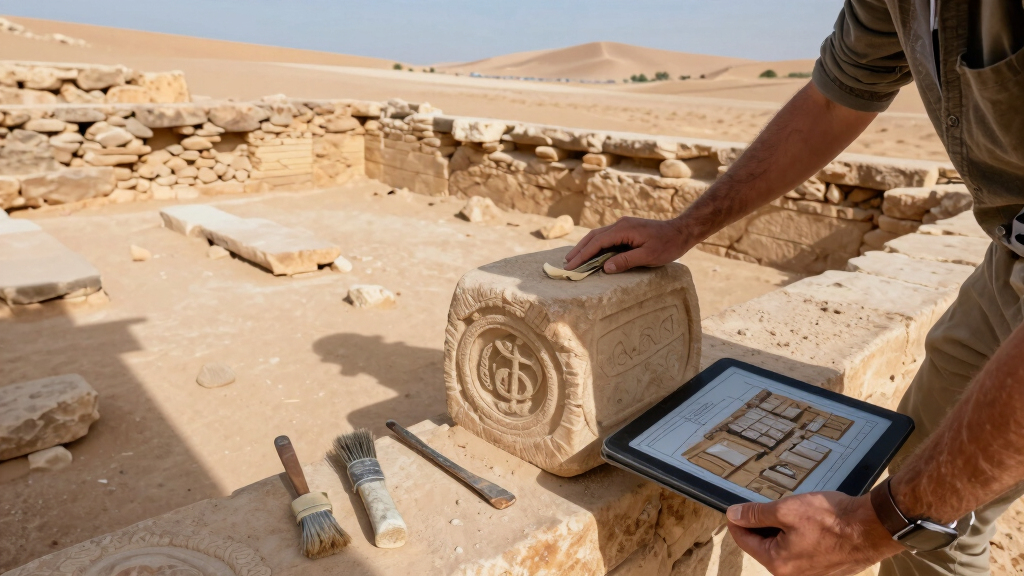
The discovery was made during excavations led by a team from the Egyptian Ministry of Antiquities, who uncovered extensive remains of a city buried beneath layers of sand and rock. The site includes the ruins of a church with well-preserved Christian mosaics and inscriptions, suggesting it dates from the 4th or 5th century AD.
Preliminary dating and analysis indicate that the city was a thriving settlement during the early Christian period in Egypt. The team also found artifacts such as pottery, tools, and religious items that support the hypothesis of a significant religious center during that era. The site was uncovered in the Western Desert, close to known ancient trade routes.
Implications for Early Christian History in Egypt
This discovery is significant because it provides tangible evidence of early Christian communities in Egypt, a region historically pivotal to Christianity’s spread. The well-preserved church and artifacts could shed light on religious practices, architectural styles, and community life during the formative years of Christianity in North Africa.
Experts believe the site might revise current understanding of early Christian settlement patterns and regional influence, potentially impacting historical and archaeological scholarship.
As an affiliate, we earn on qualifying purchases.
Previous Discoveries and Regional Archaeological Efforts
Egypt has a rich archaeological history, with well-known sites like Luxor and the Pyramids of Giza. However, much of its early Christian history remains under-explored, especially in the Western Desert. Past discoveries have included monasteries and churches, but the recent find is notable for its scale and preservation.
The Western Desert has been a focus of archaeological interest due to its potential to reveal more about Egypt’s ancient and early Christian past. The current excavation builds on decades of survey work and remote sensing technologies that identified promising underground features.
“This site offers a rare glimpse into early Christian life in Egypt, with well-preserved structures and artifacts that could rewrite parts of our history.”
— Dr. Ahmed El-Sayed, lead archaeologist
Egyptian archaeological excavation tools
As an affiliate, we earn on qualifying purchases.
As an affiliate, we earn on qualifying purchases.
What Aspects of the Site Are Still Being Investigated
While the initial findings are promising, many details about the city’s full extent, its exact date, and the specific community it served are still being studied. The preservation state of some structures and artifacts limits immediate interpretation, and further excavations are planned.
It is not yet clear how large the city was or how it related to other known settlements from the same period. Researchers are also assessing whether the site was abandoned suddenly or gradually declined.
As an affiliate, we earn on qualifying purchases.
Upcoming Excavations and Research Phases
The archaeological team plans to continue excavating the site over the coming months, employing advanced imaging and dating techniques. Further analysis of artifacts and structures will aim to clarify the city’s timeline and cultural context.
Researchers also intend to collaborate with international institutions to better understand the site’s significance within early Christian history and regional trade networks. Public reports and detailed publications are expected once more data is available.
As an affiliate, we earn on qualifying purchases.
Key Questions
How old is the city and the church?
The city and church are believed to date back to the 4th or 5th century AD, based on initial dating and artifact analysis.
What makes this discovery different from previous finds?
Its scale, preservation, and the presence of a well-preserved Christian church with mosaics make it a unique and potentially transformative archaeological site.
Will the site be open to the public?
It is too early to determine if the site will be accessible to the public. Conservation and further research are priorities before any public display.
What tools and techniques are used in the excavation?
Researchers are employing remote sensing, ground-penetrating radar, carbon dating, and traditional excavation methods to study the site.
Could this discovery change current historical understanding?
Yes, if further analysis confirms the dating and significance, it could revise current models of early Christian settlement and regional history in Egypt.
Source: hn
Fall yard work Picks
leaf blowers
As an affiliate, we earn on qualifying purchases.