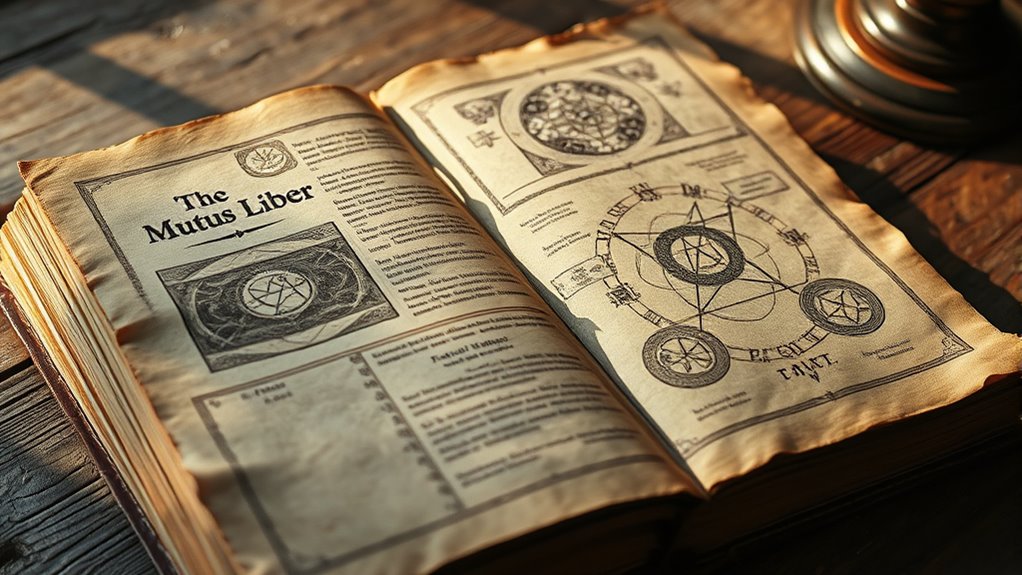

The Mutus Liber is a mysterious 17th-century manuscript filled with cryptic images that encode alchemical knowledge, making it difficult to decipher without understanding symbolisms and esoteric traditions. As you explore its illustrations, you’ll notice layered symbols representing processes like purification and transformation, often requiring interpretation from a mystical perspective. If you keep exploring, you’ll uncover the hidden messages behind its enigmatic imagery and better understand the spiritual and material goals of alchemy.
Key Takeaways
- The Mutus Liber is a visually driven alchemical manuscript, making it difficult to interpret without specialized knowledge.
- Its dense symbolism and cryptic images contribute to its reputation as an unreadable or enigmatic text.
- Created in the 17th century, it encodes complex processes of spiritual and material transformation through allegorical illustrations.
- Its purpose is to guide initiated alchemists, requiring understanding of esoteric symbolism to unlock its meaning.
- The manuscript exemplifies the mystique and secrecy surrounding alchemy, continuing to challenge modern readers and scholars.
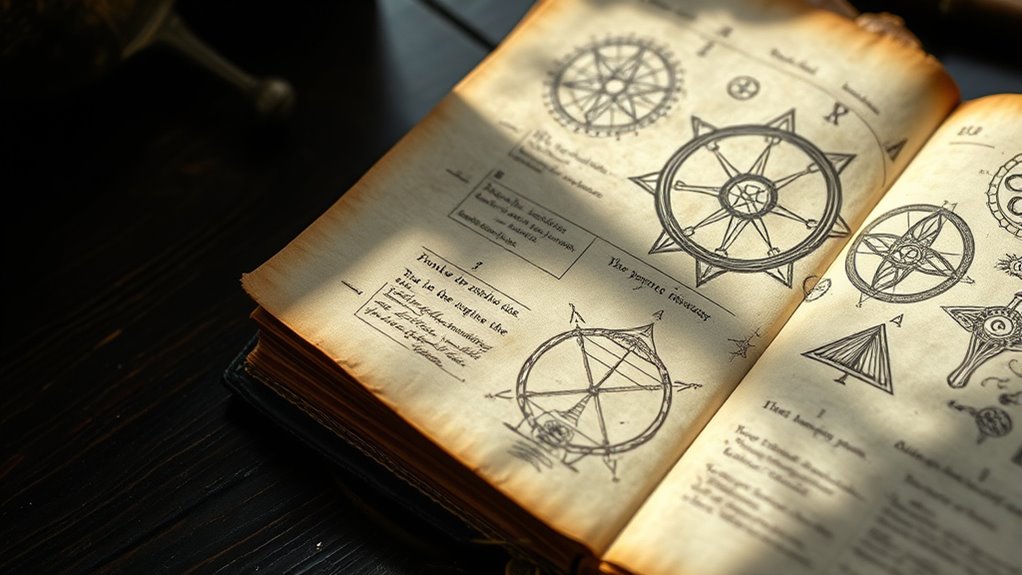
Have you ever wondered what secrets lie behind the ancient art of alchemy? The Mutus Liber, a mysterious and visually striking manuscript, invites you to explore these secrets through its unique blend of alchemy symbolism and cryptic imagery. Created in the 17th century, this book is a silent testament to alchemical processes, relying solely on images instead of words to convey its messages. Its purpose was to serve as a visual guide for those initiated into the esoteric world of alchemy, a discipline rooted in both spiritual transformation and material manipulation. To truly understand it, you need to grasp the historical context: a period when alchemy was as much a philosophical pursuit as a proto-science, often cloaked in secrecy to protect its knowledge from outsiders or authorities wary of its mystical implications. The Mutus Liber’s symbolism is dense and layered, filled with alchemical icons such as the serpent, the phoenix, and the various stages of transformation. These symbols aren’t merely decorative; they represent profound processes like purification, transmutation, and enlightenment. Each image is carefully composed to guide the viewer through the alchemical journey, from raw matter to refined substance, mirroring spiritual evolution. When you examine the illustrations, you notice how alchemy symbolism often intertwines with allegory, making the manuscript a puzzle that challenges your perception and understanding. The images depict processes like calcination, dissolution, and coagulation, all essential steps in alchemical work, but their meanings extend beyond the physical to include inner transformation. The historical context reveals that the Mutus Liber was created during a time when alchemy was evolving from a mystical craft into a more scientific pursuit, though secrecy still shrouded much of its practice. Its illustrations reflect this tension—an attempt to encode crucial knowledge in a way that could be understood by those with the right insight, while remaining obscure to outsiders. As you study the images, you begin to see how the symbolism aligns with broader philosophical ideas: the unity of opposites, the pursuit of perfection, and the quest for spiritual enlightenment. The visual language of the Mutus Liber demands more than surface-level interpretation; it calls for an understanding of alchemy symbolism rooted in centuries of tradition. This manuscript stands as a testament to the esoteric nature of alchemy, offering a glimpse into a world where symbols serve as keys to unlock hidden knowledge, all within a historical context that valued secrecy and allegory. If you’re drawn to mysteries and the symbolic language of transformation, the Mutus Liber continues to intrigue, challenge, and inspire those willing to decode its silent messages.
Frequently Asked Questions
What Is the Historical Origin of the Mutus Liber?
You discover that the Mutus Liber originated in the late 17th century, rooted in medieval symbolism and alchemical symbolism. It was created by unknown alchemists aiming to encode complex processes visually, avoiding direct language. Its purpose was to teach secret alchemical knowledge through symbolic imagery. As you analyze it, you realize it reflects the mystical and philosophical ideas prevalent during that era, making it a fascinating, if enigmatic, historical artifact.
Who Authored the Mutus Liber?
You might find it intriguing that the author of the Mutus Liber is unknown, likely a secretive alchemist or group using symbolic language and cryptic symbolism. Their purpose was to encode alchemical teachings beyond plain sight, making it difficult for outsiders to interpret. This mysterious figure or collective aimed to preserve esoteric knowledge, communicating through symbolic language that challenges modern readers to decipher its hidden messages and unseal ancient secrets.
Are There Any Hidden Meanings Within the Illustrations?
Like a locked treasure chest, the illustrations in the Mutus Liber hold hidden meanings. You can uncover these through careful visual analysis, revealing symbolic interpretations that hint at alchemical secrets. Every detail invites you to look deeper, connecting symbols to philosophical ideas. While the images seem straightforward, their true significance often lies beneath, waiting for you to decode the layered symbolism and decipher the manuscript’s mysterious messages.
How Has the Mutus Liber Influenced Modern Alchemy?
You see that the Mutus Liber influences modern alchemy through its symbolic imagery and alchemical symbolism, inspiring practitioners to explore hidden meanings and spiritual transformations. Its visual approach encourages you to interpret complex processes beyond words, fostering a deeper understanding of alchemy’s mystical aspects. This connection helps you appreciate alchemy as both a spiritual journey and a scientific pursuit, emphasizing symbolism’s importance in revealing hidden truths and personal growth.
Where Can I Find a Original or Authentic Copy?
You can find an original or authentic copy of the Mutus Liber in antique manuscripts collections or rare bookshops specializing in esoteric texts. Start by checking major auction houses or specialized online rare book dealers, as they often hold these valuable editions. Visiting well-known rare bookshops or libraries with historical collections increases your chances. Be prepared for high costs, given its rarity and significance in alchemical history.
Conclusion
Just like the silent monks of old guarding hidden secrets, the Mutus Liber remains an enigma, inviting you to decipher its mysterious code. Its unreadable pages whisper of alchemy’s secrets, daring you to see beyond the surface. Though many have tried, its true meaning stays elusive, much like the alchemist’s elusive gold. Embrace the mystery, for sometimes the greatest truths lie in what remains unread, forever hidden in the shadows of history.