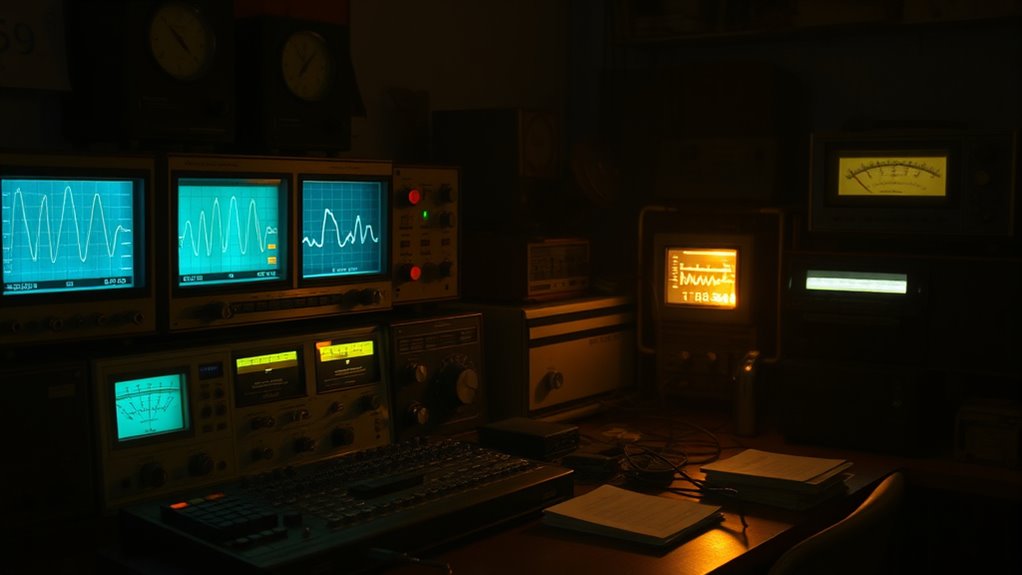

Number stations are mysterious shortwave broadcasts that secretly send coded messages during the Cold War, and they still fascinate today. These broadcasts use simple yet effective encryption methods, like one-time pads, making it difficult for anyone except the intended recipient to understand. Signal interceptors face challenges deciphering the messages due to encryption and complex patterns. If you keep exploring, you’ll discover how these broadcasts played a crucial role in espionage and why they remain an enduring mystery.
Key Takeaways
- Number stations are covert shortwave broadcasts transmitting coded messages during the Cold War era.
- They often use encryption methods like one-time pads to keep messages secret.
- Interception involves monitoring signals to identify patterns, but decoding remains challenging due to encryption.
- Signal analysis tools help researchers understand transmission patterns and origins of these mysterious broadcasts.
- They symbolize Cold War espionage, showcasing clandestine communication’s role and continuing to intrigue enthusiasts.
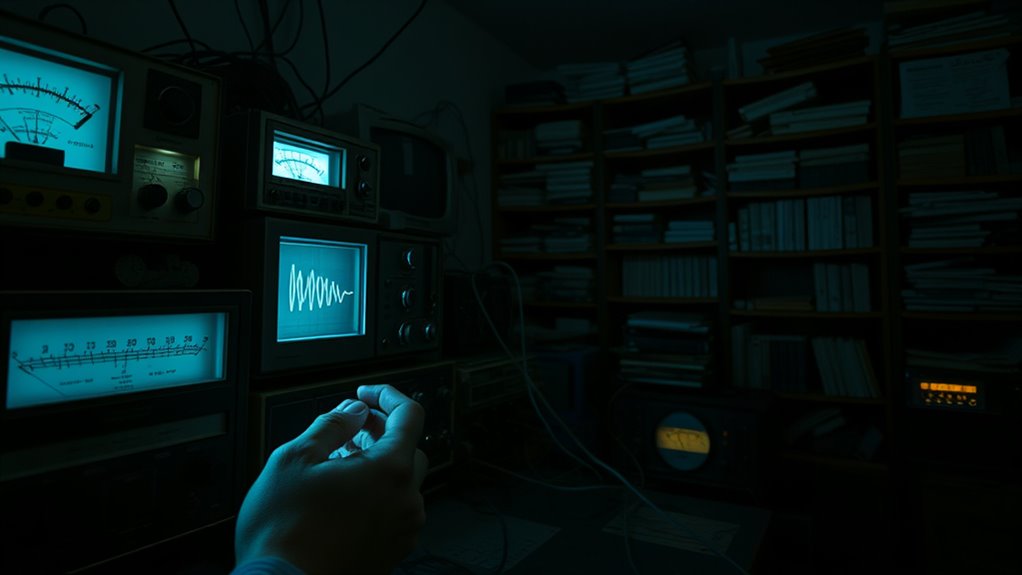
Number stations are mysterious shortwave radio broadcasts that transmit sequences of spoken numbers, words, or codes. These broadcasts have puzzled listeners and intelligence agencies alike for decades. Their encrypted messages are believed to be used for covert communication, especially during the Cold War era, when espionage was at its peak. You might wonder how these messages stay secret and how they’re sent without attracting attention. The answer lies in the advanced encryption techniques and the challenge of signal interception.
Encryption techniques are fundamental to understanding number stations. These broadcasts often employ simple yet effective methods to conceal their content. Some stations use one-time pads, which are theoretically unbreakable if used correctly, making it nearly impossible for anyone intercepting the signal to decode the message without the key. Others rely on more straightforward ciphers, shifting numbers or using predetermined patterns. The goal is to keep the message confidential while transmitting it over public airwaves. This encryption ensures that only the intended recipient, equipped with the key or method, can decipher the message. The complexity of these techniques varies, but the ultimate aim remains the same: secure, clandestine communication.
Number stations use simple yet effective encryption, like one-time pads and predetermined patterns, to keep messages secret over public airwaves.
Signal interception plays an essential role in the ongoing intrigue surrounding number stations. These broadcasts are intentionally designed to be difficult to track and decode. Signal interceptors—whether governments, spies, or hobbyists—monitor these transmissions, often without understanding their full meaning. Interception involves capturing the radio signals transmitted across vast distances, sometimes revealing patterns or timing that hint at their purpose. However, even if you can intercept these signals, decoding the message is another challenge altogether, especially when encryption techniques are in place. This cat-and-mouse game of interception and decryption has kept many researchers and intelligence agencies engaged, trying to uncover the secrets hidden within these mysterious broadcasts. Additionally, the use of specialized tools like signal analysis equipment aids in understanding these transmissions better.
Despite the advancements in technology, number stations continue to fascinate people because of their secrecy and historical significance. They serve as a reminder of a time when radio was a primary medium for espionage. You can’t help but marvel at how these simple-sounding broadcasts carry complex, encrypted information across borders without anyone knowing their true purpose. Whether they’re still actively used or remain as relics from a bygone era, number stations exemplify the art of covert communication, relying on encryption techniques and signal interception to keep their messages hidden from prying eyes.
Frequently Asked Questions
Who Typically Operates Number Stations Today?
Today, government agencies, especially intelligence services, operate number stations. You’ll notice they use cryptographic methods to encode messages, ensuring only intended recipients can decode them. They typically include station identification, like specific signals or codes, to verify the source. These stations remain active because they provide a secure, untraceable way for agents to communicate discreetly. So, if you hear unusual broadcasts, it’s likely a modern covert operation using these cryptic methods.
Are Number Stations Still Actively Broadcasting?
Yes, number stations still actively broadcast today. You can detect their signals through radio signal analysis, which traces their cryptography history and unique patterns. These broadcasts often use simple encryption methods, making them hard to decipher without specialized knowledge. Despite advances in technology, these stations continue to serve as covert communication channels, maintaining their mysterious presence in the radio spectrum, intriguing enthusiasts and security experts alike.
How Do Listeners Decode the Messages?
Think of decoding number station messages like cracking a secret code in a spy novel. You, as a listener, use cipher techniques—like frequency analysis or one-time pads—to decipher the broadcasts. Listener communities share tips and clues, helping each other improve. Sometimes, a dedicated hobbyist might recognize a pattern, turning a mysterious signal into understandable information. So, decoding involves both technical skills and collaborative effort among enthusiasts.
What Is the Origin of the Most Famous Stations?
You discover that the most famous number stations originate from Cold War espionage history, often linked to secret government agencies. These stations use complex cipher systems to encode messages, ensuring only intended recipients can decode them. Their origin is rooted in covert operations, making them a fascinating part of espionage history. By understanding their background, you gain insight into the covert methods used during tense international conflicts.
Have Any Number Stations Been Officially Identified?
You’ll find that some number stations have been officially identified, revealing their role in encrypted transmissions used for covert communication. Agencies like the CIA and NSA have occasionally acknowledged their existence, confirming these broadcasts served espionage purposes. While many stations remain unconfirmed, a few have been linked to specific intelligence operations. These identifications help decode their mysterious messages, shedding light on Cold War espionage tactics.
Conclusion
So next time you hear those eerie whispers on the radio, just remember—you’re tuned into a secret Cold War game, where mysterious voices keep the world guessing. Who knows? Maybe those cryptic broadcasts are just bored spies, or simply the universe’s way of reminding us that some mysteries are better left unsolved. Either way, enjoy the suspense, and don’t forget to keep your decoder ring handy—just in case.