

The disappearance of the Roanoke Colony remains one of history’s biggest mysteries. When John White returned in 1590, he found the settlement deserted, with only the word “CROATOAN” carved into a post. Many believe the colonists might have integrated with local tribes or moved elsewhere, but no definitive evidence has surfaced. Environmental factors and possible conflicts could also explain their disappearance. To uncover more about this puzzling event, keep exploring the story further.
Key Takeaways
- The Roanoke Colony disappeared between 1587 and 1590, with the only clue being the carved word “CROATOAN.”
- Theories suggest settlers integrated with Native tribes, moved to Croatoan Island, or were victims of environmental or hostile factors.
- Archaeological finds include European tools and signs of Native American habitation, but no definitive evidence explains their disappearance.
- Environmental challenges like storms, erosion, starvation, and disease may have contributed to the settlers’ mysterious fate.
- The lack of conclusive records and remains keeps the true story of the Lost Colony unresolved and continues to intrigue historians.
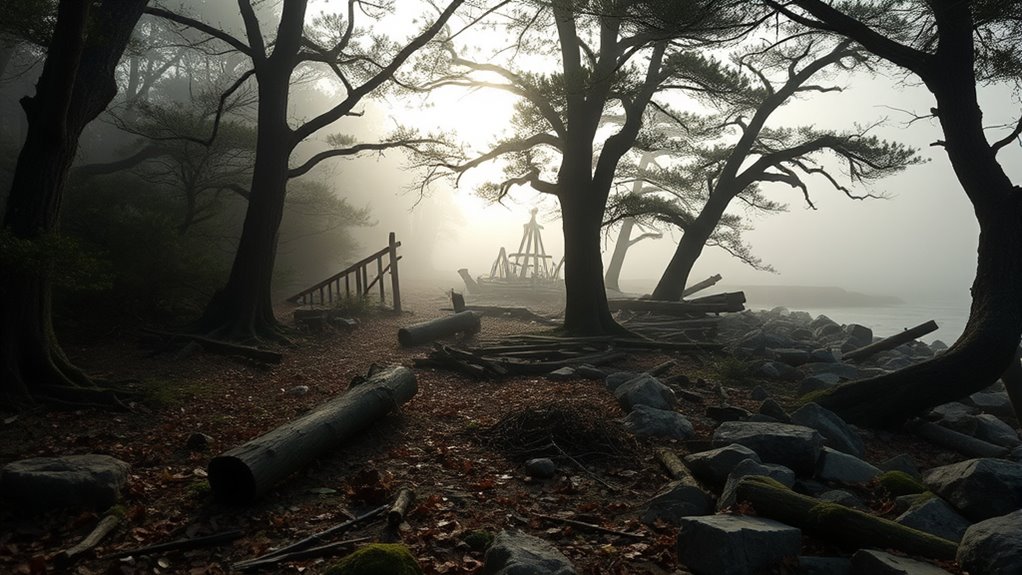
The disappearance of Roanoke Island remains one of the most enduring mysteries in American history. When you look into what happened to the settlers, you find that their sudden disappearance puzzled everyone for centuries. It all begins with European contact, which brought explorers and colonists to the New World. In 1587, a group of settlers, including John White, established a colony on Roanoke Island, off the coast of present-day North Carolina. White’s return to England for supplies and his subsequent delayed return left the colonists stranded. When he finally came back three years later, he found the settlement deserted, with no sign of the settlers. The only clue was the word “CROATOAN” carved into a post, which suggested the colonists might have moved to Croatoan Island (now Hatteras Island). Yet, no clear evidence explained what truly happened.
Throughout the years, many theories have emerged about the fate of the Lost Colony. Some suggest they integrated with local Native American tribes, which might explain the lack of remains or artifacts. Others propose they were wiped out by hostile tribes or harsh conditions. As you explore, you’ll find that archaeological evidence has played a vital role in unraveling this mystery. Over the centuries, archaeologists have uncovered artifacts and traces that hint at the settlers’ presence or their interactions with indigenous peoples. For example, some excavations have revealed European-style tools or items that could link the settlers to their European origins. Still, concrete evidence remains elusive, and no definitive proof has emerged to confirm what happened to the colonists. Additionally, the impact of environmental factors such as storms or erosion may have also contributed to the disappearance or destruction of physical evidence.
You might also consider that the settlers could have faced starvation, disease, or conflicts that wiped them out or forced them to disperse. The archaeological record shows signs of Native American habitation in the area, which might support the idea that the colonists joined local tribes for survival. However, the absence of human remains consistent with a violent attack or mass death leaves room for ongoing debate. The mystery deepens because the archaeological evidence, while suggestive, isn’t conclusive. No single find has definitively answered whether the colonists integrated, perished, or moved away.
In the end, the story of Roanoke’s disappearance remains shrouded in ambiguity. The combination of early European contact, limited archaeological evidence, and the absence of clear records keeps the mystery alive. Despite all the efforts to uncover the truth, you’re left with more questions than answers, making the Lost Colony a fascinating chapter of American history that continues to intrigue and puzzle us today.
Frequently Asked Questions
Were There Any Known Survivors After the Disappearance?
There are no confirmed survivors after the disappearance of the Roanoke colonists. While some theories suggest that a few may have survived by integrating into indigenous communities, evidence remains inconclusive. You should consider that colonial survival often depended on forming indigenous alliances, which could have helped some individuals adapt and survive. Still, the mystery persists, and no definitive records prove that anyone from the lost colony made it out alive.
What Specific Evidence Links the Colonists to the Local Tribes?
You uncover clues linking the colonists to local tribes through tribal alliances and artifact analysis. Suspense builds as archaeologists find European tools and pottery among indigenous sites, suggesting interaction. These artifacts, combined with oral histories of alliances and exchanges, point to a complex relationship. Every discovery hints at a story of survival, cooperation, or conflict, leaving you questioning whether the colonists integrated into the tribes or vanished into the wilderness.
Could the Disappearance Have Been Caused by Natural Disasters?
Natural disasters could’ve played a role in the colony’s disappearance, especially since colonial agriculture depended on stable weather and good soil. You might consider how British expeditions faced hurricanes or droughts that disrupted supply lines and weakened the settlers’ food sources. These events could’ve forced the colonists to leave or become vulnerable to conflicts with local tribes, ultimately leading to the mysterious disappearance of the Roanoke colony.
Are There Any Modern Theories Explaining the Colony’s Fate?
Modern theories suggest the colonial disappearance might be linked to integration with local tribes, conflicts, or even a drought. Some believe the settlers moved inland, others think they faced hostile encounters or disease. These explanations add layers to this historical mystery. You can explore how each theory attempts to piece together clues, revealing the complex and ongoing quest to understand what truly happened to the lost colony on Roanoke Island.
Have Any Artifacts From Roanoke Been Conclusively Linked to the Colonists?
You may wonder if any artifacts from Roanoke have been conclusively linked to the colonists. While some items, like certain tools and jewelry, show potential for authenticity, archaeologists rely heavily on rigorous archaeological methods to verify their origins. Currently, no artifacts have been definitively proven to belong to the colonists, but ongoing excavations and advanced analysis keep the possibility open for future discoveries that could confirm their connection.
Conclusion
You might find it fascinating that, despite centuries of mystery, over 100 theories try to explain Roanoke’s disappearance. Yet, no one knows for sure what happened to the 115 settlers. As you ponder this, remember that Roanoke’s fate remains one of history’s greatest puzzles. The island’s story reminds you how little we sometimes truly understand about the past, leaving you curious about what other secrets history might still be hiding.