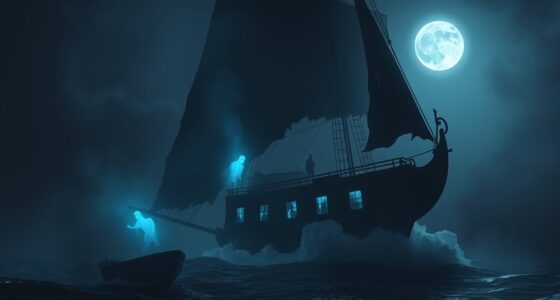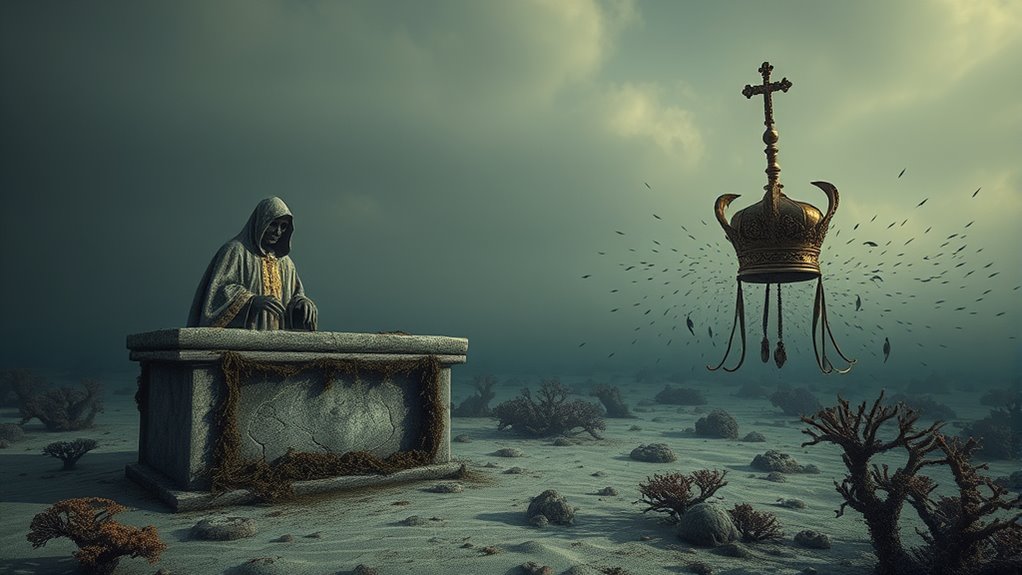

The legends of the Sea Monk and Sea Bishop are mysterious medieval tales that portray marine figures as divine symbols and moral warnings. You might see them as floating monks or bishops, often linked to shipwrecks or divine messages. These stories reflect how sailors and societies viewed the ocean as a spiritual battlefield overseen by divine forces. To uncover more about these intriguing legends and their true meanings, keep exploring these mystical marine mysteries.
Key Takeaways
- The Sea Monk and Sea Bishop are legendary marine figures symbolizing divine intervention and moral lessons in medieval shipwreck stories.
- These figures often appear as floating monks or bishops with halos, representing spiritual authority over the chaotic sea.
- Legends link their appearances to divine warnings, guidance, or punishment during maritime disasters.
- Marine symbolism in these legends reflects medieval views of the ocean as a spiritual battlefield and divine communication channel.
- Modern interpretations see these figures as embodying medieval beliefs about divine signs and the ocean’s spiritual significance.
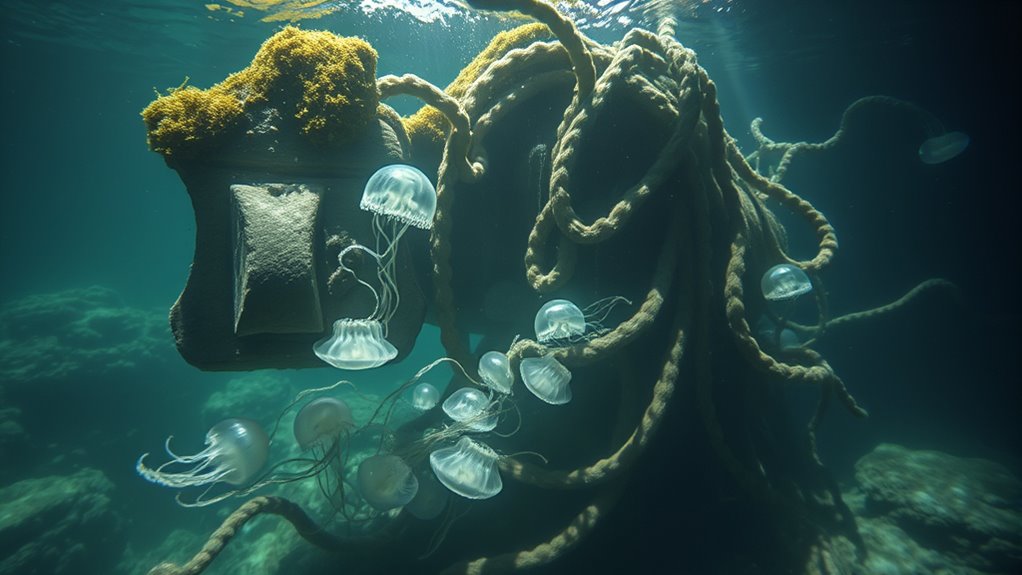
Have you ever wondered what secrets lie beneath the waves of the medieval world? The ocean has long been a kingdom of mystery and myth, where legends of shipwrecks and strange figures fuel stories passed down through generations. Among these tales, the legends of the Sea Monk and Sea Bishop stand out, cloaked in intrigue and marine symbolism. These stories aren’t just about lost ships; they’re about the symbols and messages hidden beneath the surface, waiting for curious minds to decode. When you hear about shipwreck legends from this era, you’re really exploring a tapestry of stories that blend fact, superstition, and spiritual symbolism. Many of these legends speak of monastic figures or bishops appearing amidst wreckage, often tied to divine messages or warnings. These figures are frequently depicted as floating monks or bishops clad in robes, sometimes with a halo or other divine symbols, emphasizing their connection to the spiritual domain. To medieval sailors and storytellers, such marine symbolism was more than mere imagery—it was a language conveying moral lessons, divine intervention, or warnings of impending doom.
The symbolism of the Sea Monk or Sea Bishop often reflects the medieval worldview, where the ocean was seen as both a threatening force and a spiritual battlefield. Shipwreck legends told of vessels lost to storms, but sometimes, the wrecks were attributed to the appearance of these monastic figures—guardians or punishers sent from divine powers. These stories served multiple purposes: they explained unexplained disappearances, reinforced religious beliefs, and warned sailors of divine wrath. The figures themselves symbolize a spiritual authority watching over the chaos of the sea, reminding sailors that their fate was intertwined with divine will. When you consider marine symbolism in these legends, it’s clear that they were meant to instill reverence and caution among seafarers, warning them to respect the ocean’s power and heed spiritual warnings. The legends often include descriptions of the figures offering guidance or judgment, reinforcing the idea that the sea was a place where divine forces could manifest in human form.
Understanding marine symbolism in these legends reveals how medieval societies interpreted the ocean as a spiritual domain, filled with signs and symbols that conveyed divine messages. These stories reveal how medieval societies interpreted the ocean as a spiritual domain, filled with signs and symbols that conveyed divine messages. The Sea Monk and Sea Bishop aren’t just figures of myth but representations of the profound connection between faith and the unpredictable power of nature. They serve as reminders that the sea, with all its dangers, was also a place where the divine could intervene and communicate through symbols that resonate even today. So, next time you hear about a shipwreck or a mysterious figure appearing from the depths, remember that beneath those stories lie layers of meaning rooted in medieval beliefs about marine symbolism and the enduring power of legends.
medieval marine legend books
As an affiliate, we earn on qualifying purchases.
As an affiliate, we earn on qualifying purchases.
Frequently Asked Questions
Are There Any Modern Sightings Similar to the Sea Monk?
Modern sightings of strange marine creatures resemble the historic sea monk, with cryptid sightings often describing eerie, monk-like beings or bizarre fish with unusual features. You might come across reports from sailors or divers claiming to see mysterious, humanoid figures or odd aquatic creatures that spark curiosity and skepticism alike. These cryptid sightings keep the mystery alive, blending folklore with possible real encounters, fueling ongoing debates about what lurks beneath the waves.
What Symbols Are Associated With the Sea Bishop Legend?
When you explore the legend of the Sea Bishop, you notice symbols like the bishop’s mitre and crozier, linked to ecclesiastical symbolism, emphasizing authority and spiritual power. Marine iconography often portrays him with a fish or sea creature, blending religious and ocean themes. Imagine sailors in terror, witnessing a figure with bishop’s robes emerging from stormy waters, embodying both divine judgment and mystery in this haunting legend.
How Did These Stories Influence Maritime Culture and Beliefs?
These stories deeply shaped medieval maritime folklore and nautical superstition, influencing sailors’ beliefs and behaviors at sea. You’d find that tales of mysterious monks and bishops fostered caution and awe, reinforcing the idea that the sea held divine or supernatural forces. Such legends heightened sailors’ respect for the ocean’s power, encouraging superstitions like avoiding certain waters or performing rituals, ultimately impacting maritime culture and safety practices for generations.
Were There Any Scientific Explanations for These Marine Mysteries?
You might find that scientific explanations for these marine mysteries stem from marine biology, such as misidentified sea creatures like giant squids or whales, and natural phenomena like bioluminescence. Nautical folklore often shaped stories to explain strange sightings, blending myth with reality. While these stories captivated imaginations, modern science suggests many mysteries had natural origins, helping shift perceptions from superstition to understanding marine life better.
Have Any Artifacts or Relics Been Linked to the Sea Monk or Sea Bishop?
You’ll find no confirmed medieval relics or maritime artifacts directly linked to the Sea Monk or Sea Bishop. Despite numerous claims and myths, archaeological evidence remains elusive. Some enthusiasts speculate that certain medieval relics or maritime artifacts might be connected, but no concrete proof exists. If you’re interested, exploring maritime artifacts from the era could reveal clues, but currently, the connection remains speculative and unverified.
nautical spiritual symbolism art
As an affiliate, we earn on qualifying purchases.
As an affiliate, we earn on qualifying purchases.
Conclusion
So, as you ponder these eerie tales of the sea monk and sea bishop, do you really think they were just myths or hidden truths from the past? These stories remind us that the ocean still holds many secrets, waiting to be uncovered. Whether myth or mystery, they spark curiosity and wonder about what lies beneath the waves. Are we prepared to accept that some marine mysteries might never be fully explained?
maritime shipwreck divination artifacts
As an affiliate, we earn on qualifying purchases.
As an affiliate, we earn on qualifying purchases.
ocean mythology collectible figurines
As an affiliate, we earn on qualifying purchases.
As an affiliate, we earn on qualifying purchases.