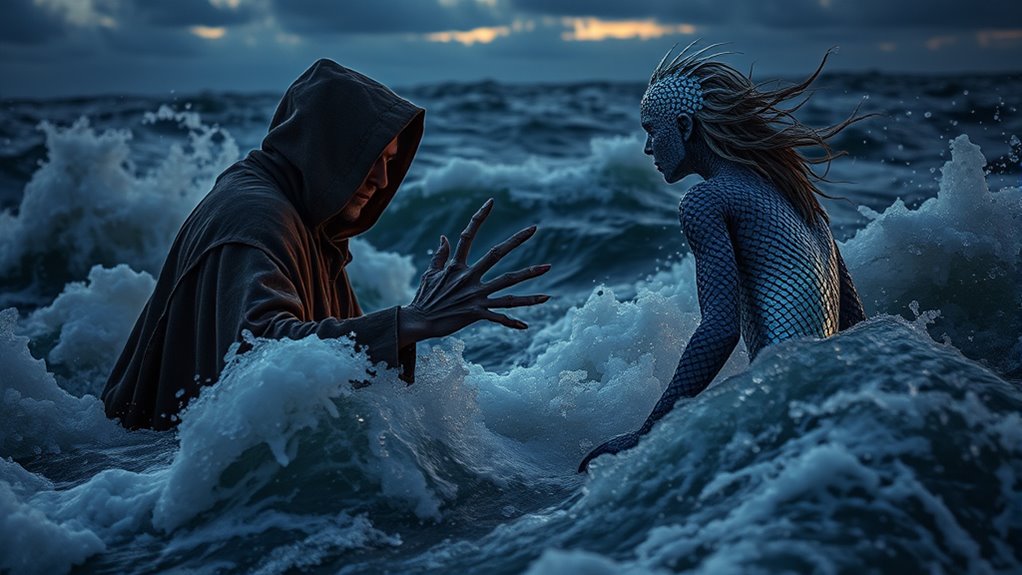

In medieval times, people often confused the Sea Monk with the Merman because both mythic figures emerged from oceanic mysteries, but they symbolized different ideas. The Sea Monk represented spiritual purity, divine power, and humility, while the Merman embodied temptation, danger, and worldly allure. This confusion reflected how society perceived the sea as both sacred and dangerous. If you keep exploring, you’ll uncover more about how these legends shaped cultural views of the ocean’s secrets.

Prime made for students and young adults
- Fast, free delivery for dorm and study essentials
- Prime Video and Amazon Music included
- Member-only deals
Key Takeaways
- The Sea Monk is a medieval myth representing spiritual purity and divine mystery, often depicted as a hermit-like figure in the sea.
- Mermen are widespread mythological beings symbolizing temptation, danger, and the ocean’s dual nature across various cultures.
- Confusion arises because both are marine figures in medieval stories, but the Sea Monk emphasizes spirituality, while mermen embody worldly allure.
- The Sea Monk symbolizes divine salvation and humility, contrasting with the merman’s association with temptation and treasures.
- Medieval stories often conflate or confuse these figures, blending themes of divine mystery with earthly temptation, fueling legends and misunderstandings.
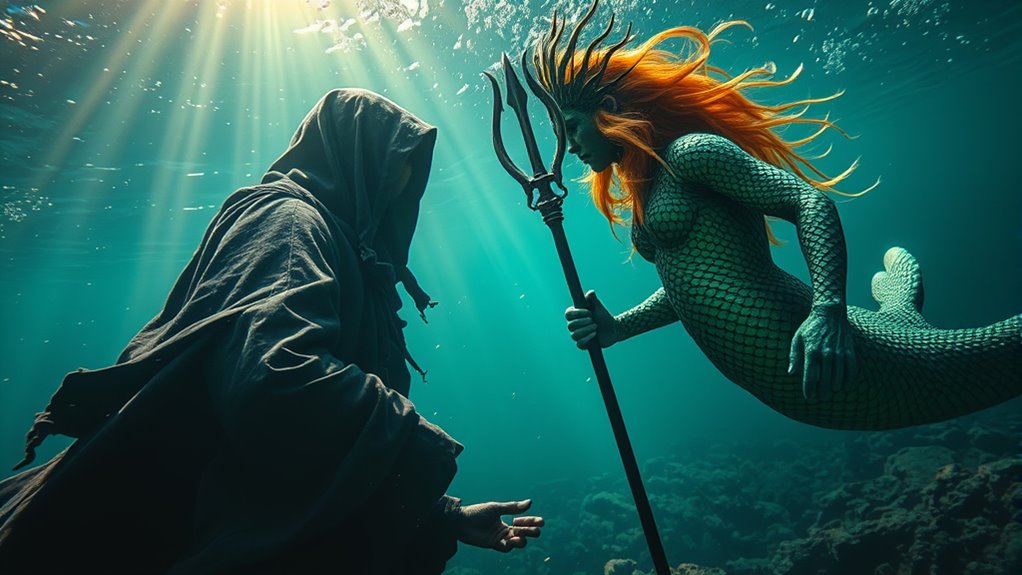
Have you ever wondered what would happen if the mysterious Sea Monk clashed with the legendary Merman? In medieval times, stories and legends about these oceanic beings sparked curiosity and fear, blending myth with reality. The Sea Monk’s origins trace back to mythical origins rooted in the religious and cultural symbolism of the Middle Ages. Often depicted as a hermit-like figure, the Sea Monk appears in tales as a solitary monk who mysteriously lives beneath the waves, embodying spiritual purity and divine mystery. These stories weren’t just about a strange creature; they carried deeper meanings, symbolizing the unknown dangers of the sea and mankind’s quest for spiritual salvation in the face of nature’s vastness. The Sea Monk’s myth served as a reminder of humility and the divine power that governs the oceans, making it a potent symbol in medieval culture. Additionally, the Sea Monk’s religious symbolism highlights the medieval tendency to interpret natural phenomena through spiritual lenses.
On the other hand, the Merman, a creature with the upper body of a human and the tail of a fish, has equally rich mythical origins. Its stories stretch across many cultures, from European folklore to Asian legends, often representing the allure and peril of the sea. The Merman is more than just a myth; it’s a symbol of the duality of the ocean—both life-giving and dangerous. In medieval times, the Merman was seen as a guardian of hidden treasures and secrets beneath the waves, embodying mankind’s fascination with the mysterious depths. Its cultural symbolism revolves around temptation, danger, and the unknown, making it a powerful figure in stories that warn sailors of the ocean’s unpredictable nature. Unlike the solitary Sea Monk, the Merman is often portrayed as a more active, sometimes mischievous, presence in legends. Its mythic origins reflect humanity’s desire to explain the unexplainable and to personify the sea’s unpredictable character.
In medieval stories, these two figures often appeared in tales of encounters, where their contrasting symbolism and mythic origins created confusion and wonder. The Sea Monk’s spiritual symbolism clashed with the Merman’s worldly allure, embodying the tension between divine purity and earthly temptation. To you, these stories might seem like simple legends, but they reveal how medieval cultures viewed the ocean’s mysteries—both as spiritual battlegrounds and as realms of temptation. Whether as symbols of divine mystery or earthly allure, both the Sea Monk and the Merman reflect humanity’s enduring fascination with the sea’s secrets and its role in shaping cultural identities. Their mythical origins and symbolism continue to evoke intrigue, reminding us of the rich tapestry of medieval storytelling and the universal desire to understand the unknown.
As an affiliate, we earn on qualifying purchases.
Frequently Asked Questions
Are Sea Monks Real or Mythical Creatures?
Sea monks are mythical beings from marine folklore, not real creatures. Historically, sailors and explorers described strange, monk-like figures in the ocean, which fueled stories and legends. These sightings likely stem from misidentifications of marine life or hallucinations. While fascinating, there’s no scientific evidence supporting their existence. So, you can consider sea monks as part of myth, reflecting human imagination and the mysterious nature of the sea.
How Did Sea Monks Influence Medieval Maritime Beliefs?
Some might dismiss sea monks as mere legend, but their marine symbolism deeply influenced medieval maritime beliefs, blending religious influence with local lore. You see, sailors and monks alike saw these creatures as divine or ominous signs, shaping navigation and spiritual outlooks at sea. Their presence reinforced the idea that the ocean was sacred and mysterious, inspiring both awe and caution, which impacted maritime culture and navigation practices profoundly.
What Are the Origins of Merman Legends?
You might find that merman legends originate from ancient marine symbolism and folklore origins, blending human and aquatic traits to symbolize mystery and power. These tales likely emerged in coastal cultures where sailors and fishermen encountered sea creatures, inspiring stories that reinforced respect for the ocean. Over time, these legends evolved, reflecting cultural beliefs and fears about the unknown depths, shaping the enduring myth of the merman in maritime folklore.
Do Sea Monks Appear in Any Ancient Texts?
You’ll find that sea monks appear in some ancient texts, often blending marine spirituality with monastic symbolism. These stories depict hermits or monks living near or within the sea, embodying spiritual reflection and divine connection. Medieval writers sometimes used sea monks symbolically to represent spiritual purity or isolation. While not widespread, these figures highlight how marine spirituality influenced monastic symbolism, illustrating humanity’s fascination with the divine and the ocean’s mysteries.
How Do Sea Monk and Merman Depictions Differ Across Cultures?
You’ve heard the saying “a picture is worth a thousand words,” and in cultural symbolism, depictions of sea monks and mermen reveal diverse meanings. Across cultures, sea monks often symbolize spiritual devotion, depicted as mysterious, robed figures in artistic interpretations. Mermen, however, usually embody allure and danger, shown with fish tails and human features. These differences reflect unique cultural narratives and artistic styles, shaping how each is viewed worldwide.
As an affiliate, we earn on qualifying purchases.
Conclusion
Now that you’ve uncovered the truth, you realize the sea monk and merman are worlds apart—one a haunting legend, the other a majestic myth. You’d be forgiven for thinking they’re the same, but their stories are as different as night and day. As you dive deeper into history, you see how medieval confusion turned simple tales into legends that still echo through the ages. These stories are truly the most fantastical secrets of the sea!
As an affiliate, we earn on qualifying purchases.
marine mythological figures collectibles
As an affiliate, we earn on qualifying purchases.
As an affiliate, we earn on qualifying purchases.
Halloween Picks
halloween
As an affiliate, we earn on qualifying purchases.