
The Serpopard is a mythical creature from ancient Egyptian mythology, blending a leopard’s body with serpent-like traits. You’ll see it on artifacts like seals and amulets, symbolizing divine harmony, strength, and protection. Its design reflects how Egyptians viewed the natural world and divine forces as interconnected. If you’re curious to explore more about this fascinating creature’s origins, symbolism, and cultural significance, there’s much more to discover beyond the basics.
Key Takeaways
- The Serpopard is a mythical Egyptian creature combining a leopard’s body with serpent-like features, symbolizing power and divine harmony.
- It frequently appears on ancient Egyptian seals and amulets, representing protection, strength, and spiritual balance.
- The creature embodies the Egyptian worldview of interconnectedness between life, death, rebirth, and divine forces.
- Originating from imaginative craftsmanship, the Serpopard symbolizes divine wisdom and royal authority in Egyptian art.
- It reflects Egypt’s sophisticated use of animal symbolism to communicate complex spiritual and societal ideals.
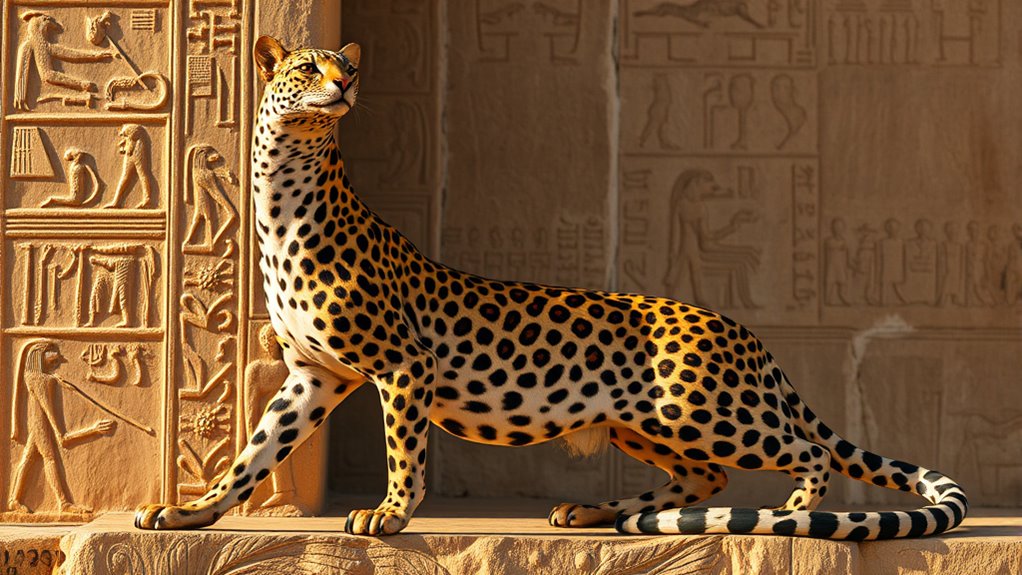
Have you ever wondered about the mysterious creatures that adorned ancient Egyptian mythology? One such intriguing figure is the Serpopard, a mythical creature whose image has fascinated archaeologists and historians alike. This creature’s origins are deeply rooted in Egyptian symbolism, representing a blend of power, agility, and harmony. The Serpopard appears on ancient artifacts, like carved seals and amulets, illustrating its significance within Egyptian culture and spiritual beliefs. Its distinctive body combines the long neck and body of a leopard with the serpent-like features of a snaking neck, creating a creature that seems both fierce and graceful. Understanding its mythic creature origins helps reveal how the ancient Egyptians viewed the natural world and the divine forces they believed governed it.
The Serpopard symbolizes Egypt’s divine harmony through its fierce yet graceful mythical form.
The Serpopard’s design likely stems from a desire to symbolize the unity between two powerful forces: the feline predator and the serpent, both of which held essential roles in Egyptian mythology. The leopard, known for its strength and agility, was often associated with royalty and protection, while the serpent symbolized rebirth, eternity, and divine wisdom. Combining these elements, the Serpopard embodies a complex harmony—an embodiment of balance and strength. Its presence in Egyptian art suggests it was more than just a creature; it was a symbol representing the interconnectedness of life, death, and rebirth, as well as the divine order that the Egyptians sought to maintain.
The origins of this mythical creature, however, are shrouded in mystery, as no real creature closely resembles it in nature. Some scholars believe that the Serpopard originated from the imagination of ancient artisans, inspired by real animals like leopards and snakes, but amplified through their spiritual and symbolic lens. Its depiction on seals and pottery indicates it played a role in religious rituals or royal insignias, emphasizing its importance in the cultural fabric of ancient Egypt. The creature’s stylized form also hints at a divine or mythic quality—something beyond the physical world, representing ideals rather than literal animals. This blending of symbolism and artistic imagination helped forge a creature that remains an enduring symbol of Egyptian mythology, embodying the complex relationship between nature, spirituality, and kingship.
Additionally, the Serpopard’s mythic origins reflect a sophisticated understanding of animal symbolism as a way to communicate divine principles and societal values within Egyptian culture. In essence, the Serpopard’s mythic creature origins reflect a vivid tapestry of Egyptian symbolism, where animal forms serve as potent symbols of divine principles. Its unique design illustrates how the ancient Egyptians used myth and art to express ideas about power, protection, and eternity. By understanding its origins, you gain insight into how this mysterious beast encapsulates the spiritual worldview of a civilization that saw animals as more than mere creatures—they were vital symbols connecting the mortal and divine realms.
Frequently Asked Questions
What Symbols Is the Serpopard Associated With in Egyptian Art?
You’ll notice the Serpopard symbolism in Egyptian art, where it often appears intertwined with other mythological figures. It’s associated with Egyptian mythological representations of chaos and protection, symbolizing the unification of Upper and Lower Egypt. The Serpopard’s long neck and powerful build highlight its role as a guardian and a symbol of strength. Its imagery emphasizes harmony and balance, making it a significant emblem in ancient Egyptian culture and art.
Are There Any Known Real Animals That Inspired the Serpopard Myth?
Did you know that the serpopard might be inspired by real animals like leopards or big cats? While no single animal directly matches its mythological form, its long neck resembles that of a giraffe, blending real animal traits with mythological significance. This creature symbolizes power and unity in Egyptian art, reflecting both actual animal features and deeper cultural meanings. Therefore, its mythological significance ties back to these fascinating possible real animal inspirations.
Has the Serpopard Appeared in Modern Popular Culture or Media?
You’ll find the serpopard in modern media, especially in video games, movies, and artwork inspired by ancient Egypt. Its striking image appears in popular culture as a symbol of mystery and myth. For example, the serpopard in pop culture often appears in fantasy games or as part of museum exhibitions showcasing Egyptian art. Its unique blend of a lion and serpent makes it a mesmerizing creature that continues to inspire creative works today.
What Materials Were Used to Craft Serpopard Depictions in Ancient Artifacts?
You see that ancient depictions of the serpopard were crafted using carved stone or ivory, showcasing skilled ancient carving techniques. Artists often painted these images with mineral pigments, creating vibrant colors that have endured over millennia. They used natural minerals like malachite and ochre to produce reds, greens, and yellows. These methods highlight the Egyptians’ mastery of both carving and mineral pigment usage, bringing the mythical creature to life on their artifacts.
Did the Serpopard Have Any Specific Religious or Ceremonial Significance?
You see, the serpopard held significant spiritual symbolism and played a role in ancient rituals. It represented chaos and rebirth, embodying the power of divine forces. During ceremonies, its imagery was used to invoke protection and harmony, reflecting its sacred status. Its presence in artifacts highlights its importance in religious beliefs, serving as a guardian and a symbol of cosmic order in ancient Egyptian spirituality.
Conclusion
As you imagine the serpopard, picture a creature woven from the threads of ancient dreams, its serpent-like neck entwined with a powerful feline body. It stands as a guardian of secrets, blending grace and mystery in a dance as old as time. This mythical beast, born from Egypt’s rich imagination, invites you to see history not just as stories, but as living dreams that still whisper in the shadows of your mind.