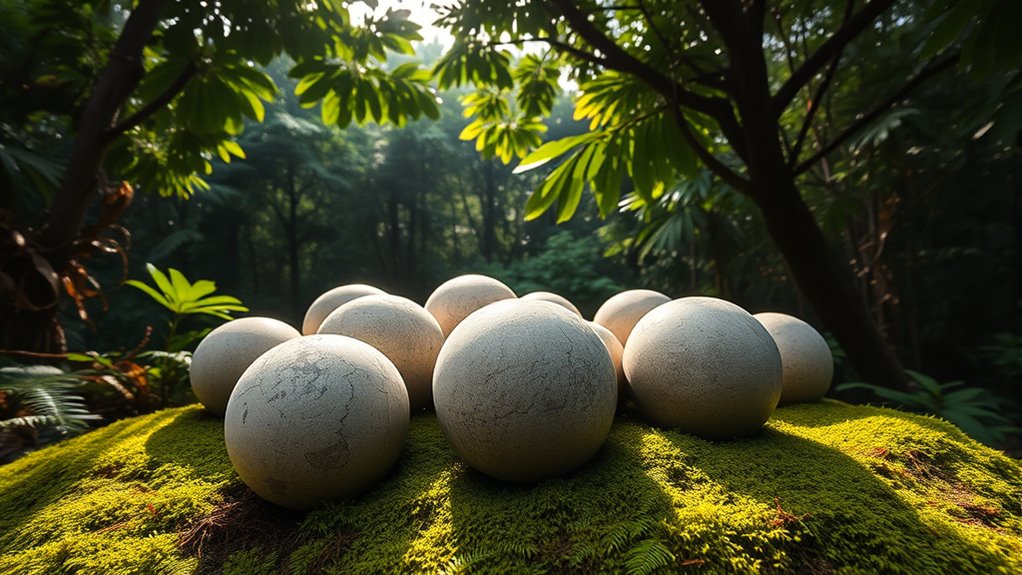

The stone spheres of Costa Rica are a fascinating mystery that sparks debates about their origin. While some speculate they could be alien artifacts, most evidence points to advanced human craftsmanship by ancient Costa Rican societies. These perfect, massive stones likely served cultural or spiritual purposes, with deliberate placement and sophisticated techniques. If you want to uncover the secrets behind their creation, significance, and ongoing debates, there’s much more to explore in their compelling history.
Key Takeaways
- The spheres are crafted with advanced stone-working skills, indicating human craftsmanship rather than extraterrestrial origin.
- Their deliberate placement and cultural significance suggest they are artistic and ceremonial artifacts of ancient Costa Rican societies.
- No definitive scientific evidence supports an alien origin; most researchers view them as human-made cultural symbols.
- The spheres’ mysterious origins and purpose have fueled speculation, but current evidence aligns more with artistic or ritual use.
- The ongoing archaeological debate emphasizes their role as cultural artifacts, not extraterrestrial objects.
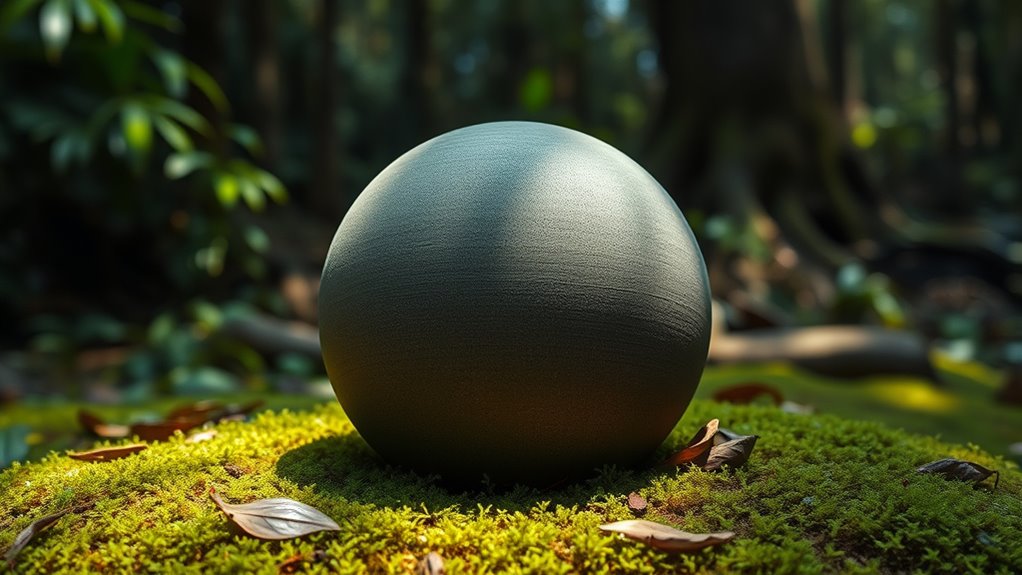
The Stone Spheres of Costa Rica are one of the country’s most intriguing archaeological mysteries. You might wonder how these perfectly round, massive stone balls came to be, especially considering their mysterious origins. Despite extensive research, no definitive explanation exists, which only deepens the intrigue. Some believe they were created by ancient peoples for practical purposes, while others see them as symbols of spiritual or cultural significance. What’s clear is that these spheres hold a special place in Costa Rican history, and understanding their purpose can give you a glimpse into the ancient society that crafted them.
The mysterious purpose of Costa Rica’s ancient stone spheres remains a captivating archaeological enigma.
As you explore the significance of these spheres, you’ll discover that their cultural importance isn’t fully understood. Many experts think they served as markers for territorial boundaries, ceremonial objects, or symbols of status within the community. The craftsmanship suggests a sophisticated knowledge of geology and stone working, which indicates an advanced level of skill. They were likely associated with religious or social practices, perhaps representing celestial bodies or serving as offerings to deities. These interpretations highlight just how much the spheres might have meant to their creators, making them more than just carved stones — they’re potentially a window into the beliefs and social structures of the ancient Costa Rican peoples.
You’ll also notice that the placement of the spheres adds to their mystery. Found in various locations across the Diquis Delta and surrounding areas, some are positioned along ancient pathways or near archaeological sites. This strategic positioning hints at their cultural significance, possibly serving as navigational aids or ritual focal points. The fact that many of these spheres were placed with such precision suggests that their creators placed importance on their arrangement, which could have been linked to spiritual beliefs or community rituals. Exploring their locations and how they relate to other artifacts can deepen your understanding of their cultural relevance and the society that built them.
Despite the ongoing debates, the allure of the Stone Spheres remains intact because they embody a blend of mystery, craftsmanship, and cultural depth. As you ponder their origins, consider how they might have played a crucial role in ancient ceremonies or social hierarchies. Their mysterious origins continue to spark curiosity, and their cultural significance offers a rich narrative about the people who once inhabited this land. Far from just stones, they are a testament to human ingenuity and the enduring power of cultural expression, inviting you to imagine a complex society capable of creating such enigmatic and enduring symbols. Additionally, recent advancements in archival research have helped uncover more details about their historical context, shedding light on the society that created them.
Frequently Asked Questions
Who Created the Stone Spheres and How Long Ago?
You might wonder who created the stone spheres and how long ago. Archaeological debates suggest they were crafted by the Diquis culture around 600 CE, but some myth versus reality stories speculate ancient aliens or lost civilizations. Despite the mystery, most experts agree local artisans made these perfect spheres, showcasing impressive craftsmanship for their time, and they remain an intriguing symbol of Costa Rica’s rich history.
Are the Stone Spheres Protected as Cultural Heritage Sites?
Like guardians of a lost world, the stone spheres are protected as cultural heritage sites in Costa Rica. You should know that their preservation is essential for cultural preservation and understanding their archaeological significance. Authorities recognize their importance, ensuring they’re safeguarded from damage and vandalism. By protecting these mysteries, you help maintain their historical value, allowing future generations to marvel at their craftsmanship and the stories they silently hold.
What Materials Were Used to Craft the Spheres?
You find that the stone spheres were crafted from granite and sandstone, chosen for their durability. Their geological origins reveal local volcanic activity, providing the raw materials. Skilled artisans used craftsmanship techniques like pecking, polishing, and grinding to shape the spheres with remarkable precision. These methods highlight the sophisticated craftsmanship of their creators, showcasing cultural significance and advanced stone-working skills that continue to fascinate today.
Have There Been Any Recent Discoveries Related to the Spheres?
Recent discoveries from modern excavations reveal new insights into the ancient craftsmanship behind the Costa Rican stone spheres. Archaeologists have uncovered additional spheres and related artifacts, helping to better understand their purpose and construction methods. These findings suggest a sophisticated level of skill and cultural significance, fueling ongoing debates. You can explore these latest discoveries to appreciate how modern excavations continue to shed light on these intriguing, ancient masterpieces.
Are There Similar Artifacts Elsewhere in the World?
You’ll find similar artifacts worldwide, like the carved stone spheres in Guatemala and the Easter Island moai, symbolizing ancient craftsmanship and cultural significance. These relics ignite archaeological debates about their purpose and creators. Like Costa Rica’s spheres, they serve as silent storytellers of past civilizations’ ingenuity. Exploring these connections deepens your understanding of human history, revealing that artistry and mystery transcend borders, uniting us through shared ancient traditions.
Conclusion
So, when you look at these mysterious stone spheres, you realize they’re more than just rocks — they’re a puzzle waiting to be solved. Whether they’re alien artifacts or simply amazing art, one thing’s clear: they’ve got everyone talking. Don’t judge a book by its cover, right? These spheres remind us that sometimes, the biggest mysteries are right in our backyard, just waiting for someone like you to piece the story together.