
In early modern Europe, werewolf trials fueled by widespread superstitions led to brutal punishments based on flimsy evidence and confessions obtained under torture. Society’s fears of evil and witchcraft made accusations easy, often targeting marginalized individuals. Trials reinforced paranoia, resulting in condemnations by community courts. If you keep exploring, you’ll uncover how these fears shaped societal behavior and the harsh justice system that punished supposed werewolves with devastating consequences.
Key Takeaways
- Werewolf trials were driven by widespread beliefs in supernatural threats and societal fears during early modern Europe.
- Accusations often relied on flimsy evidence, confessions under torture, and spectral testimonies rather than objective proof.
- Trials targeted marginalized individuals, with confessions and spectral evidence leading to executions like burning or hanging.
- Fear of werewolves fueled social hysteria, witch hunts, and reinforced existing prejudices and social control.
- Legal procedures lacked fairness, with confessions obtained under duress playing a central role in convicting suspects.

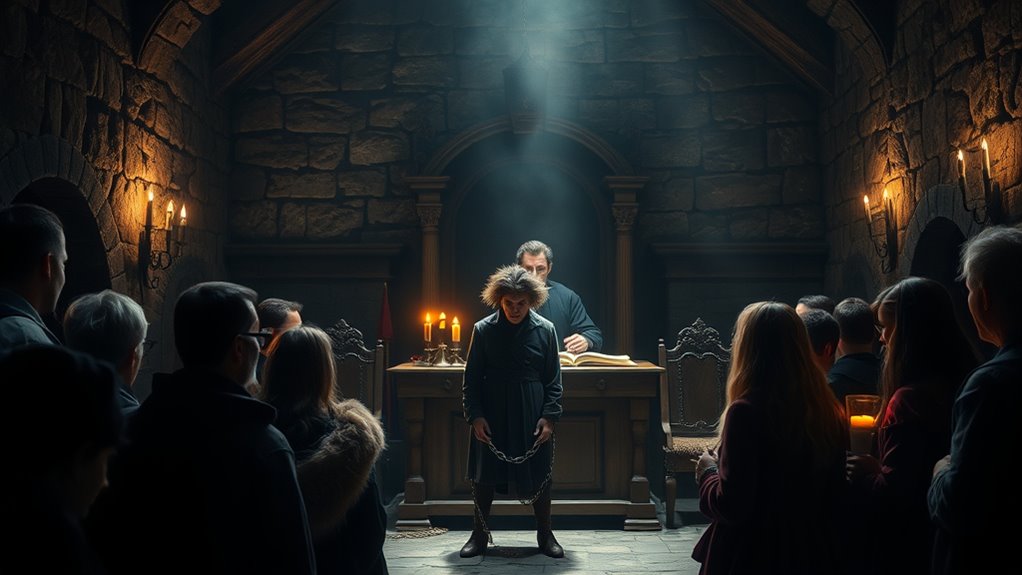
Have you ever wondered why so many people in early modern Europe believed in and accused others of being werewolves? During this period, fears of supernatural threats like werewolves, witches, and demons ran rampant, fueling a wave of witchcraft accusations that often led to brutal legal proceedings. These accusations weren’t made lightly; they reflected deep-seated anxieties about morality, social order, and the unknown. When someone was suspected of being a werewolf, it wasn’t just about superstition—authorities saw it as a threat to community stability. Legal proceedings against suspected werewolves usually followed a pattern: accusations were made, often based on flimsy evidence or local rumors, and then formal trials would ensue. In these trials, the burden of proof was minimal, and confessions—sometimes extracted under torture—played a significant role. The courts, influenced by a mix of religious fervor and societal fears, often saw confessions as confirmation of guilt, regardless of their validity.
Witchcraft accusations and werewolf fears were closely intertwined, with many believed that werewolves were witches who could transform into wolves to commit evil acts. These beliefs made the legal process more severe; suspects could be accused of both witchcraft and lycanthropy, leading to a series of accusations that spiraled into mass hysteria. Once accused, individuals faced interrogation methods designed to elicit confessions, which often involved torture or threats. The legal proceedings lacked fairness by today’s standards, as guilt was often presumed, and evidence was secondary to spectral testimonies or confessions. The accused had little chance to defend themselves, and the social stigma of being labeled a werewolf or witch sealed their fate.
Executions followed swiftly after conviction, usually by burning or hanging, reinforcing the brutal nature of these trials. The community’s fear and suspicion created a cycle: accusations led to trials, which confirmed fears, leading to more accusations. The legal system at the time prioritized social conformity and religious orthodoxy over justice, making these proceedings not just about law but about controlling societal fears. Many of these trials targeted marginalized individuals—those who didn’t fit societal norms or who had conflicts with neighbors—highlighting the role of suspicion and prejudice. Ultimately, these witchcraft accusations and legal proceedings created a climate of paranoia, where fear of werewolves and witches fueled a terrifying and often deadly pursuit of supposed evil.
Frequently Asked Questions
What Inspired the Witch-Hunt Mentality Behind Werewolf Trials?
You’re inspired by superstitious beliefs and legal precedents that fueled the witch-hunt mentality behind werewolf trials. People feared supernatural threats, believing werewolves were real and dangerous. Authorities relied on existing legal frameworks to prosecute suspected werewolves, reinforcing hysteria. This combination of superstition and legal tradition created a climate where accusations spread rapidly, leading to widespread trials and executions based on fear, ignorance, and societal pressures.
Were There Any Notable Differences Between Regions in Trials?
You’d be amazed at how regional variations and cultural influences made werewolf trials feel like different worlds! In some areas, trials focused on dark magic and satanic pacts, while others emphasized curses and local folklore. For example, in France, trials often involved accusations of shape-shifting, whereas German regions linked werewolves to social rebellion. These differences highlight how local beliefs and customs shaped the terrifying spectacle of each trial.
How Did Accusations Typically Originate in Communities?
Accusations usually started from community gossip or local conflicts, where fear and suspicion ran high. You’d hear whispers or rumors about someone acting strangely, which quickly spread among neighbors. Often, disagreements or disputes turned into accusations of werewolf activity as a way to explain misfortunes or resolve conflicts. These accusations could escalate rapidly, fueled by fear, misunderstanding, and the community’s desire to find a scapegoat for their problems.
Were There Any Surviving Records of Trial Testimonies?
You can find surviving records of trial testimonies from early modern Europe. These documents often include witchcraft confessions, revealing what accused individuals admitted under pressure. The testimonies provide insight into the accusations, and trial durations varied widely, sometimes lasting weeks or months. These records help us understand the intense interrogations and societal fears that fueled the werewolf and witchcraft persecutions during that period.
How Did Societal Fears Influence the Legal Proceedings?
You’re caught between superstition and rationality, as societal fears fueled superstitious beliefs that heavily influenced legal proceedings. During moral panics, authorities often accepted accusations without solid evidence, shaping trials to reflect collective anxieties. This environment led to biased testimonies, where fear overrode justice, and confessions became tools for social control. Your understanding reveals how societal fears can distort justice, turning ordinary individuals into suspects based on paranoia rather than fact.
Conclusion
So, as you reflect on these werewolf trials, it’s clear how fear and superstition shaped justice in early modern Europe. Do you wonder how different our view of justice would be if we let fear override reason? These trials remind us that, even now, societal fears can drive actions that seem irrational. Understanding these events helps us see the importance of critical thinking and compassion in confronting fear—lessons that remain relevant today.