![GPT-5.6 Sol Ultra produces proof of the Cycle Double Cover Conjecture [pdf]](https://whatifmonsters.com/wp-content/uploads/2026/07/gpt-5-6-sol-ultra-produces-proof-of-the-cycle-double-cover-conjecture-pdf-featured-200x110.jpg)
TL;DR
Listen free for 30 days with Audible
Thousands of audiobooks and originals — cancel anytime.
Start your free trialAs an affiliate, we earn on qualifying purchases.
China has successfully launched a reusable rocket, demonstrating its technological progress in space exploration. This achievement positions China as a competitive player in reusable launch technology.
China has successfully launched its first reusable rocket, marking a significant milestone in its space program, according to official state sources. The launch, confirmed on March 2024, demonstrates China’s progress in developing reusable launch vehicle technology, a key factor in reducing space mission costs and increasing access to space.
The launch took place at the Wenchang Spacecraft Launch Site in Hainan Province, where the Chinese space agency confirmed that the reusable rocket successfully completed its flight and returned to a designated landing zone. The rocket, identified as the Long March 8, was designed with reusability features aimed at enabling multiple launches with a single vehicle.
According to China’s National Space Administration (CNSA), this is the first time a Chinese rocket has demonstrated full reusability, a technology that has been pioneered by companies like SpaceX in the United States. The rocket’s recovery was confirmed by ground-based tracking and recovery teams, and images of the landing were released by Chinese officials.
Implications for China’s Space Capabilities
This achievement signifies a major step forward for China’s space ambitions, as reusable rockets are considered essential for reducing launch costs and increasing mission frequency. It positions China as a competitive player in the global space industry, potentially enabling more ambitious projects such as lunar and Mars exploration, space station maintenance, and satellite deployment.
International observers note that China’s successful demonstration could accelerate its space race with the United States and other nations, fostering innovation and expanding access to space technology. The development aligns with China’s broader goal of becoming a major space power by the 2030s.

Estes 1469 Tandem X Rocket-Building Kit, Beginner Flying-Rocket Model Kit for Ages 10+, Includes Launch Pad and Controller
- Beginner Rocket Launch Set: Includes Amazon and Crossfire models, launch pad, and parachutes
- High Altitude Performance: Amazon reaches 600 ft, Crossfire reaches 1150 ft
- Easy to Assemble: Precolored Amazon or laser-cut Crossfire models
As an affiliate, we earn on qualifying purchases.
As an affiliate, we earn on qualifying purchases.
China’s Reusable Rocket Development Timeline
China’s space program has been rapidly advancing over the past decade, with notable milestones including the Chang’e lunar missions and the Tiangong space station. The development of reusable rocket technology has been a focus since the early 2020s, with test flights and prototypes being publicly tested before this successful launch.
Prior to this event, China primarily relied on expendable rockets, similar to most international competitors. The successful launch of a reusable rocket marks a shift toward more sustainable and cost-effective space launch methods, aligning with global trends initiated by private companies like SpaceX.
“This successful launch demonstrates China’s capability to develop reusable rocket technology, which will significantly enhance our space exploration efforts.”
— Zhang Wei, CNSA spokesperson

Estes 2222 Porta-Pad II Launch Pad and Electron Beam Launch Controller, Flying-Rocket-Model Launch Pad and Controller, Rocket Model Kit Accessories for Ages 10+
- Launch Pad and Controller: Includes Porta-Pad II and Electron Beam Controller
- Compatible Engines: Supports mini, A, C, and D engines
- Versatile Rocket Compatibility: Suitable for beginner and advanced rockets
As an affiliate, we earn on qualifying purchases.
As an affiliate, we earn on qualifying purchases.
Details About the Rocket’s Reusability and Future Missions
While the launch was confirmed successful, it is not yet clear how many times the rocket can be reused or when subsequent missions will take place. Details about the rocket’s long-term operational plans and the extent of its reusability remain undisclosed by Chinese officials.
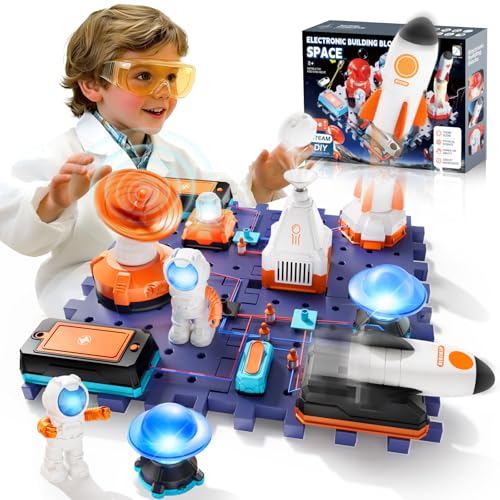
VATOS Space Science Circuit Kits for Kids – 31PCS Electronics Exploration STEM Kit with 100+ Projects, Rocket Launcher & Light Up Astronaut | Educational Learning Toy Gift for Boys Girls Ages 6+
- Number of Projects: Over 100 space-themed circuits
- Educational Focus: Hands-on electrical science learning
- Kit Components: 31-piece complete, safe circuit set
As an affiliate, we earn on qualifying purchases.
As an affiliate, we earn on qualifying purchases.
Next Steps for China’s Reusable Rocket Program
China is expected to conduct further test flights to assess the rocket’s durability and reusability capabilities. The government may also announce plans for multiple launch cycles or commercial deployment in the coming months. Monitoring upcoming test flights will be key to understanding the full potential of this technology.
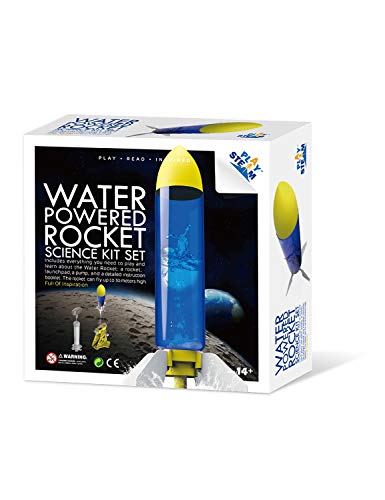
PLAYSTEM Outdoor Water Powered Rocket Physics Learning Set-with Tail, Body and Pump DIY Rocket Science Experiment Kit- Space STEM Outdoor Toys Gift for Kids,Teens, Boys & Girls
- Complete Water Rocket Kit: Includes rocket body, tail, launcher, pump
- DIY Recycled Rocket: Build with provided parts or recycled bottles
- Easy Assembly Guide: Step-by-step instructions included
As an affiliate, we earn on qualifying purchases.
As an affiliate, we earn on qualifying purchases.
Key Questions
What is the significance of China’s reusable rocket?
The successful launch indicates China’s progress in reducing launch costs and increasing mission frequency, positioning it as a competitive space power.
How does China’s reusable rocket compare to others like SpaceX?
While SpaceX has been developing reusable rockets since 2015, China’s recent success marks its entry into this advanced technology, though details on reusability limits are still emerging.
When will China conduct more reusable rocket launches?
Further tests are expected in the coming months, but specific dates have not been announced by Chinese officials.
What are China’s future plans for space exploration?
China aims to expand its lunar and Mars missions, develop a more advanced space station, and enhance its launch capabilities through reusable technology.
Are there international implications of this development?
Yes, it could intensify the global space race, prompting other nations to accelerate their reusable rocket programs and space exploration efforts.
Source: google-trends
Back to school Picks
back to school
As an affiliate, we earn on qualifying purchases.