
TL;DR

Get school and study supplies delivered free — and shop member deals
- Fast, free delivery on millions of items
- Access to Prime Big Deal Days deals on October 6–7
- Prime Video, Amazon Music and more included
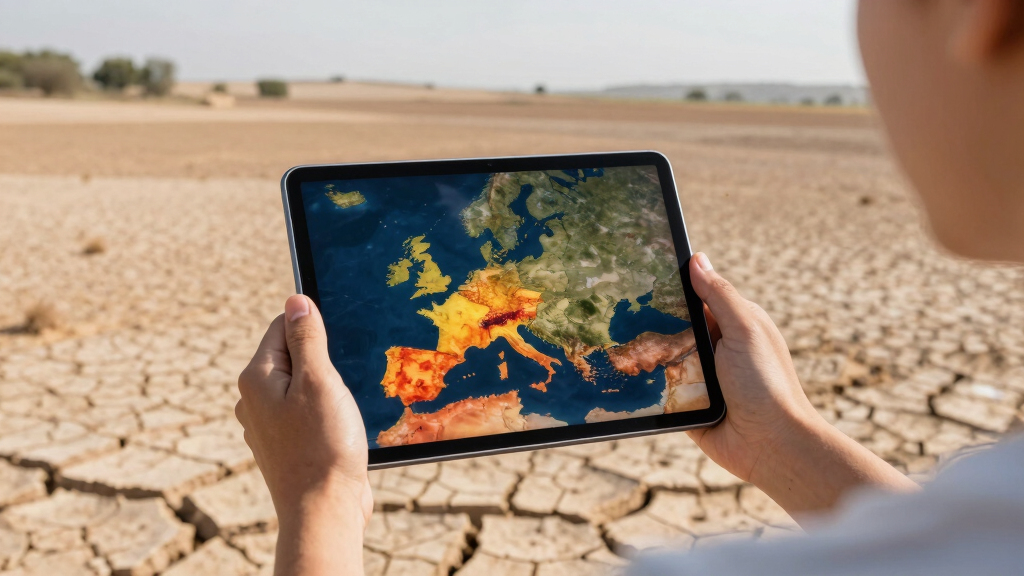
On June 30, 2026, satellite imagery documented a record-breaking heatwave across Europe, with extreme temperatures causing health crises and environmental stress. The event underscores ongoing climate change impacts.
Satellite imagery captured on June 30, 2026, shows an extensive and intense heatwave sweeping across Europe, with surface temperatures reaching historic highs. This event underscores the growing severity of climate-related extreme weather, with significant implications for public health and ecosystems.
On June 30, 2026, space-based sensors from various satellites revealed a large area of Europe experiencing unprecedented heat levels. The images show vast regions, including parts of Southern and Central Europe, with surface temperatures exceeding 45°C (113°F). France records its hottest day ever as Europe withers in early heat wave. According to climate scientists, such anomalies are consistent with the patterns of intensified heatwaves linked to climate change. Local authorities in affected countries have issued heat advisories, and hospitals report a surge in heat-related illnesses. The European Space Agency (ESA) highlighted the imagery as a stark visual of the ongoing climate crisis, emphasizing the need for urgent mitigation and adaptation measures.
While the satellite data confirms the extent and intensity of the heatwave, specific temperature records and their impacts on infrastructure and agriculture are still being assessed. Meteorological agencies are analyzing ground-based data to corroborate satellite observations. The event follows a series of increasingly severe heatwaves across Europe over recent years, raising concerns about long-term climate trends.
Implications of Satellite-Documented Extreme Temperatures
This heatwave’s documentation from space provides valuable data for understanding regional climate patterns. The extreme temperatures observed have potential implications for public health, ecosystems, and agriculture. Satellite monitoring plays a role in assessing the scope of such events and informing response strategies, highlighting the importance of continued observation and research in climate science.
personal portable fan for heatwave
As an affiliate, we earn on qualifying purchases.
As an affiliate, we earn on qualifying purchases.
Recent Trends in European Heatwaves and Climate Indicators
Europe has experienced increasingly frequent and intense heatwaves over the past decade, with notable events in 2019, 2020, and 2023. Scientific studies attribute these trends to rising greenhouse gas emissions, which have led to higher baseline temperatures and altered atmospheric patterns. Satellite data has been instrumental in documenting these changes, providing a visual record of the severity and geographic spread of heat events. The June 30 imagery is part of an ongoing effort by climate scientists to monitor and understand how climate change influences weather extremes, with the goal of informing policy and adaptation strategies.
“The satellite images from June 30 provide a clear visualization of the spatial extent and intensity of this heatwave, contributing to our understanding of climate-related extremes.”
— Dr. Maria Lopez, Climate Scientist at ESA
As an affiliate, we earn on qualifying purchases.
Unconfirmed Details and Ongoing Data Analysis
While satellite imagery confirms the widespread presence of high temperatures, detailed ground-based measurements and assessments of impacts on infrastructure, agriculture, and health are ongoing. Meteorological agencies are analyzing additional data to better understand the event’s characteristics and implications. Comparisons with previous heatwaves in terms of duration and cumulative effects are still being evaluated.
high SPF sunscreen for extreme heat
As an affiliate, we earn on qualifying purchases.
As an affiliate, we earn on qualifying purchases.
Monitoring and Response Efforts Moving Forward
Meteorological agencies and climate scientists will continue to analyze satellite and ground data to improve understanding of the event. Authorities in affected countries are expected to implement emergency measures, and policymakers may review climate adaptation strategies. Continued satellite observations will help track the progression of heat events during the summer, and research efforts aim to enhance predictive models for such phenomena.
As an affiliate, we earn on qualifying purchases.
Key Questions
How do satellite images help in understanding heatwaves?
Satellite images provide a visual record of surface temperatures over large areas, aiding scientists in assessing the extent and intensity of heatwaves in real time.
Are these heatwaves linked to climate change?
Scientific research indicates that the increasing frequency and severity of heatwaves are consistent with climate change driven by greenhouse gas emissions.
What are the health risks associated with such heatwaves?
Extreme heat can lead to heat exhaustion, heatstroke, dehydration, and can worsen pre-existing health conditions, particularly among vulnerable populations such as the elderly.
What measures are being taken to mitigate the impacts?
Authorities issue heat advisories, establish cooling centers, and promote public awareness. Long-term strategies include infrastructure improvements and efforts to reduce greenhouse gas emissions.
Will this heatwave continue or worsen?
Meteorological forecasts suggest that high temperatures may persist during the summer, with the possibility of additional heatwaves, as climate models project increased frequency of such events.
Source: google-trends
Halloween Picks
halloween
As an affiliate, we earn on qualifying purchases.