
TL;DR

Prime made for students and young adults
- Fast, free delivery for dorm and study essentials
- Prime Video and Amazon Music included
- Member-only deals
Science experiment kits give kids hands-on ways to explore STEM subjects. The best kits balance safety, educational value, and fun—helping children ask questions, make predictions, and understand science in everyday life.
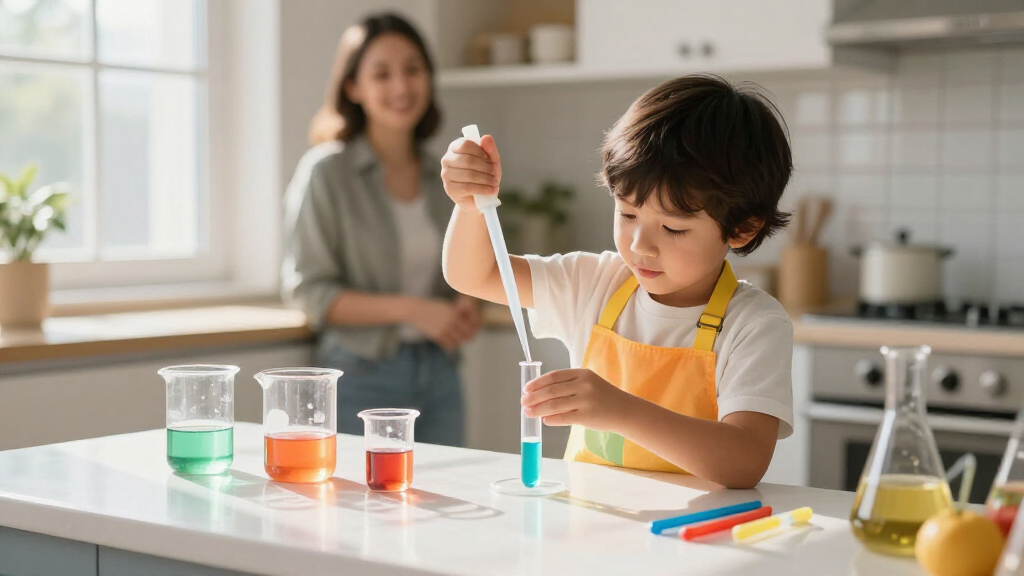
Imagine a box that transforms your living room into a mini laboratory, filled with bubbling liquids, colorful crystals, and buzzing circuits. That’s the power of a good science experiment kit. It’s not just about the cool reactions or the shiny gadgets—it’s about sparking a child’s natural curiosity.
If you’ve ever watched a child stare at a swirling vortex or squeal with delight over a glowing slime, you know the magic of hands-on science. But choosing the right kit isn’t just about the coolest effects. It’s about finding something that matches your child’s age, safety needs, and interests—so they can explore confidently, ask questions, and maybe even produce a few “aha!” moments in the process.
Match the kit to your child’s age, interests, and safety needs for the best experience.
Focus on quality features like educational explanations and reusability, not just the number of experiments.
Use failures as learning moments—troubleshoot and change variables to deepen understanding.
Refillable and reusable components save money and reduce waste, making science more sustainable.
Look for kits that are inclusive, with clear instructions and adaptable activities for all children.
How to Pick a Science Kit That Actually Sparks Curiosity
The first step in choosing a science kit is matching it to your child’s age and interests. A preschooler might love a colorful slime kit with simple instructions, while an older kid might crave a robotics set that challenges problem-solving skills.
Look for kits that clearly state the recommended age and include detailed safety info. For example, a chemistry set for ages 8+ should specify if adult supervision is needed during activities involving heat or chemicals.
Check if the kit offers real explanations behind experiments, not just step-by-step instructions. Kids love understanding the “why” behind what they do. For instance, a kit that explains how vinegar and baking soda create a fizzy reaction makes the volcano eruption more meaningful.
Durable, reusable components add value, especially if your child gets hooked on experimenting. And remember, some kits only include the main materials—household items like water, spoons, or food coloring are often needed to complete the fun.
Choosing a kit that provides clear, age-appropriate explanations encourages deeper understanding. When children grasp the science behind the reactions, they’re more likely to develop critical thinking skills and retain knowledge longer. Conversely, kits lacking explanations may result in superficial engagement, where kids just follow instructions without understanding the underlying principles, limiting the educational impact.
As an affiliate, we earn on qualifying purchases.
Top Features to Look for in a Science Kit (Spoiler: Not Just the Number of Experiments)
It’s tempting to judge a kit by how many experiments it promises, but quality matters more. A kit packed with tiny, disposable components may seem impressive but can fall short if it doesn’t support repeated exploration.
Beyond quantity, understanding the quality of features helps ensure meaningful learning. Here’s why each feature matters:
- Clear educational explanations—These help children grasp the underlying concepts, making the activity more than just a task. When children understand the science, they can transfer knowledge to new situations, fostering curiosity and critical thinking.
- Reusability—Reusable tools and materials promote sustainability and allow children to experiment multiple times. This repeated engagement helps solidify understanding and encourages independent exploration, rather than one-off experiments that are quickly forgotten.
- Safety details—Highlighting potential hazards and including protective gear teach children responsible science practices. This awareness not only prevents accidents but also instills respect for scientific procedures, which is vital for safe future experimentation.
- Hands-on engagement—Experiments that produce visible or measurable results actively involve children. This active participation enhances retention and makes science exciting. However, understanding what results mean deepens the learning experience, transforming a simple reaction into a meaningful discovery.
- Accessible instructions—Clear, simple language with diagrams ensures children can perform experiments independently. Building confidence through autonomy encourages a lifelong interest in science.
For example, a crystal growing kit that explains saturation and nucleation offers more educational value than one with just pretty crystals. When children understand the natural processes behind crystal formation, they develop a deeper appreciation for geology and chemistry, which can inspire further exploration. Integrating explanations with hands-on activities promotes critical thinking, making science both engaging and insightful.
educational STEM science kits for children
As an affiliate, we earn on qualifying purchases.
As an affiliate, we earn on qualifying purchases.
Frequently Asked Questions
What is the best age to introduce a science kit?
Starting as young as preschool, with simple, supervised activities, can spark curiosity early. For more complex experiments, around age 8 and up, kits should match the child’s reading and fine-motor skills. Always check the manufacturer’s age recommendation to ensure safety and engagement.
Are science kits safe for young children?
Reputable kits designed for specific age groups are generally safe, but parental supervision is essential. Always read warnings, use protective gear, and keep chemicals or small parts away from pets and very young siblings. Safety is about guidance, not just labels.
Do I need to be present during my child’s experiments?
Depends on age and activity complexity. Younger kids often need constant supervision, especially with chemicals or heat. Older children may handle simple experiments alone but still benefit from oversight during setup and cleanup. Follow the kit’s safety guidelines.
What household supplies will I need?
Common extras include water, vinegar, baking soda, food coloring, cups, spoons, and paper towels. The kit’s instructions usually specify what’s needed. Having these ready helps avoid delays and keeps the experiment flowing smoothly.
Can siblings share one kit?
Yes, if the equipment can be shared and enough consumables are available. For individual projects or those involving construction, separate kits may be better. Always check the contents and experiment instructions for compatibility.
As an affiliate, we earn on qualifying purchases.
Conclusion
Science experiment kits are more than just toys—they’re gateways to curiosity, critical thinking, and even future careers. Pick one that fits your child’s world, and watch as they turn everyday materials into discoveries that could change their view of science—and the world.
Remember, the best experiments aren’t just about the reactions—they’re about fostering a sense of wonder that lasts a lifetime. So, grab a kit, ask questions, and let the adventure begin.
As an affiliate, we earn on qualifying purchases.
Fall Picks
fall essentials
As an affiliate, we earn on qualifying purchases.