
TL;DR

Prime made for students and young adults
- Fast, free delivery for dorm and study essentials
- Prime Video and Amazon Music included
- Member-only deals
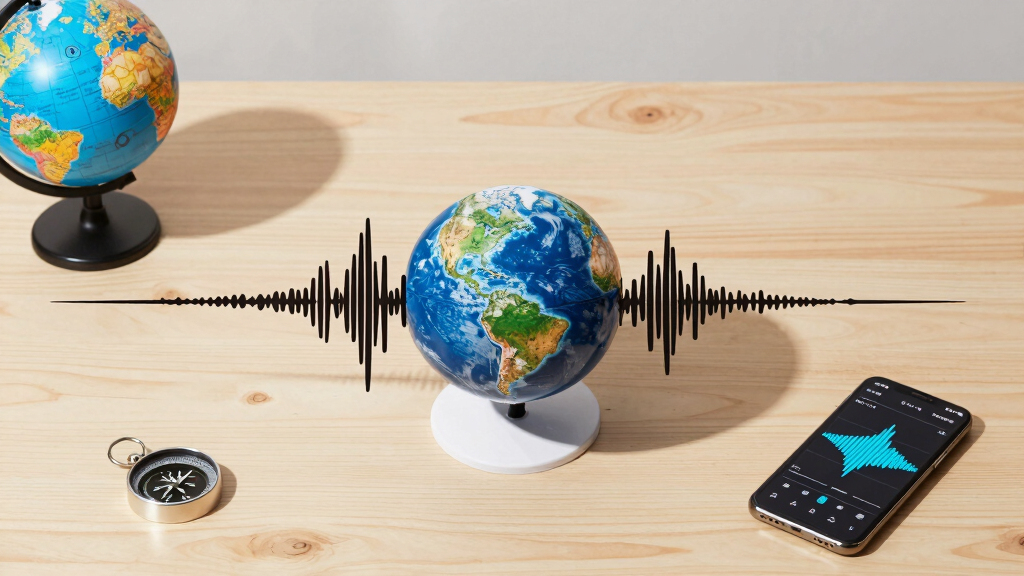
Scientists have confirmed that seismic waves from the 2011 Japan earthquake bounced off Earth’s core, revealing shifts in the planet’s interior that impacted Japan. The discovery enhances understanding of Earth’s internal dynamics and their surface effects.
Scientists have confirmed that seismic waves from the 2011 Japan earthquake bounced off Earth’s core, revealing shifts in the planet’s interior that affected Japan. This discovery provides new insights into Earth’s internal dynamics and their surface impacts, making it a significant development for geophysics and earthquake research.
Recent seismic studies have provided conclusive evidence that waves generated by the 2011 Tōhoku earthquake traveled deep into Earth’s interior and reflected off its core. These reflections suggest that the Earth’s core experienced measurable shifts following the massive quake, which may have contributed to changes in seismic activity observed in Japan and surrounding regions. The research involved analyzing data from global seismic networks, revealing that certain seismic wave paths were altered compared to pre-2011 models. Experts say this confirms that major earthquakes can induce long-term internal structural changes, although the precise nature and extent of these shifts are still under investigation. The findings could influence future earthquake risk assessments and models of Earth’s interior behavior over time.
Implications for Earth’s Interior and Seismic Risk
This discovery matters because it suggests that large-scale earthquakes like the 2011 Tōhoku event can cause lasting changes within Earth’s core, potentially affecting seismic activity and earthquake risk in Japan and globally. Understanding these internal shifts could improve earthquake prediction models and inform infrastructure resilience planning. It also opens new avenues for studying Earth’s internal dynamics, which have remained largely theoretical until now.
As an affiliate, we earn on qualifying purchases.
Background on Seismic Wave Research Post-2011
The 2011 Tōhoku earthquake was one of the most powerful ever recorded, prompting extensive seismic research worldwide. Prior studies focused on surface and crustal movements, but recent advances in seismic imaging have enabled scientists to probe deeper into Earth’s interior. In the years following 2011, researchers observed anomalies in seismic wave travel times, raising questions about possible shifts within Earth’s core. This new research builds on those observations, employing enhanced data analysis techniques and global seismic networks to confirm that waves indeed reflected off the core, indicating internal structural changes. Such findings challenge previous assumptions that Earth’s core remains largely unaffected by surface earthquakes and suggest a more dynamic internal environment.
“Our analysis shows measurable shifts in seismic wave paths, indicating that the core has experienced structural changes since 2011.”
— Seismic researcher Maria Lopez, Global Seismology Institute
As an affiliate, we earn on qualifying purchases.
Unconfirmed Aspects of Core Shifts and Long-Term Effects
While the data confirms seismic wave reflections off Earth’s core following the 2011 earthquake, the precise nature, scale, and permanence of the internal shifts remain unclear. Researchers are still analyzing whether these shifts are temporary or indicative of longer-term changes in Earth’s core structure. Additionally, it is not yet confirmed how these internal shifts directly influence surface seismic activity or earthquake patterns in Japan and elsewhere. Further studies are needed to determine the full implications of these internal dynamics.
As an affiliate, we earn on qualifying purchases.
Next Steps in Earth Interior and Seismic Research
Scientists plan to conduct more detailed seismic monitoring and modeling to understand the extent of the core shifts and their long-term effects. Future research will focus on correlating internal structural changes with surface seismic activity, aiming to improve earthquake prediction models. Additionally, international seismic networks are expected to gather more data to verify and expand upon these findings, potentially leading to revisions in Earth’s internal models and hazard assessments.
As an affiliate, we earn on qualifying purchases.
Key Questions
How do seismic waves bounce off Earth’s core?
Seismic waves generated by earthquakes travel through Earth’s interior. When they encounter different layers, such as the boundary between the mantle and core, some waves are reflected back toward the surface, allowing scientists to study Earth’s internal structure based on these reflections.
What does this discovery mean for earthquake prediction?
If Earth’s core has experienced shifts due to large earthquakes, it could influence how seismic waves propagate, potentially affecting earthquake risk assessments. However, more research is needed to understand these effects fully.
Are these core shifts permanent?
It is currently unclear whether the internal shifts are temporary or represent long-term changes. Ongoing studies aim to determine the duration and impact of these structural modifications.
Could this lead to new earthquake warning methods?
Potentially, understanding internal shifts could improve models of Earth’s behavior, but it is too early to say if this will directly lead to new warning systems. Further research is required.
Source: google-trends
Fall Picks
fall essentials
As an affiliate, we earn on qualifying purchases.