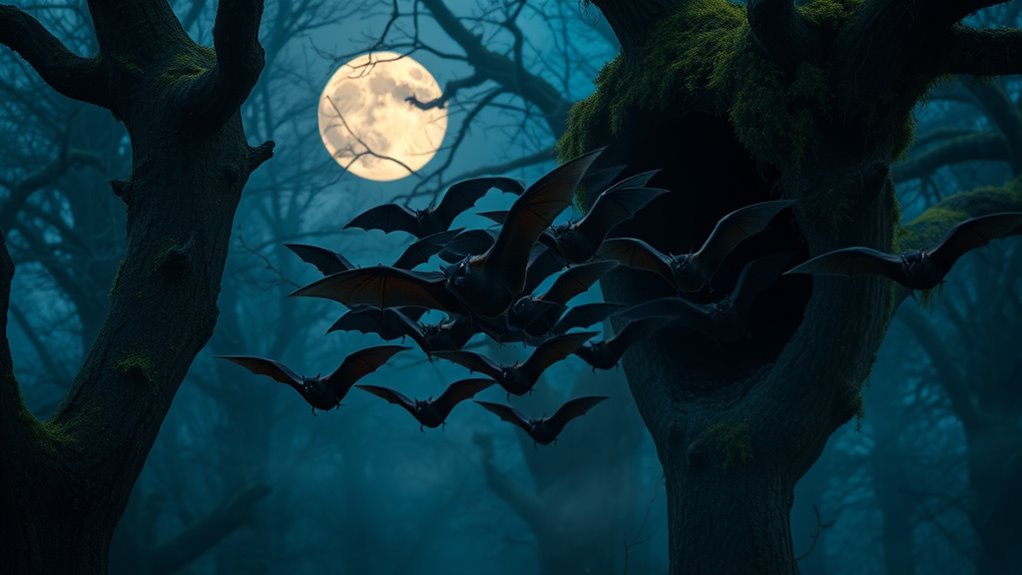

Bats are central to vampire legends because their nocturnal habits and mysterious appearances symbolize darkness, secrecy, and transformation. Their shape-shifting abilities and silent flight reinforce the myth of vampires lurking in shadows, feeding unseen, and shifting forms. Bats also symbolize hidden power and danger, often linked to disease and death. If you want to uncover how these symbols connect even deeper to vampire lore, there’s more to explore below.
Key Takeaways
- Bats are linked to vampire legends due to their nocturnal habits and mysterious appearance, symbolizing darkness and secrecy.
- They embody transformation and hidden power, paralleling the shape-shifting nature of vampires.
- Bats’ ability to fly silently and hide in shadows represents the stealth and elusive traits of vampires.
- Their association with disease and death reinforces the ominous, supernatural qualities linked to vampires.
- The imagery of bats shapes the eerie perception of vampires in folklore and popular culture, emphasizing mystery and the night.
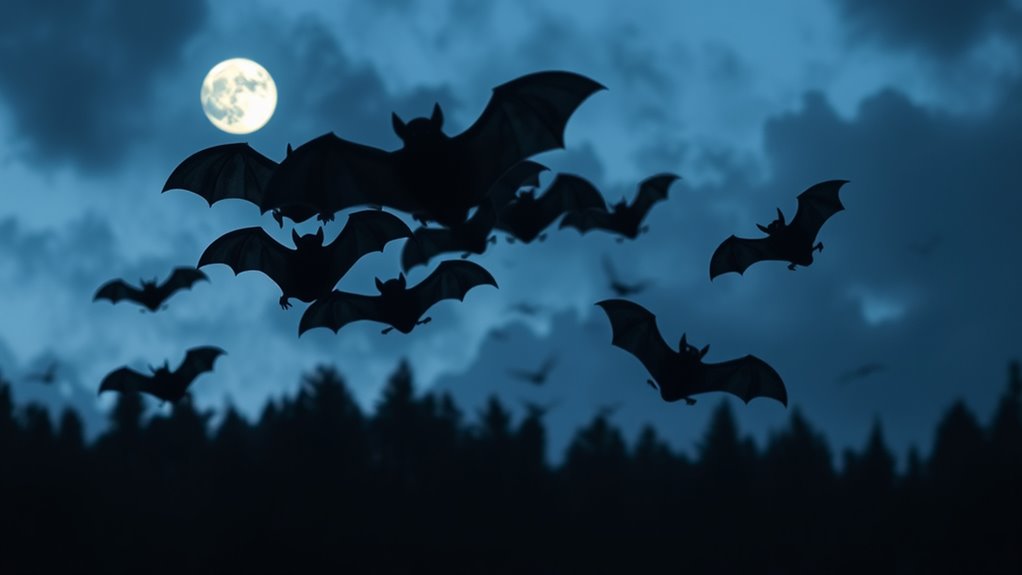
Bats have long been associated with vampire legends, thanks to their mysterious appearance and nocturnal habits. When you think of vampires, it’s almost instinctive to picture a dark-haired figure lurking in the shadows, but bats often play a significant role in shaping that eerie imagery. Their symbolism runs deep, representing mystery, darkness, and the unknown—qualities that seamlessly blend with the vampire mythos. As nocturnal creatures, bats are active when most humans are asleep, which adds to their mystique and makes them perfect symbols for creatures of the night. Their ability to navigate in complete darkness, using echolocation, reinforces their connection to secrecy and hidden worlds, traits that vampires are often associated with.
You might find it fascinating how bat symbolism has influenced vampire stories. Historically, bats have been viewed as creatures that dwell in the shadows, embodying the fears and superstitions of different cultures. In folklore, they’re seen as messengers between the living and the dead, or as symbols of transformation and rebirth—parallels that fit neatly with vampire legends, which often revolve around themes of immortality and metamorphosis. Their nocturnal nature makes them ideal metaphors for creatures that thrive in darkness, feeding on the unseen and the mysterious. This connection has fueled the idea that vampires and bats share a symbiotic relationship, both lurking in the night and feeding on what’s hidden from plain sight. Additionally, mythological symbolism emphasizes their role as symbols of transformation and hidden power, adding depth to their connection with vampire lore.
In the domain of vampire lore, the image of the bat isn’t just about nocturnal habits; it also symbolizes the vampire’s ability to conceal itself, to shift shape, and to strike suddenly from the shadows. The transformation from bat to vampire, or vice versa, is a common motif in stories and folklore, emphasizing the fluidity of identity and the hidden depths of these creatures. Bats’ association with darkness and their silent flight through the night make them perfect allegories for the elusive, often misunderstood nature of vampires. You may also notice how vampire stories often depict bats as carriers of disease or death, reinforcing their ominous reputation and deepening their symbolic ties to danger and the supernatural.
Frequently Asked Questions
Are All Bats Associated With Vampire Legends?
Not all bats are associated with vampire legends. You might think every bat links to mythical creatures, but only certain species, like the vampire bat, are tied to folklore origins involving blood-drinking. Many bats are harmless and play essential roles in ecosystems. It’s easy to associate bats with vampires due to myths, yet most are just misunderstood creatures, not part of any folklore origins involving supernatural or mythical creatures.
Do Vampire Bats Actually Feed on Blood?
Yes, vampire bats do feed on blood. They are real creatures, unlike the bat mythology and blood drinking myths that surround them in legends. These bats, native to Central and South America, have adapted to drink blood from mammals, including livestock and sometimes humans. Their unique behavior fuels the vampire myth, but in reality, they play a crucial role in their ecosystems. You might find it fascinating how these bats have inspired centuries of stories.
How Did Bats Become Linked to Vampire Myths Historically?
Imagine a shadow stretching across history, blending myth and reality. You see, bats became linked to vampire myths through cultural symbolism and their nocturnal nature. Early stories cast bats as mysterious, blood-drinking creatures, fueling fears and legends. This mythical symbolism grew as explorers and storytellers intertwined bats with vampire lore, making them symbols of darkness and death in many cultures. Their eerie presence cemented their place in vampire mythology.
Are Vampire Legends Influenced by Real Bat Behaviors?
Yes, vampire legends are influenced by real bat behaviors, especially through bat mythology and folklore symbolism. You might notice that the nocturnal habits of bats, their mysterious nature, and their blood-feeding species like vampire bats inspired stories of blood-drinking creatures. These behaviors, combined with cultural symbolism surrounding bats as omens or symbols of darkness, helped shape the myth of vampires, blending nature and folklore into a enthralling legend.
What Are the Differences Between Vampire Bats and Other Bat Species?
Think of vampire bats as the night’s stealthy diners, unlike other bat species. Vampire bats have specialized feeding habits that involve feeding on blood, making them unique. Other bat species mainly eat insects, fruit, or nectar. Vampire bats are small, with sharp teeth for piercing skin, while most bats have different diets and physical features. Their distinct feeding habits set them apart in the world of bat species.
Conclusion
So, next time you see a bat fluttering at dusk, remember its place in vampire legends. Recognize how it symbolizes mystery, fear, and the unknown. Understand how it fuels stories of darkness, danger, and allure. Embrace the connection between bats and vampires, and see beyond the myth. Because in the end, bats remind us that legends live in our imagination, that shadows hide stories, and that truth often dances with myth in the night.