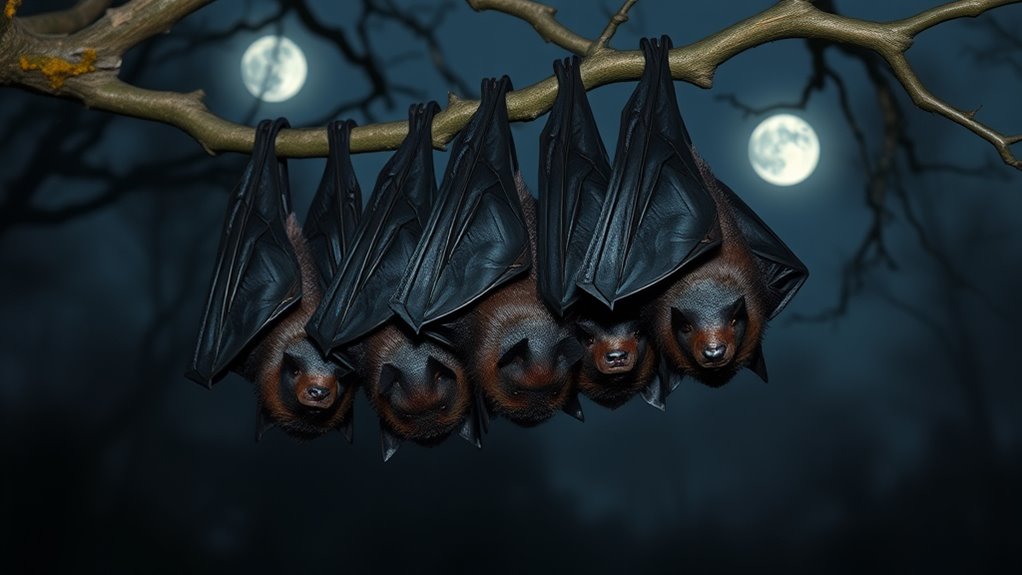

Bats play a key role in vampire legends, symbolizing darkness, secrecy, and the supernatural. Historically, superstitions linked bats to death and bloodsucking traits, fueling vampire stories. Writers and media have embraced these beliefs, depicting vampires transforming into bats for stealth and fear. This blend of folklore and fiction gives vampires their eerie, shape-shifting qualities. To discover how these legends evolved and stick with us today, continue exploring their fascinating history.
Key Takeaways
- Bats have historically symbolized darkness and evil, influencing their association with vampires in folklore.
- Literature and media depict vampires transforming into bats, reinforcing their mysterious and stealthy nature.
- Scientific misconceptions linked bats to blood-drinking, strengthening myths connecting them to vampiric traits.
- Cultural superstitions portrayed bats as sinister creatures, shaping vampire stories and imagery over centuries.
- The bat motif enhances the supernatural and secretive qualities of vampires in legends and popular culture.
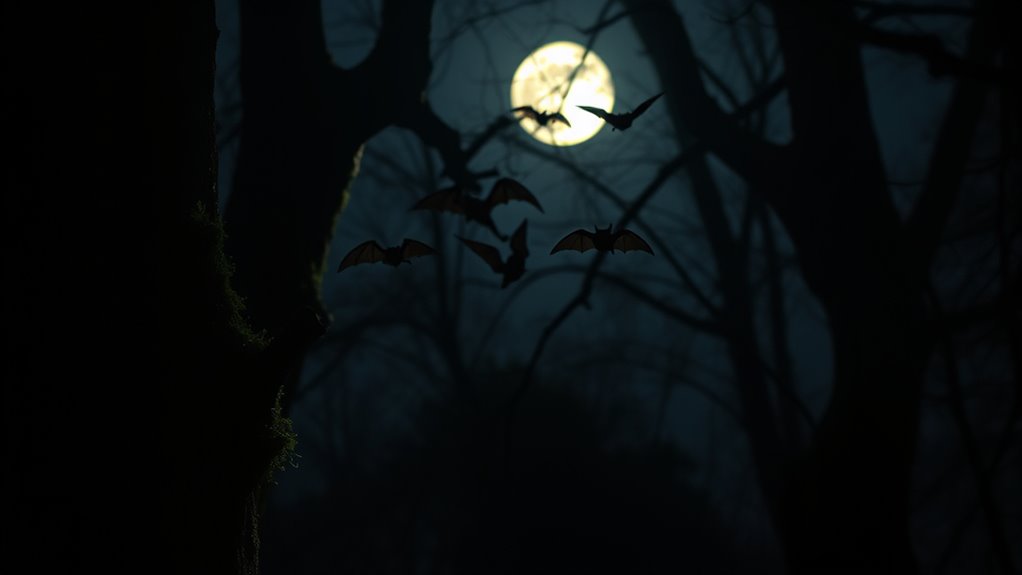
Have you ever wondered why bats are so often linked to vampire legends? This connection isn’t just a product of folklore; it’s deeply rooted in centuries of superstitions surrounding bats, which have evolved alongside modern vampire fiction. Long before Bram Stoker’s Dracula popularized vampires in literature, humans harbored fears and superstitions about these nocturnal creatures. In many cultures, bats were seen as omens of death or darkness, partly because their presence often signaled the onset of night and the unknown. Such superstitions painted bats as mysterious, even sinister, creatures capable of sinister deeds. These beliefs helped shape the perception of bats as symbols of evil, feeding into stories that would later influence vampire mythology.
Bats have long been symbols of darkness and evil, shaping vampire legends and superstitions across cultures.
As vampire fiction developed over the centuries, writers drew upon these existing superstitions to craft their stories. Bats, with their eerie flight and hidden habits, became perfect stand-ins for vampires’ nocturnal, secretive nature. Literature and later, film, depicted vampires transforming into bats as a way to escape detection or travel swiftly through the night. This motif resonated with audiences because it amplified the vampire’s mysterious and fearsome qualities, reinforcing the idea that these creatures could slip into the shadows unseen. The image of a vampire turning into a bat became iconic, cementing the creature’s role in modern vampire lore.
The association between bats and vampires was further reinforced by scientific discoveries in the 18th and 19th centuries, which linked certain bat species to blood-drinking habits, although most bats are harmless and feed on insects or fruit. Still, this scientific fact added weight to superstitions surrounding bats, making them seem even more connected to bloodsucking creatures. Over time, pop culture adopted these ideas, with movies, books, and TV shows depicting vampires as shape-shifters that could assume a bat’s form. This blending of superstition and fiction created a powerful visual symbol that persists today in modern vampire fiction.
In essence, the role of bats in vampire legends is a mix of ancient superstitions and contemporary storytelling. The fears and beliefs about bats helped shape the vampire mythos, transforming these creatures from misunderstood animals into symbols of darkness and the supernatural. Whether as a metaphor for hidden danger or as a literal shape-shifting ability, bats continue to be central to vampire stories, bridging old fears with modern imagination. Their shadowy presence reminds us how folklore and fiction intertwine, making the vampire legend richer and more enthralling.
Top picks for "role bats vampire"
Open Amazon search results for this keyword.
As an affiliate, we earn on qualifying purchases.
Frequently Asked Questions
Do All Vampire Legends Involve Bats?
Not all vampire legends involve bats, but bat symbolism is closely tied to vampire mythology. Many stories feature bats because they’re nocturnal and mysterious, symbolizing darkness and transformation. As you explore vampire myths, you’ll notice bats often represent the creature’s ability to shift shapes and hide in shadows. This connection makes bats a powerful and iconic part of vampire lore, even if not every legend directly involves them.
Are Bats Actually Associated With Real Vampires Historically?
No, bats aren’t actually associated with real vampires historically. Instead, bat behavior and folklore origins fueled vampire legends, especially in Eastern Europe. People believed that blood-drinking creatures lurked around, and sightings of bats—particularly the vampire bat—led to these stories. These legends grew over time, blending local fears and superstitions, but no historical evidence links actual bats to real vampires.
How Did Bats Become Symbols of Vampire Lore?
You might picture a bat’s midnight swoop, symbolizing mystery and fear, which helped it become a vampire lore icon. As nocturnal creatures, bats’ secretive habits evoke the shadowy world of vampires. Their eerie flight and blood-sucking reputation, rooted in ancient superstitions, turned them into potent symbols. Over time, their association with darkness and the supernatural cemented their place in vampire mythology, fueling our fascination with these mysterious creatures.
Are There Different Bat Species Linked to Vampire Myths?
Yes, different bat species are linked to vampire myths. Bat symbolism varies across regions, but the common vampire bat, *Desmodus rotundus*, is often associated with these legends due to its blood-drinking habits. Species variation influences how bats are perceived in folklore. In some cultures, other bats symbolize darkness or mystery, but the vampire bat remains the primary species connected to vampire myths because of its unique feeding behavior.
What Cultural Differences Exist in Bat-Related Vampire Stories?
You’ll notice that cultural differences shape bat-related vampire stories, blending medieval superstitions with modern pop culture. In some regions, like Eastern Europe, legends emphasize bats as sinister, blood-drinking creatures rooted in superstition. In contrast, modern pop culture often romanticizes vampires, downplaying their dark origins. These stories reflect local beliefs and societal fears, showing how perceptions of bats evolve from medieval fears to contemporary entertainment.
Conclusion
So, here you are, thinking bats are just creepy creatures, yet they secretly fueled one of history’s most enduring myths. Ironically, these tiny mammals, often feared and misunderstood, became the very symbol of vampires. Instead of being sinister monsters, they’re simply doing what nature intended—flying, feeding, and surviving. Next time you see a bat, remember, it’s not a bloodsucker, but a misunderstood creature whose legend lives on, thanks to a little bit of myth and a lot of irony.