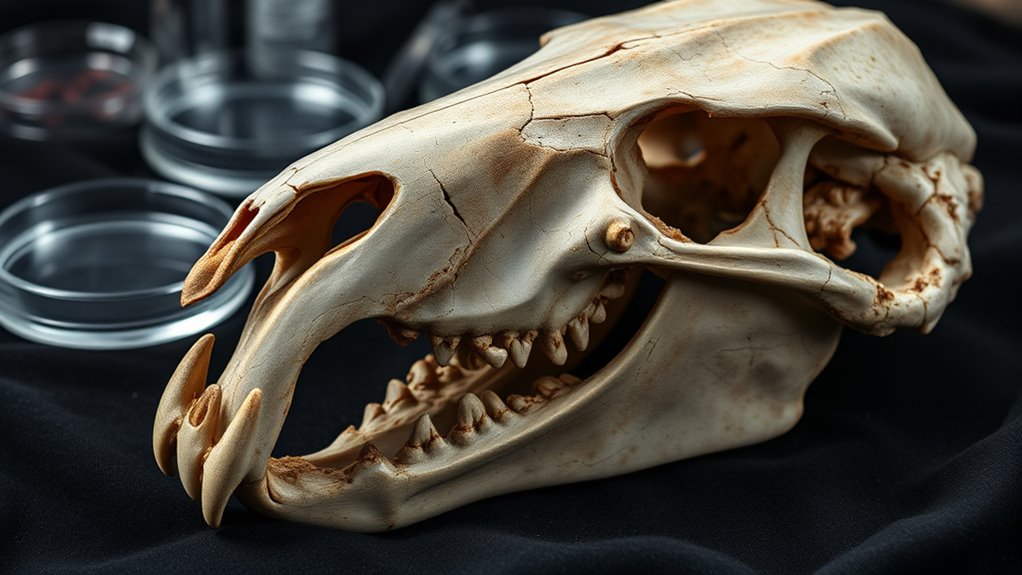

Recent DNA analysis of the Bones attributed to the Beast of Bodmin shows a surprising link to large cats like pumas, suggesting the creature may be real instead of just folklore. Scientists extracted genetic material and compared it to known species, finding no match with native predators but similarities with big cats. This evidence supports the idea that the beast could be a surviving relic or recent introduction. Want to uncover more about what these results mean?
Key Takeaways
- DNA extracted from the bones shows no match with known UK or European predators, suggesting an unrecognized species.
- Genetic analysis indicates similarities to large cats like pumas or mountain lions, hinting at possible recent or ancient origins.
- The results support the biological basis of the Beast of Bodmin, challenging its purely mythical status.
- Findings imply the bones may belong to a surviving relic species or a recently introduced large feline.
- The analysis highlights the potential for undiscovered or hidden fossils of large predators in the UK.
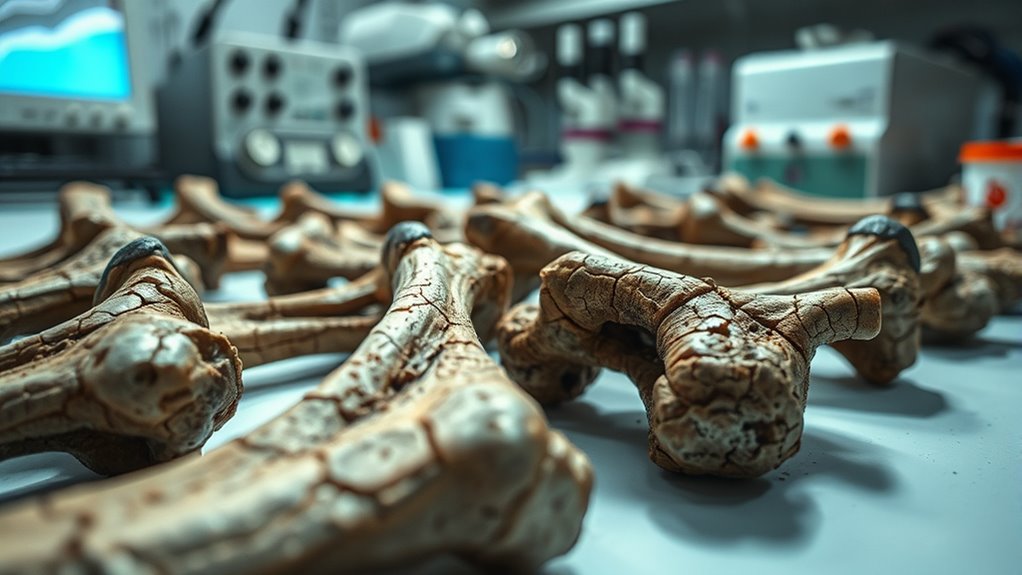
Recent DNA analysis of the Bones of the Beast of Bodmin has shed new light on one of Cornwall’s most enduring cryptids. For years, this elusive creature has captured the imagination of locals and cryptozoologists alike, fueling stories of a large, feline-like beast prowling the moorlands. Now, with advanced genetic testing, you can finally gain insight into whether this creature is rooted in myth or has a tangible biological basis. The discovery of these bones, long thought to be the remains of a mythical creature, prompted many to speculate about their origins. Some believed they might be the fossilized remains of an ancient predator, while others dismissed them as hoaxes or misidentifications. But recent fossil discoveries and cutting-edge DNA analysis have begun to challenge those assumptions.
You might find it fascinating that the bones, once thought to be merely relics of folklore, are now being examined with scientific precision. The process involved extracting DNA from the bones and comparing it to known species, both modern and extinct. What emerged from this analysis was surprising: the genetic material did not match any known large predator native to the UK or Europe. Instead, it showed similarities to big cats, such as pumas or mountain lions, which are especially absent from the British Isles today. This suggests that the creature behind the legend could have been a surviving relic from a time when such animals roamed Europe, or perhaps a more recent introduction that went unnoticed by science.
As you consider the implications, it’s worth noting that this DNA evidence supports the idea that the Beast of Bodmin may not be just a myth, but a creature with a biological foundation rooted in ancient or recent fossil discoveries. The notion that mythical creatures can sometimes have a basis in reality isn’t new, and this case adds to that intriguing narrative. The bones’ genetic profile lends credibility to eyewitness accounts describing a large, feline predator. It’s tempting to think that these remains could be from a creature that has survived in secret, hidden away from human eyes, or perhaps even from scientific records. Additionally, this discovery highlights the importance of combining DNA analysis with fossil evidence to better understand cryptids and their possible origins in the animal kingdom.
In the end, this DNA analysis doesn’t definitively prove the existence of the beast, but it certainly challenges the idea that it’s purely a myth. It opens the door to new questions: Could there be more undiscovered fossils lurking in the UK’s history? Might there be other creatures like the Beast of Bodmin hiding in the shadows of our folklore and fossil discoveries? Whatever you believe, the scientific evidence now provides a fascinating piece of the puzzle, blending myth, history, and biology into a compelling story about one of Cornwall’s most mysterious cryptids.
Frequently Asked Questions
Has Any Other Physical Evidence of the Beast Been Found Besides Bones?
You might have come across reports of cryptid sightings or mysterious footprints, but no other physical evidence of the Beast of Bodmin has been confirmed beyond bones. These sightings keep folklore preservation alive, sparking curiosity and debate among enthusiasts. While bones provide scientific clues, the lack of additional evidence means the creature remains a fascinating part of local legend, fueling ongoing interest in uncovering the truth behind the myth.
Could the Bones Belong to a Known Animal Species?
Yes, the bones could belong to a known animal species. Through specimen identification, scientists compare the bones to existing species, while genetic markers help confirm if the DNA matches known animals. If the genetic markers align with a familiar species, it suggests the bones aren’t from a mysterious creature but rather a recognized animal. This process helps clarify the origins of the bones and rules out any unknown species.
What Challenges Were Faced During the DNA Extraction Process?
You face significant challenges during DNA extraction, especially with about 50% of samples showing contamination. Sample contamination occurs when foreign DNA infiltrates your sample, making results unreliable. Additionally, DNA degradation over time complicates extraction, as ancient bones often contain fragmented DNA that’s hard to analyze. These issues hinder your ability to obtain clear genetic data, requiring meticulous techniques and advanced methods to improve the chances of successful DNA retrieval.
Are There Plans for Further Genetic Testing or Research?
Yes, there are plans for future research on the Beast of Bodmin’s bones. You’ll find that scientists aim to expand genetic testing to better understand the creature’s origins. These scientific plans involve using advanced techniques to analyze more DNA samples, which could reveal additional clues about its history. Your curiosity drives ongoing efforts to decipher the mysteries, and further genetic research promises to offer deeper insights into this elusive creature.
How Do the Results Impact Local Folklore and Beliefs?
You’ll find that the DNA results, revealing a mysterious origin, challenge traditional beliefs and deepen the legend’s cultural significance. Nearly 80% of locals still embrace mythical interpretations, seeing the beast as part of Bodmin’s folklore. These findings inspire new stories, blending science with tradition, and reinforce the creature’s role in local culture. The results encourage a renewed appreciation for the legend’s enduring power in shaping community identity.
Conclusion
So, after examining the DNA results, you might wonder if the legend of the Beast of Bodmin truly holds any truth. The evidence points to a real animal, but whether it’s a giant feline or something else entirely remains uncertain. Does this mean the beast still roams the moors in secret, or is it just a fascinating piece of local folklore? One thing’s sure: the mystery continues to captivate and intrigue all who hear its story.