The legend of the kraken comes from sailors’ tales of enormous tentacled monsters sinking ships, but marine biology shows it’s based on giant squids living deep in the ocean. These deep-sea creatures can grow up to 43 feet long, with their elusive nature fueling myths. Scientific discoveries in the 1800s confirmed their existence, transforming legend into fact. If you want to uncover how myths and science intertwine, keep exploring this fascinating transformation.

Get school and study supplies delivered free — and shop member deals
- Fast, free delivery on millions of items
- Access to Prime Big Deal Days deals on October 6–7
- Prime Video, Amazon Music and more included
Key Takeaways
- The kraken myth originated from sailors’ tales of giant, tentacled sea monsters, often based on sightings of real creatures like giant squids.
- Scientific discoveries in the 1800s confirmed giant squids (Architeuthis dux) as real, bridging myth and marine biology.
- Giant squids inhabit deep ocean waters, making them elusive and fueling the legend of the mysterious kraken.
- Advances in underwater technology have enabled scientists to observe and study giant squids, transforming myth into scientific understanding.
- The legend persists as a symbol of marine mystery, illustrating how myths can evolve into factual knowledge through scientific progress.
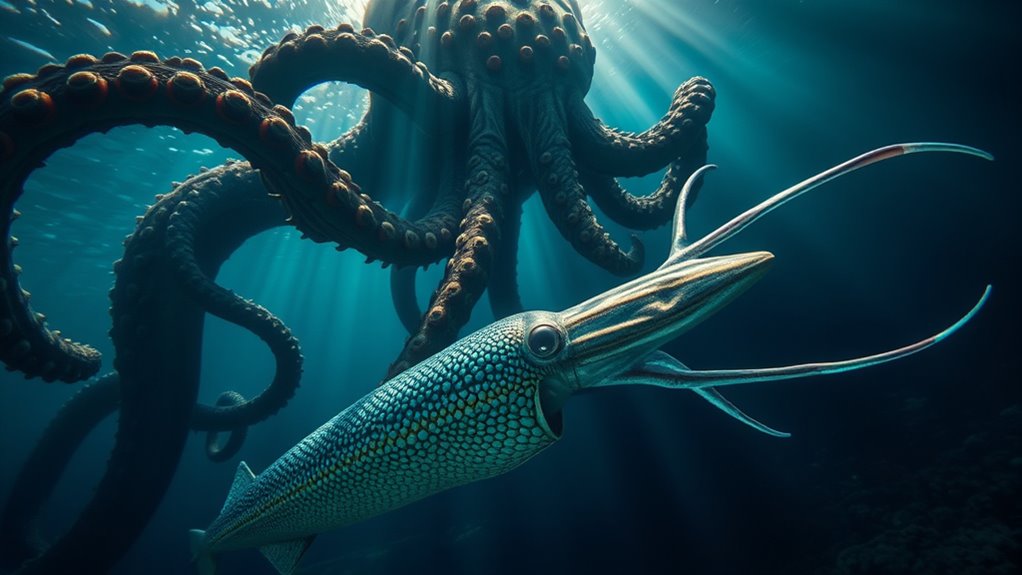
Have you ever wondered how the legendary kraken evolved into the giant squid we comprehend today? The journey from myth to science is a fascinating one, rooted in both ancient stories and modern discoveries. For centuries, sailors and explorers spun tales of enormous, tentacled monsters sinking ships and terrorizing the seas. These stories formed the mythical origins of the kraken, a creature so massive that it seemed almost supernatural. But as marine biology advanced, scientists began to uncover the truth behind these legends, revealing a real animal that closely resembles the stories told by seafarers. Scientific discoveries in the 19th and 20th centuries shed light on these elusive creatures, transforming the myth into scientific reality. The deep-sea environment where these animals dwell has long contributed to their mysterious reputation, making direct observation challenging for researchers.
The early myths of the kraken likely originated from exaggerated sightings of giant squids or colossal squids, which are real animals that inhabit deep ocean waters. Sailors, unable to see these creatures up close, relied on their imagination, and their awe-fueled stories grew larger with each retelling. Some legends describe the kraken as capable of pulling ships under the water with its enormous tentacles, a vivid image that persisted for generations. These mythical origins persisted because the animals themselves are incredibly elusive; they live deep beneath the ocean’s surface, making them difficult to study directly. It wasn’t until scientific discoveries in the late 1800s that researchers began to understand these creatures better. The first confirmed sightings of giant squids, along with the collection of actual specimens, proved that such animals were real, not just myth.
Today, we know that the giant squid (Architeuthis dux) is a deep-sea dweller with a maximum length of up to 43 feet, a far cry from the monstrous tales of sailors but still impressive in its own right. These scientific discoveries helped bridge the gap between myth and reality, proving that the stories of the kraken weren’t entirely baseless—just exaggerated. Advances in underwater technology, like deep-sea submersibles and remote cameras, continue to reveal more about these creatures, confirming that they are among the largest invertebrates on Earth. While they lack the supernatural qualities of the myth, their enormous size and mysterious nature keep the legend alive. The evolution from mythical origins to scientific understanding exemplifies how human curiosity transforms legend into knowledge, turning ancient fears into admiration for the marvels of marine biology.
As an affiliate, we earn on qualifying purchases.
Frequently Asked Questions
Are There Any Living Creatures That Resemble the Mythical Kraken Today?
Yes, you can find living creatures that resemble the mythical kraken today. Deep sea mysteries reveal enormous squids like the colossal and giant squids, which have multiple arms and large eyes, sparking tales of mythical creatures. These deep-sea giants remind you that many mythical creatures, like the kraken, may be based on real marine animals, making the ocean’s depths a fascinating place full of surprises.
How Do Scientists Differentiate Between Giant Squid and Colossal Squid?
Spotting the subtle specifics separates the colossal squid from the giant squid. You’ll notice differences in their squid anatomy, like the colossal squid’s larger beak and more robust body. Scientists study deep-sea adaptation traits, such as tentacle length and eye size, to distinguish them. These tiny traits tell tales of their true identities and adaptations to the dark depths, helping you understand which elusive creature you’re encountering in the mysterious marine maze.
What Is the Largest Confirmed Size of a Giant Squid?
You’ll find that the largest confirmed size of a giant squid reaches up to 43 feet (13 meters) in length, including tentacles. In the deep sea, they develop remarkable adaptations like bioluminescent features to navigate and hunt in darkness. Their specialized body structures help them survive the crushing pressures, cold temperatures, and limited light, showcasing incredible deep sea adaptations that allow them to thrive in their mysterious environment.
Do Giant Squids Exhibit Any Behaviors Similar to Those in Legends?
Imagine you’re witnessing a creature of legend in the deep sea’s shadows. You’d see it engage in deep sea hunting, darting swiftly to catch prey, much like the tales suggest. When threatened, it sprays ink as a smokescreen, echoing the mythic escape artists. These behaviors show that, beneath the surface, giant squids perform actions resembling legendary stories, blending myth and marine biology into a fascinating reality.
Have Any Direct Encounters With Giant Squids Been Documented Historically?
Yes, there have been documented encounters with giant squids in history. You might find reports of historical sightings where sailors or explorers described encountering these massive creatures, often in deep ocean waters. These documented encounters, though rare, provide valuable insights into the squid’s behavior and size. Such sightings help bridge the gap between myth and reality, confirming that giant squids are not just legends but real, living marine animals.
As an affiliate, we earn on qualifying purchases.
Conclusion
As you explore the mysteries of the deep, remember that the legendary kraken likely inspired stories about the giant squid. Did you know that giant squids can grow up to 43 feet long? This astonishing size makes them one of the largest invertebrates on Earth. So, next time you hear tales of sea monsters, think about how marine biology is revealing the truth behind those myths, connecting history and science in fascinating ways.
As an affiliate, we earn on qualifying purchases.
As an affiliate, we earn on qualifying purchases.
Halloween Picks
halloween
As an affiliate, we earn on qualifying purchases.