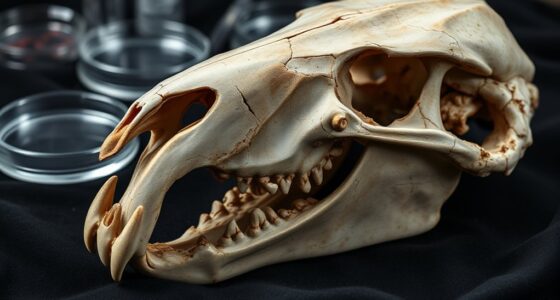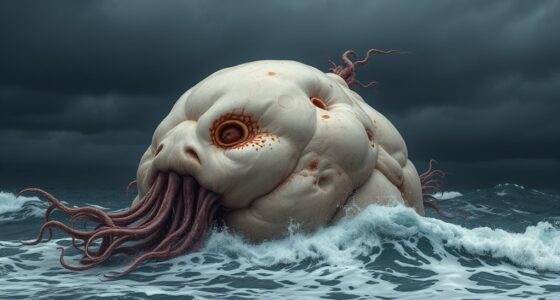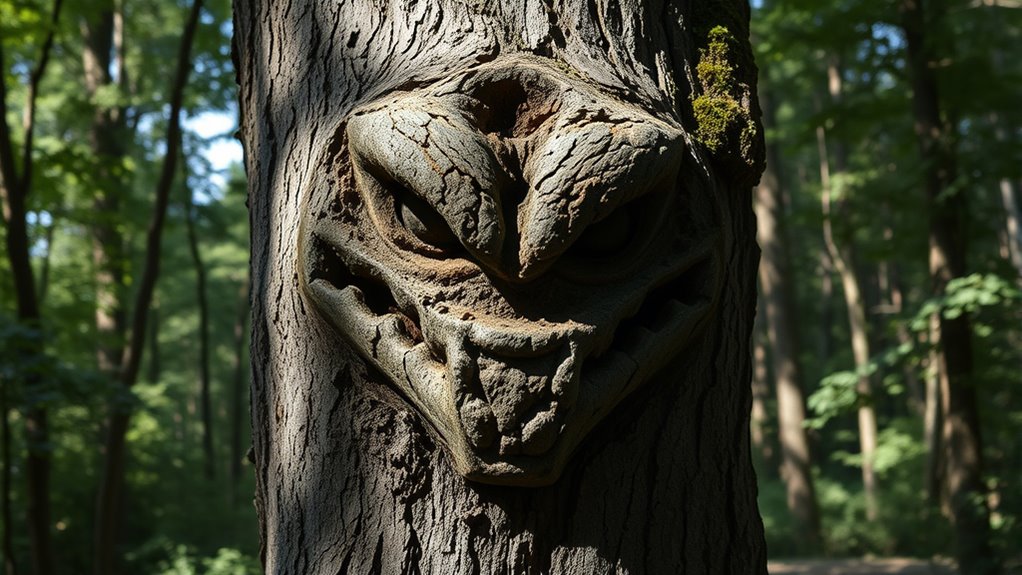
Your brain naturally seeks familiar patterns, especially faces and shapes, even in random objects or shadows. This tendency, called pareidolia, is driven by cognitive biases that prioritize recognition and survival instincts. As a result, you might interpret vague forms as monsters or cryptids, especially when emotions like fear or curiosity come into play. Understanding this trick of perception reveals how your mind creates monsters from mundane stimuli—continue exploring to uncover more fascinating insights.
Key Takeaways
- Pareidolia causes the brain to interpret ambiguous stimuli as familiar shapes, often faces or creatures, including monsters.
- Cognitive biases favor pattern recognition and familiarity, leading us to see meaningful images in random objects.
- Evolutionary instincts for quick threat detection promote the perception of monsters in vague or shadowy forms.
- Cultural stories and fears reinforce the tendency to perceive cryptid-like shapes in everyday environments.
- Visual illusions and emotional states enhance the likelihood of seeing monsters through mental filling-in and pattern-seeking biases.
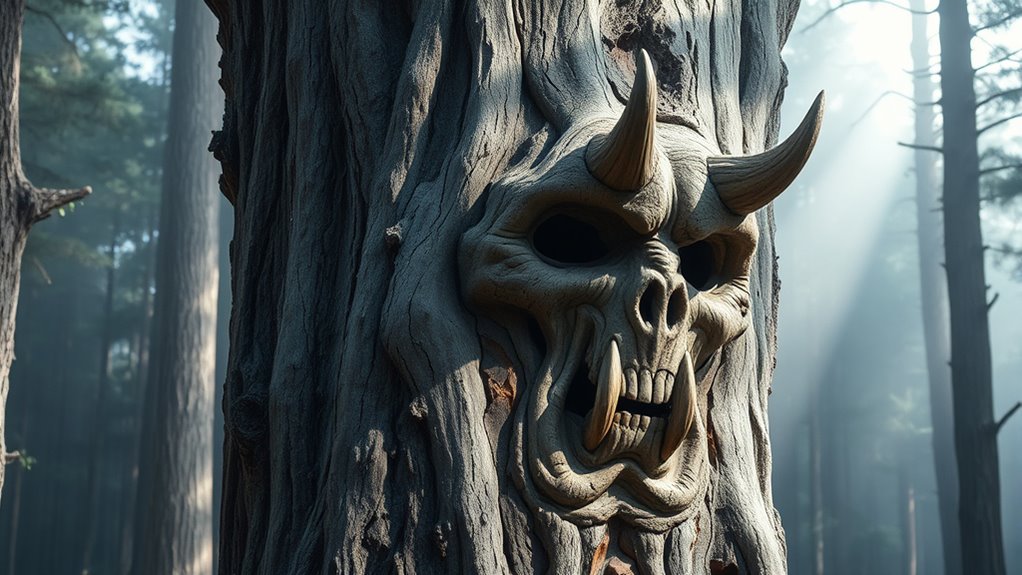
Have you ever looked at a cloud or a random stain and suddenly seen a face or a creature? That’s pareidolia at work—our brain’s way of turning vague visual data into familiar shapes. It’s a fascinating psychological illusion that reveals how our minds are wired to find patterns, even when none truly exist. This tendency isn’t random; it’s rooted in cognitive biases that prioritize recognition and familiarity over randomness. Your brain is constantly filtering and interpreting sensory information, trying to make sense of the chaos around you. When it detects shapes resembling faces, animals, or objects, it jumps to conclusions that feel real. This isn’t just a quirk; it’s an adaptive trait that historically helped humans recognize threats or allies quickly. But it also opens the door for seeing monsters in everyday objects or shadows, especially during times of fear or uncertainty.
When you see a face in a burned toast or a strange figure in the shadows, your brain’s pattern recognition kicks into overdrive. It’s not just about seeing something that’s there; it’s about the brain’s bias towards human faces, known as pareidolia’s most common form. This bias is fueled by psychological illusions—misleading perceptions created by your mind’s attempt to interpret ambiguous stimuli. Cognitive biases like the “confirmation bias” or “illusory pattern perception” push your brain to connect dots, sometimes creating the vivid impressions of monsters lurking in the dark or cryptids hiding in the woods. These biases make you more prone to interpret random shapes as meaningful, especially when your imagination is heightened, or when you’re feeling scared or curious.
Furthermore, understanding visual perception and how our brain processes ambiguous stimuli can shed light on why these illusions are so powerful and convincing. This tendency has cultural and evolutionary roots. Across different societies, stories of monsters or spirits often start from ambiguous shapes or sounds, amplified by collective beliefs and fears. Your mind’s inclination to see monsters isn’t purely irrational; it’s a mixture of innate pattern recognition and cultural storytelling. When you encounter vague stimuli, your brain fills in the gaps with familiar images—often terrifying or mysterious. This process is amplified by psychological illusions, which distort reality, and cognitive biases that make you more likely to see what you expect or fear. In summary, your brain is a pattern-seeking machine, creating cryptids and monsters from the most mundane stimuli, illustrating how perception can be as much about the mind’s biases as about external reality.
Frequently Asked Questions
How Does Pareidolia Differ From General Visual Perception?
Pareidolia differs from general visual perception because it specifically involves pattern recognition where your brain interprets random images as familiar objects or faces. While visual processing handles all incoming visual information, pareidolia triggers a bias, making you see meaningful patterns, like monsters or faces, in ambiguous visuals. This tendency highlights how your brain actively seeks familiar patterns, even when none are intentionally present, unlike routine perception that processes straightforward visuals.
Can Pareidolia Be Influenced by Cultural Beliefs?
Yes, pareidolia can be influenced by cultural conditioning and folklore influence. When you see shapes or figures, your brain draws on your cultural background and stories you’ve heard, shaping what you perceive. If your culture features specific cryptids or mythic beings, you’re more likely to interpret ambiguous images as those creatures. This cultural conditioning guides your perception, making certain pareidolic images more familiar or meaningful.
Are There Neurological Explanations for Seeing Monsters?
You might feel a shiver down your spine when imagining monsters, but neuroscience offers gentle explanations. Neural mechanisms and sensory processing can cause your brain to interpret ambiguous stimuli as creatures lurking in shadows. These processes, designed to alert you to potential threats, sometimes misfire, especially when your mind is alert or anxious. So, it’s your brain’s way of staying cautious, turning ordinary shapes into imagined monsters.
What Role Does Imagination Play in Cryptid Sightings?
Imagination’s influence heavily shapes cryptid sightings, as your mind fills in ambiguous shapes with familiar or frightening images. During myth-making processes, your brain actively interprets vague stimuli, creating stories and legends. This imaginative process allows you to connect dots and craft compelling tales, making cryptid encounters feel real. Your vivid imagination fuels the storytelling, reinforcing these myths and perpetuating the belief in creatures that may never have truly existed.
How Can We Distinguish Real Creatures From Pareidolia Illusions?
Think of your mind as a detective sorting truth from illusion. To distinguish real creatures from pareidolia illusions, you must recognize the influence of familiarity bias and pattern recognition. Question unusual sightings, seek multiple credible sources, and look for consistent, tangible evidence like tracks or DNA. If something only appears in fleeting images or vague shapes, it’s likely a product of your brain’s pattern recognition, not a real creature.
Conclusion
So, next time you see a face in a cloud, a creature in a shadow, or a monster in a mirror, remember it’s your brain’s way of making sense of chaos. It’s the pattern-seeking, meaning-making, imagination-firing process at work. Your mind is wired to find faces, to spot stories, to create monsters. Embrace it. Celebrate it. Because in those fleeting moments of pareidolia, you’re tapping into the fascinating, mysterious power of your own perception.