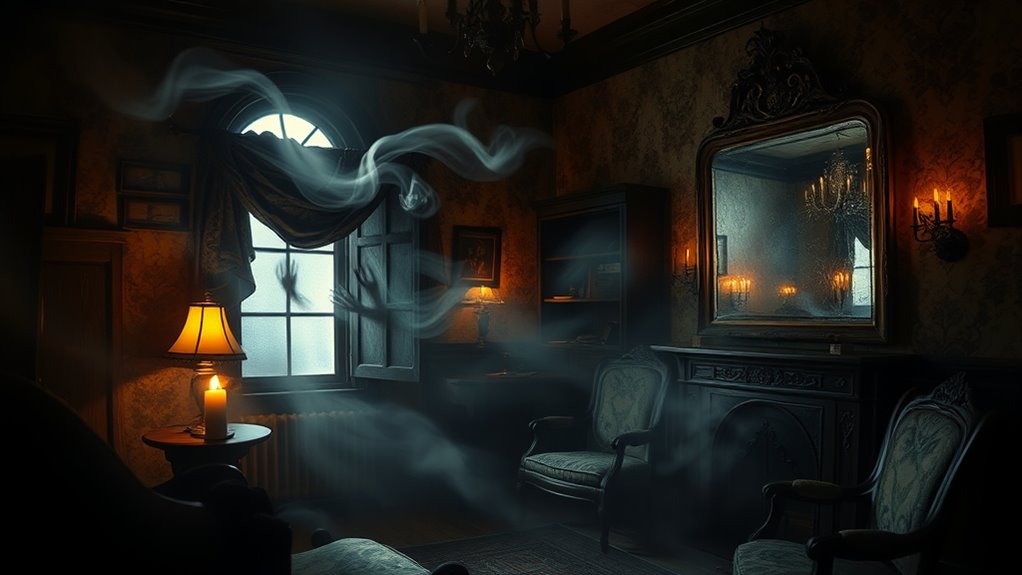

When investigating poltergeists, you’ll find most disturbances are caused by natural, psychological, or environmental factors rather than actual spirits. Sudden noises, object movement, or disruptions often stem from structural issues, drafts, or even psychological stress and subconscious intentions. Skeptics have debunked many cases, using tools like infrared cameras and electromagnetic meters. If you want to uncover what truly lies behind these noisy claims, there’s more to explore beneath the surface.
Key Takeaways
- Many poltergeist reports are explained by environmental factors, psychological influences, or natural causes rather than supernatural spirits.
- Scientific investigations often debunk claims using tools like cameras and EMF meters, revealing hoaxes or natural explanations.
- Psychological factors such as stress, hallucinations, or subconscious intent can produce perceived noisy or disruptive phenomena.
- Structural issues, drafts, or environmental disturbances frequently cause sounds and movements attributed to poltergeists.
- Critical inquiry emphasizes natural, psychological, and environmental explanations, distinguishing genuine phenomena from fraud or misinterpretation.

Have you ever wondered what causes the mysterious, often disruptive phenomena known as poltergeists? These noisy spirits seem to manifest out of nowhere, throwing objects, banging walls, and creating chaos that defies logical explanation. To understand what’s behind these events, it’s essential to explore the domain of paranormal activity and how scientific skepticism approaches such claims. Many believe poltergeists are genuine spirits or supernatural entities, but scientific investigation offers a different perspective. Skeptics argue that most supposed poltergeist phenomena can be explained through psychological, environmental, or physical factors rather than supernatural forces.
Poltergeist phenomena often have natural, psychological, or environmental explanations rather than supernatural causes.
When investigating reports of poltergeist activity, it’s vital to consider the possibility of psychological influences. Stress, emotional turmoil, or even subconscious intentions can sometimes produce physical effects or perceptions that mimic paranormal events. For example, a person experiencing intense anxiety or grief might unknowingly cause objects to move or fall, a phenomenon known as psychokinesis, which is often cited in paranormal circles. Alternatively, sleep paralysis and hallucinations can lead witnesses to believe they’ve encountered spirits or supernatural disturbances, even though these are rooted in the brain’s responses during altered states of consciousness.
Environmental factors also play a significant role. Drafts, uneven flooring, or structural issues with a building can cause objects to shift or fall without any paranormal involvement. Unusual noises may result from old pipes or settling foundations, while temperature fluctuations might create auditory illusions or visual distortions. These natural explanations are often overlooked by those convinced of paranormal activity, but they’re essential to consider when trying to get to the truth. Additionally, technological limitations can sometimes lead to misinterpretations of supposed paranormal signals or phenomena.
Despite the compelling stories, scientific skepticism urges a cautious approach. Many poltergeist cases have been debunked when investigators apply rigorous standards of evidence, seeking logical explanations rather than jumping to supernatural conclusions. Modern technology, like infrared cameras, EVP recorders, and electromagnetic field meters, helps document events objectively. Yet, these tools often fail to confirm paranormal activity, revealing instead that what appears to be supernatural noise or movement can often be traced back to mundane causes.
In the end, understanding poltergeist phenomena requires balancing open-minded curiosity with rigorous scientific inquiry. While the allure of spirits and the supernatural is powerful, it’s important to scrutinize each case critically. Most often, what’s perceived as paranormal activity is rooted in natural, psychological, or environmental factors that can be explained through scientific skepticism. By approaching poltergeist reports with a healthy dose of caution and a focus on evidence, you can better distinguish between genuine mystery and well-orchestrated hoax or misinterpretation.
Frequently Asked Questions
What Are the Most Common Physical Signs of Poltergeist Activity?
You might notice electrical disturbances, like flickering lights or appliances turning on by themselves, along with unexplained noises such as banging, knocking, or whispers. Objects could suddenly move or fall without reason, and there may be cold spots or a sense of unease. These physical signs often point to poltergeist activity, making it clear that something unusual is happening in your space. Stay alert and document any occurrences.
How Do Skeptics Explain Poltergeist Phenomena Scientifically?
Skeptics in paranormal research often explain poltergeist phenomena as psychological or environmental factors. You might see them pointing to stress, hallucinations, or trickery as the real culprits behind moving objects or strange noises. Scientific skepticism argues that these events can be explained through natural causes, not spirits. Imagine a dark room suddenly illuminated by a logical explanation, revealing how human perception and environmental conditions create the illusion of supernatural activity.
Are Children More Likely to Experience Poltergeist Disturbances?
You’re more likely to experience poltergeist disturbances during childhood because of childhood susceptibility and developmental factors. Kids tend to be more emotionally intense and less able to distinguish between imagination and reality, which can lead to perceived paranormal activity. Their heightened imagination and emotional states may amplify or even create phenomena that adults might dismiss or overlook. So, your childhood experiences could be influenced by these natural psychological and developmental factors.
Can Poltergeist Activity Be Predicted or Prevented?
Like a modern-day psychic detective, you can’t reliably predict or prevent poltergeist activity. Electromagnetic interference can sometimes trigger disturbances, but it’s not foolproof. Psychological profiling helps identify emotionally charged situations that might escalate, yet it doesn’t guarantee prevention. You might try sealing windows or calming environments, but ultimately, poltergeist activity remains unpredictable—more akin to a viral tweet than a scheduled event. Stay cautious, and don’t rely solely on technology or profiling.
What Historical Cases Are Most Well-Documented and Credible?
You should look into well-documented historical case studies like the Enfield poltergeist, which gained credibility through police reports and media coverage. Credibility assessments reveal that many famous cases, such as the Rosenheim poltergeist, involve multiple witnesses and thorough investigations. These detailed accounts help you understand patterns and differentiate genuine phenomena from fraud, making them some of the most credible examples in the study of poltergeists.
Conclusion
Ultimately, whether poltergeists are genuine spirits or clever trickery, remember that “truth is the first casualty of war.” Keep an open mind but stay skeptical, questioning what you see and hear. Sometimes, what appears supernatural can have a logical explanation. Trust your instincts, but also seek evidence. After all, as the saying goes, “Seeing is believing,” but sometimes, believing is seeing. Stay curious and cautious on your quest for the truth.