

If you explore the world of ancient creatures, you’ll see how fossils of reptiles like the Komodo dragon and Titanoboa resemble mythical dragons. These animals evolved features such as powerful bodies, sharp claws, and massive sizes over millions of years, inspiring legends across cultures. While they aren’t fire-breathers, their adaptations show how real predators can appear dragon-like. Keep exploring — there’s more to uncover about how these ancient animals shaped myths and our understanding of nature.
Key Takeaways
- Fossil evidence shows ancient reptiles and snakes with features resembling mythical dragons, highlighting evolutionary links.
- Modern animals like the Komodo dragon exhibit dragon-like traits such as muscular build and venomous bites as apex predators.
- Titanoboa’s enormous size and predatory capabilities likely inspired dragon myths across ancient cultures.
- Evolutionary adaptations over millions of years demonstrate how real animals developed traits once thought mythical.
- Fossil discoveries bridge scientific understanding with cultural narratives, revealing the possible origins of legendary dragons.
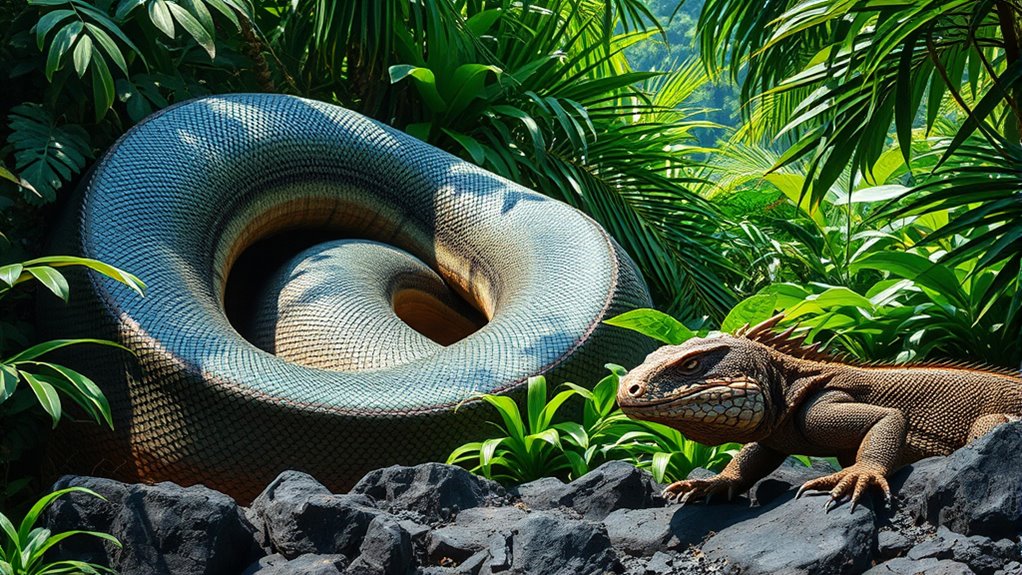
Have you ever wondered if real dragons ever roamed the Earth? The idea of legendary creatures like dragons sparks curiosity, but science offers fascinating insights into creatures that might have inspired those myths. When you explore the fossil record, you find evidence of ancient animals with evolutionary adaptations that could explain some dragon-like features. Fossil discoveries reveal that some creatures developed extraordinary traits, such as immense size, powerful limbs, and formidable jaws, which could have fueled the imagination of early humans. These adaptations weren’t accidental; they evolved over millions of years as responses to their environments, hunting needs, and survival challenges. Fossil evidence shows that many ancient reptiles and snakes exhibited features that resemble dragon traits, further fueling speculation. Take the Komodo dragon, for example. While it’s not a fire-breathing beast, its evolutionary adaptations make it a true terrestrial predator. Its muscular body, sharp claws, and venomous bite help it dominate its island habitat. These features highlight how natural selection shapes creatures to become apex predators within their niches. The Komodo’s success comes from specialized hunting strategies and physical traits that have been refined through generations. Fossil discoveries of ancient varanids, the family to which Komodo dragons belong, show that these reptiles have been around for millions of years, adapting to changing climates and ecosystems. These discoveries help us understand how similar animals might have looked and behaved long before humans started recording history.
Then there’s Titanoboa, a snake that truly pushes the boundaries of what we think of as dragons. Fossilized remains of Titanoboa reveal an enormous snake, nearly 50 feet long, which roamed the prehistoric rainforests of South America. Its evolutionary adaptations include a massive body size, a powerful skull, and a heat-efficient metabolism that allowed it to thrive in warm, humid environments. These adaptations made Titanoboa an apex predator of its time, capable of ambushing large prey like crocodiles. The fossil discoveries of Titanoboa’s vertebrae and skulls provide a glimpse into how evolution shaped this terrifying creature, making it the largest snake ever known. It’s easy to see how such a creature, with its immense size and predatory prowess, could have inspired stories of dragons in ancient cultures.
Top picks for "trivial pursuit real"
Open Amazon search results for this keyword.
As an affiliate, we earn on qualifying purchases.
Frequently Asked Questions
Are There Any Living Species That Resemble Mythical Dragons?
Yes, some living species resemble mythical dragons, embodying symbolic traits found in cultural representations. For instance, Komodo dragons showcase fierce, powerful imagery, echoing mythical symbolism. Similarly, certain monitor lizards and large serpents like the reticulated python evoke dragon-like appearances. These creatures inspire awe and myth, reflecting humanity’s fascination with legendary beasts, and serve as real-world symbols of strength and mystery rooted in diverse cultural representations.
How Do Scientists Verify Ancient Dragon Fossil Discoveries?
Think of verifying ancient dragon fossils like assembling a complex puzzle. You analyze fossil dating techniques to determine age and compare anatomical features with known species. Scientists look for unique traits in bones, scales, or teeth that suggest mythical creatures. They also use imaging and DNA analysis when possible. This careful process confirms whether a fossil truly represents a legendary dragon or a known prehistoric creature, ensuring accuracy in our ancient bestiary.
Could Modern Climate Change Threaten Existing Large Reptiles?
Yes, modern climate change threatens large reptiles through climate impact and habitat loss. Rising temperatures and changing weather patterns disrupt their ecosystems, making food and water sources scarce. Habitat destruction from deforestation and urban expansion further reduces their living space. You should be concerned because these factors can lead to declining populations and even extinction, emphasizing the urgent need for conservation efforts to protect these majestic creatures from ongoing environmental threats.
What Are the Key Differences Between Komodo Dragons and Titanoboa?
You’d find that Titanoboa, at 42 feet long and over a ton in weight, towers over the 10-foot Komodo dragon. The key differences lie in their ecological impacts and evolutionary adaptations; Titanoboa was a prehistoric snake that thrived in warm, swampy environments, while Komodo dragons are modern apex predators with adaptive hunting skills. These distinctions highlight how evolution shapes giants across different eras and ecosystems.
Is There Any Evidence of Dragon-Like Creatures in Ancient Cultures?
Yes, you’ll find evidence of dragon-like creatures in ancient cultures. Many mythological symbols, like Chinese dragons or European wyverns, reflect cultural interpretations of powerful, often divine, beings. These mythical symbols embody themes like strength, protection, or chaos. Archaeological findings, such as ancient paintings and legends, suggest that early societies often imagined legendary creatures resembling dragons, blending real animals with myth to explain natural phenomena or societal values.
Conclusion
Just like chasing elusive shadows, exploring real dragons from Komodo to Titanoboa reveals nature’s incredible diversity. These creatures, once thought mythical, remind you that the line between legend and reality blurs in the wild. As you explore into their stories, you realize that understanding these giants is like opening a hidden chapter of Earth’s history—exciting, mysterious, and impossible to ignore. Keep searching, because the true dragons of our world are waiting to be discovered.