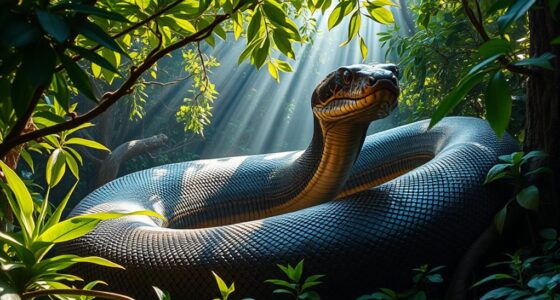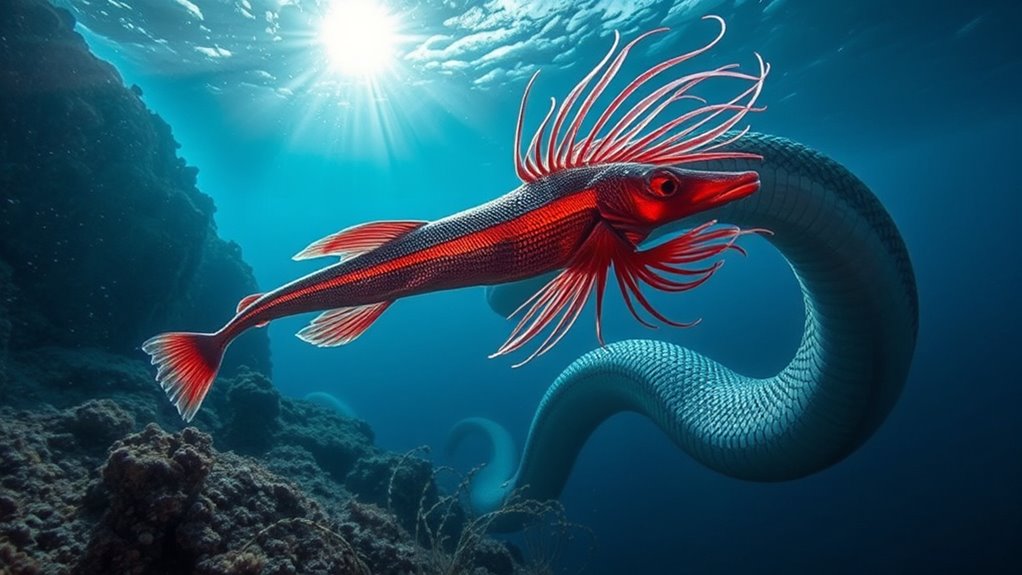

Many sea serpent sightings are actually based on real creatures like the oarfish, which can grow up to 56 feet long and have glowing, elongated bodies. These fascinating fish often surface during storms, sparking legends among sailors. Bioluminescence and their mysterious appearance make them easy to mistake for mythic monsters. If you’re curious about how these real animals inspired legends and what secrets the deep ocean still hides, there’s more to discover.
Key Takeaways
- Many sea serpent sightings are likely misidentified or exaggerated oarfish, which are real, elongated deep-sea fish.
- Oarfish can reach 56 feet and exhibit bioluminescence, contributing to their mythic reputation.
- Bioluminescent displays in deep-sea creatures often inspire legends of glowing sea monsters.
- Optical illusions and environmental factors frequently cause misperceptions of large, serpentine shapes near the surface.
- Ongoing deep-sea exploration reveals real animals that may have inspired mythical sea serpent stories.

Deep beneath the waves, where sunlight barely reaches, the ocean is teeming with life that often appears otherworldly. During your explorations, you might stumble upon footage of long, sinuous creatures gliding gracefully through the water, their forms reminiscent of the legendary sea serpents. Many of these sightings coincide with reports of strange shapes seen just beneath the surface, fueling speculation about their origins. In recent years, marine biologists have identified creatures like the oarfish, which can grow up to 56 feet long. Their elongated bodies and dorsal fins, combined with their bioluminescent displays, make them look like the mythical monsters of sailors’ stories. These sightings are often dismissed as misidentifications or optical illusions, but they point to the possibility that what people have described for centuries might have some basis in reality. Additionally, the bioluminescent traits of many deep-sea creatures, such as the oarfish, are linked to bioluminescence, which is a key adaptation for survival in the dark depths. These glowing creatures, often seen near the surface during storms or unusual weather, could have sparked the legends that have persisted through generations. As your exploration deepens, you realize that the line between myth and reality blurs in the vast, mysterious depths of the ocean. The more you learn, the more you see that some of the stories about sea serpents might be inspired by real, awe-inspiring creatures lurking beneath the waves.
Frequently Asked Questions
Are There Any Recent Verified Sea Serpent Sightings?
There haven’t been any recent verified sea serpent sightings, but deep sea mysteries continue to intrigue us. Many legendary sightings remain unconfirmed, fueling speculation about these elusive creatures. You might find reports from explorers or sailors interesting, as they often describe strange, serpentine forms in the water. While no conclusive evidence exists today, the ongoing fascination with deep sea mysteries keeps the legend alive, encouraging scientific exploration and curiosity.
How Do Oarfish Communicate Underwater?
Ever wondered how oarfish communicate in the dark depths? They use bioluminescent signaling to send signals through the water, making them visible to others nearby. This form of deep sea communication helps them find mates and stay aware of their surroundings. Their glowing bodies create a mesmerizing display, highlighting the fascinating ways these creatures have adapted to thrive in their mysterious underwater world. Would you believe such beauty exists beneath the waves?
What Are the Most Common Myths About Sea Monsters?
You probably think sea monsters are terrifying beasts from legends, but many myths originate from sailors’ tales and sightings of real creatures like oarfish. These myths often symbolize fears of the unknown or serve as warnings, reflecting cultural symbolism. People have long exaggerated sightings, creating stories about massive, serpent-like monsters lurking in the depths, which fueled maritime folklore and reinforced the mystery of the ocean’s unexplored regions.
Can Oarfish Be Kept in Captivity?
You can’t easily keep an oarfish in captivity; “curiosity killed the cat,” and trying to meet their needs is tough. Due to aquarium challenges, their large size and specific captivity requirements make it nearly impossible. Oarfish need vast, deep tanks and specialized conditions, which most aquariums can’t provide. So, while fascinating, these creatures are best appreciated in their natural ocean habitat rather than confined spaces.
How Do Scientists Differentiate Between Real Creatures and Myths?
You can tell real creatures from myths by examining cryptozoology evidence and applying myth debunking techniques. Scientists analyze physical remains, photographs, and consistent sightings, then verify them through scientific methods. When evidence is lacking or inconsistent, myths are debunked. You should look for tangible proof, such as DNA or clear photographs, to differentiate between genuine animals and legends. This approach helps separate fact from fiction effectively.
Conclusion
So, next time you hear about sea serpents or spot an oarfish gliding through the water, remember—they’re real creatures behind those myths. Oarfish, with their long, ribbon-like bodies, likely inspired tales of sea monsters. By understanding these fascinating animals, you see how legends often stem from nature’s hidden wonders. The ocean’s depths still hold mysteries, but science helps us uncover the truth behind the stories that have captivated humanity for centuries.