
Sleep paralysis happens when your brain awakens during REM sleep, leaving you unable to move and often experiencing terrifying nightmare creatures. These frightening visions aren’t supernatural but result from a brain misfiring, blending dream imagery with wakefulness. Stress, irregular sleep, and sleep disorders can increase these episodes. Understanding the science behind sleep paralysis can help you recognize it as a natural brain response—if you’re curious, you’ll find more surprising insights ahead.
Key Takeaways
- Sleep paralysis occurs when REM sleep atonia persists into wakefulness, causing inability to move and vivid hallucinations resembling nightmare creatures.
- Fear and stress can heighten the perception of these hallucinations, often interpreted as supernatural or creature-like entities.
- Neurobiologically, these episodes involve misfiring in brain regions responsible for muscle atonia and visual hallucinations during REM sleep.
- Understanding sleep cycles and maintaining good sleep hygiene can reduce the frequency and intensity of sleep paralysis and associated hallucinations.
- Techniques like reality checks and lucid dreaming practices can help individuals manage or diminish frightening hallucinations during sleep paralysis.
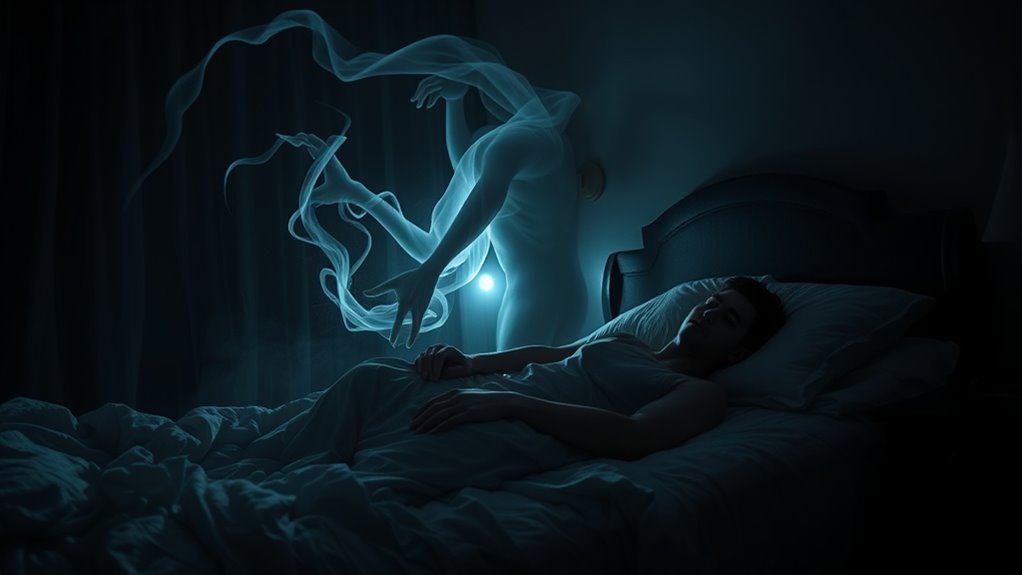
Many people experience sleep paralysis, a phenomenon where you wake up unable to move and often feel a terrifying presence in the room. It’s a deeply unsettling experience that can leave you feeling helpless and frightened. While sleep paralysis is often linked to stress, irregular sleep schedules, or sleep disorders, understanding its connection to the mind’s complex processes can help demystify what’s happening during these episodes. One intriguing aspect of sleep paralysis is its relationship to lucid dreaming—an altered state where you become aware that you’re dreaming and can sometimes control your dreams. During lucid dreaming, your brain maintains a level of consciousness that can blur into sleep paralysis, especially if you’re trying to induce or control the dream state. This overlap can make it feel like you’re caught between waking and dreaming, intensifying feelings of fear or helplessness.
Many researchers believe that sleep paralysis occurs when your REM (rapid eye movement) sleep atonia—the natural paralysis that prevents you from acting out dreams—persists into wakefulness. This disruption can happen for various reasons, including stress, sleep deprivation, or irregular sleep patterns. Fortunately, there are sleep disorder treatments designed to reduce the frequency and intensity of episodes. These treatments often focus on improving sleep hygiene—regular sleep schedules, reducing caffeine intake, and managing stress levels. Cognitive-behavioral therapy (CBT) can also be effective in addressing underlying anxiety or sleep issues that contribute to sleep paralysis. In some cases, doctors might prescribe medication to help regulate sleep cycles, especially if episodes are frequent or severe.
Understanding how to prevent sleep paralysis involves learning how to better manage your sleep habits and reduce triggers. If you’re interested in exploring lucid dreaming, techniques such as reality checks during the day, keeping a dream journal, or practicing meditation can sometimes help you gain greater control over your dreams and reduce the chances of waking up paralyzed. Additionally, understanding the neuroscience of sleep can provide deeper insights into how these episodes occur. When you understand the science behind these episodes, you realize they’re not supernatural phenomena but rather a misfiring of your brain’s sleep mechanisms. This knowledge can be empowering, helping you approach sleep paralysis with less fear and more curiosity. Recognizing the signs and practicing good sleep hygiene, combined with techniques from lucid dreaming training, can make your nights more peaceful. Ultimately, addressing sleep disorders and understanding your sleep cycles can help you regain control and lessen the terrifying experiences of sleep paralysis and nightmare creatures lurking in your dreams.
Frequently Asked Questions
Can Sleep Paralysis Occur During Naps or Only at Night?
Sleep paralysis can happen during naps as well as at night. Your napping patterns and sleep cycle disruption increase the chances, especially if you nap during irregular hours or wake up suddenly. When your sleep cycle is disturbed, it can trigger episodes of sleep paralysis regardless of the time of day. So, don’t assume it only occurs at night; any interruption to your normal sleep pattern can cause it.
Are Nightmare Creatures Linked to Specific Mental Health Conditions?
Nightmare creatures are often linked to psychological associations like anxiety or trauma, but cultural interpretations also play a role. You might find that beliefs about spirits or demons influence how you perceive these experiences. While some mental health conditions can increase your likelihood of encountering nightmare creatures, understanding both psychological and cultural factors helps you better grasp why they appear and how your mind interprets these frightening visions.
How Does Sleep Paralysis Differ Across Age Groups?
You should know that sleep paralysis affects about 8% of adults and can vary with age. Developmental differences mean teens often experience it more frequently, while age-related prevalence tends to decrease in older adults. Younger children might not report it clearly, but as you grow older, you might notice more episodes during stressful periods. Understanding these patterns helps you recognize how sleep paralysis evolves across different age groups.
Can Dietary Habits Influence the Likelihood of Nightmare Creatures?
Yes, your dietary habits can influence the likelihood of nightmare creatures. Consuming sleep-inducing foods like dairy, bananas, or warm milk before bed may promote better sleep, reducing nightmares. Conversely, eating heavy, spicy, or caffeinated foods late at night can disrupt your sleep cycle and increase vivid dreams or nightmares. Pay attention to your dietary impact and choose sleep-friendly foods to help minimize nightmare creatures and enjoy restful sleep.
Is There a Genetic Predisposition to Experiencing Sleep Paralysis?
You might have a subtle hint of predisposition if you notice frequent sleep disruptions, as genetic factors can play a role in sleep paralysis. While no single gene predicts this experience, predisposition markers suggest a family history could increase your chances. Your genetic makeup influences your sleep architecture, making some individuals more susceptible. Recognizing these signs helps you better understand your sleep patterns and seek strategies to reduce episodes.
Conclusion
As you lie awake in the quiet darkness, remember that sleep paralysis is a strange, fleeting domain where nightmares seem to seep into reality. The shadowy figures and whispering voices aren’t real, but your mind’s way of processing fears. Embrace the calm, breathe through the shadows, and know that dawn will break the illusion. Like the dawn dispersing night, understanding transforms fear into fleeting shadows, reminding you that darkness always gives way to light.