
Wendigo psychosis is a cultural syndrome found among Indigenous North American communities where individuals believe they are possessed by or transforming into the malevolent Wendigo spirit. This belief often arises during times of hardship like famine or social stress and reflects fears of greed, moral decay, and environmental threats. Symptoms can include hallucinations, paranoia, and insatiable hunger for human flesh. To understand how this phenomenon shapes social and spiritual life, keep exploring its deeper meanings.
Key Takeaways
- Wendigo psychosis is a cultural syndrome involving fears of becoming or being possessed by the malevolent Wendigo spirit.
- It manifests with symptoms like paranoia, hallucinations, and insatiable hunger, often linked to environmental stress or social isolation.
- The syndrome functions as a moral warning against greed, taboo-breaking, and moral decay within Indigenous communities.
- It reflects both psychological and spiritual concerns, symbolizing internal and external threats related to famine and moral imbalance.
- Recognized as a cultural phenomenon, it influences community responses and reinforces social cohesion through spiritual and moral boundaries.
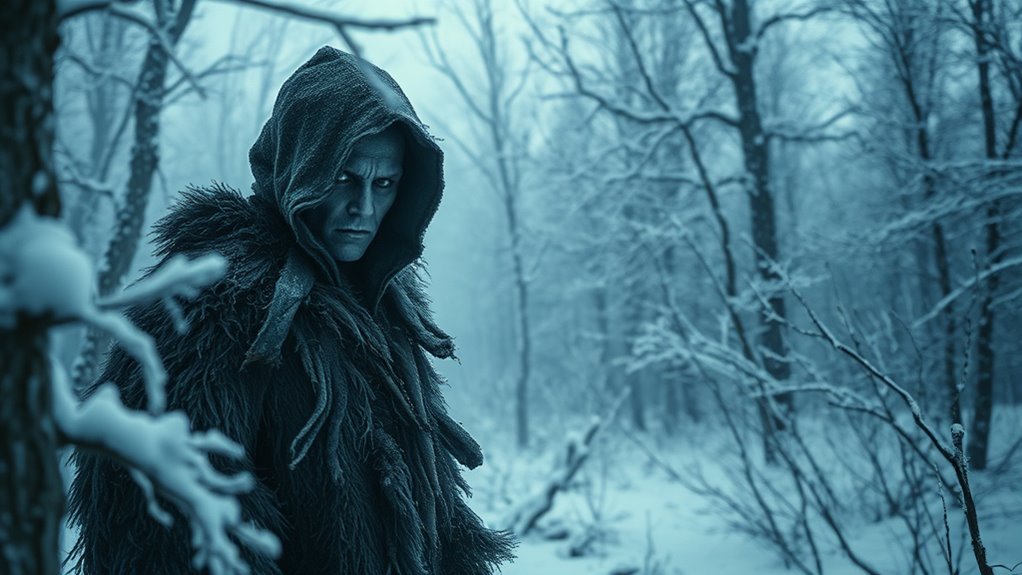
Wendigo psychosis is a cultural syndrome characterized by a shared belief among certain Indigenous communities that individuals can become possessed by or transform into the Wendigo—a malevolent, cannibalistic spirit. This mythic creature features prominently in indigenous beliefs, especially among tribes in the northern forests of North America. You might find it helpful to think of the Wendigo as more than just a creature; it embodies fears of starvation, greed, and moral corruption. Traditionally, the Wendigo is depicted as a gaunt, emaciated being with glowing eyes, a heart of ice, and an insatiable hunger for human flesh. Its presence symbolizes the destructive forces lurking within the human psyche and the environment, making it a powerful cultural symbol.
In many indigenous beliefs, the Wendigo is seen as a dangerous, supernatural entity that can possess a person, especially during times of famine or hardship. When individuals experience extreme hunger or social isolation, they might develop symptoms aligning with what’s called Wendigo psychosis. These symptoms include paranoia, hallucinations, and an overwhelming craving for human meat. You need to understand that this isn’t simply a mental illness but a culturally contextualized syndrome rooted in specific mythic and spiritual frameworks. The belief that someone might transform into the Wendigo acts as a social warning against greed, selfishness, and breaking spiritual taboos. It’s a way communities interpret and manage behaviors they see as threatening or immoral.
Throughout history, indigenous elders and healers have associated Wendigo psychosis with moral failings or a loss of spiritual balance. The mythic creature’s presence in stories and rituals emphasizes the importance of maintaining harmony with nature and community. When individuals display behavior seen as aberrant or dangerous, communities might interpret it as a sign of Wendigo possession. Such interpretations help reinforce social cohesion and moral boundaries, guiding individuals back toward cultural norms. Additionally, the concept of cultural syndrome plays a key role in understanding how these beliefs influence perceptions of mental health within indigenous groups.
While some researchers suggest that Wendigo psychosis could be explained by mental health conditions like schizophrenia or psychosis triggered by environmental stress, you should understand that for many Indigenous communities, it’s much more than a medical diagnosis. It’s a complex cultural phenomenon woven into their worldview, where the mythical creature serves as a symbol of the dangers of excess, moral decay, and spiritual imbalance. Recognizing this helps you appreciate how indigenous beliefs shape perceptions of mental health and behavioral anomalies, making Wendigo psychosis a fascinating example of how culture influences understanding and responses to psychological phenomena.
Frequently Asked Questions
How Common Are Cases of Wendigo Psychosis Today?
Cases of wendigo psychosis are extremely rare today. You might find some reports linked to cultural beliefs or psychological disorders, but modern psychiatry generally considers them folklore rather than genuine mental health issues. As understanding of psychological disorders advances, these stories are seen more as cultural myths rather than actual diagnoses. So, while the legend persists, real instances are almost nonexistent in current clinical practice.
What Are the Main Symptoms of Wendigo Psychosis?
You might feel overwhelmed by intense, unshakable fear and hallucinations that seem to control your mind. The main symptoms include cannibalistic tendencies, where you crave human flesh, and delusional paranoia, believing you’re possessed or cursed. You could experience extreme loneliness, weight loss, and a terrifying obsession with becoming a wendigo. These symptoms are so intense, they feel like you’re losing your grip on reality entirely, consumed by the legend.
Can Wendigo Psychosis Be Cured or Treated?
Wendigo psychosis can’t be fully cured, but psychological treatment can help manage symptoms and reduce fears. Cultural intervention plays a vital role, as understanding and respecting the cultural beliefs surrounding the syndrome can aid in healing. You might find therapy helpful, especially approaches that incorporate cultural context, allowing you to process fears and beliefs effectively. Seeking support from culturally aware professionals can make a significant difference in your recovery journey.
Is Wendigo Psychosis Linked to Specific Indigenous Tribes?
You might find it surprising, but wendigo psychosis is closely linked to specific indigenous tribes, especially those in Algonquian-speaking regions. These tribal legends and cultural beliefs shape how they interpret the condition, often viewing it as a spiritual affliction rather than a medical issue. The syndrome’s roots in local folklore mean it’s mainly associated with tribes that have deep-rooted stories of the wendigo, making it a culturally specific phenomenon.
How Does Wendigo Psychosis Influence Modern Pop Culture?
You see, wendigo psychosis heavily influences modern pop culture by fueling urban legends and horror movies. It captures your imagination as a terrifying, supernatural curse linked to insatiable greed and cannibalism. Filmmakers and storytellers use it to create chilling characters and stories, making the wendigo a symbol of primal fear. Its eerie mythology keeps evolving, inspiring new horror narratives that keep you on the edge of your seat.
Conclusion
Understanding the wendigo psychosis shows how culture deeply shapes mental health. It’s fascinating that in some Indigenous communities, reports of this syndrome have decreased by nearly 40% over the past decade, possibly due to increased awareness and integration of Western mental health practices. This highlights how cultural beliefs influence perceptions and diagnoses of psychological conditions. Recognizing these cultural nuances helps you appreciate the complex link between mind, society, and tradition, emphasizing the importance of culturally sensitive mental health care.