Celtic Fae include various Irish fairies, each with unique roles and traits. The Sidhe are noble beings guarding sacred land and history, while the Doinne Sídhe are playful tricksters and helpful guides. The Púca is a shape-shifter warning or leading travelers, embodying change and unpredictability. These beings reflect Ireland’s rich spiritual heritage and emphasize respecting nature and tradition. If you stay curious, you’ll uncover more about their fascinating worlds and tales.

Prime made for students and young adults
- Fast, free delivery for dorm and study essentials
- Prime Video and Amazon Music included
- Member-only deals
Key Takeaways
- The Sidhe are noble, powerful fairy beings living in sacred hills and mounds, embodying land and ancestral spirits.
- The Doinne Sídhe are small, mischievous fairies known for trickery, helpfulness, and embodying Ireland’s playful folklore.
- The Púca are shape-shifting spirits that appear as animals or humans, symbolizing unpredictability and signaling change or danger.
- Irish fairies reflect a worldview where the natural and supernatural worlds are interconnected, influencing cultural identity and tradition.
- Celtic Fae serve as guardians of heritage, embodying land, myth, and the importance of respecting unseen forces and nature.

Have you ever wondered about the mysterious beings known as Celtic Fae? These enchanting creatures are woven into fairy folklore and Irish mythology, captivating imaginations for centuries. They’re believed to inhabit a hidden domain parallel to our world, often interacting with humans in ways both benevolent and mischievous. As you explore their world, you’ll find that Celtic Fae come in many types, each with unique roles and characteristics that reflect Ireland’s rich cultural tapestry.
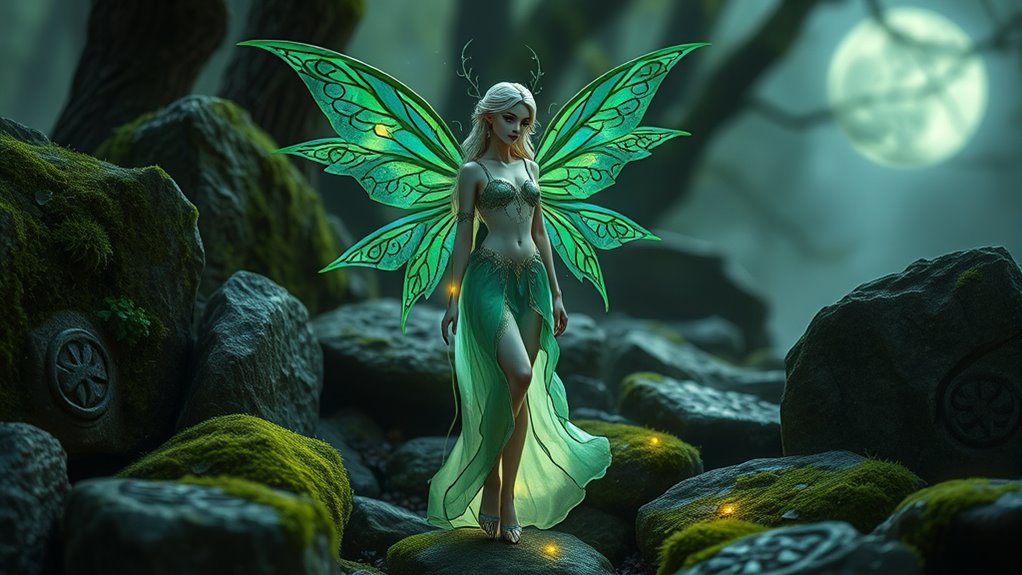
One of the most well-known groups is the Sidhe, or the fairy nobles, who are often depicted as noble, otherworldly beings that dwell in the hills and mounds known as sith. These Fae are considered powerful and sometimes unpredictable, capable of blessing or cursing humans depending on their mood. They’re central figures in Irish mythology, embodying the mysterious and sacred aspects of the land. The Sidhe are often associated with ancient burial mounds, believed to be portals to their domain, where they hold court and dance under moonlight. As you encounter stories about the Sidhe, you’ll notice that they serve as guardians of Irish heritage, embodying the spiritual connection between the land and its history.
The Sidhe are noble, otherworldly beings guarding Irish heritage in sacred mounds and moonlit dances.
Additionally, the extraction process used in some traditional Irish fairy rituals reflects the deep cultural significance of these beings and their stories.
Then there are the daoine sídhe, or fairy folk, who are more accessible and often depicted as small, glowing beings with a mischievous streak. They’re the tricksters of Irish mythology, known for playing pranks on humans but also for offering help when approached respectfully. These Fae often appear in fairy tales as helpful guides or as sources of magic, embodying the playful yet cautious spirit of Irish folklore. Their role is to remind us that the natural world is alive with unseen magic, and that respect for nature and tradition is essential when dealing with these beings.
You’ll also find the púca, a shape-shifting creature that can appear as a horse, a goat, or a human. The púca is a tricky character, known for leading travelers astray or warning them of danger. In fairy folklore, they serve as both protectors and troublemakers, embodying the unpredictable nature of Irish mythology. Their role is often cautionary: respect the wilderness and heed the signs, as the púca’s appearances can signal change or challenge.
Understanding these different types of Celtic Fae reveals a worldview where the supernatural and natural worlds are intertwined. Each Fae type plays a crucial role in preserving Irish stories, morals, and cultural identity, reminding you of the deep-rooted belief that unseen forces influence life and that respecting these forces is essential. As you explore Irish mythology, you’ll see that Celtic Fae are not just myth—they’re a reflection of a culture that holds the mysterious and magical as an integral part of everyday life.
As an affiliate, we earn on qualifying purchases.
Frequently Asked Questions
Are Celtic Fae Considered Good or Evil Entities?
You might find that Celtic Fae aren’t strictly good or evil, as their moral alignment varies based on cultural perceptions. Some fairies are seen as helpful and protective, while others can be mischievous or even dangerous. It’s important to remember that these entities often reflect human qualities, embodying both kindness and trickery. Your experience with them depends on the stories you hear and the respect you show toward their mysterious nature.
How Do Celtic Fae Interact With Humans Today?
Modern fae encounters often involve fleeting, fascinating folktale flashes where you might feel a gentle, guiding presence or a mischievous moment. Fae-human relationships tend to be friendly but cautious, with some people believing they’ve formed fairytale friendships or received fairy favors. You could stumble upon hidden fairy habitats or hear whispers on the wind, making these magical moments feel real, mysterious, and memorable while respecting the ancient allure of the Celtic Fae.
What Are Common Signs of Fae Presence?
You might notice signs of fae presence through glowing lights flickering in the woods or mysterious sounds like whispers or tinkling bells. Sometimes, you’ll see tiny, shimmering figures darting just out of sight or find unexpected, delicate trinkets placed in your path. These signs often feel enchanting, reminding you that the fae are nearby, watching, and subtly influencing your world in ways you might not fully understand.
Can Celtic Fae Be Summoned or Contacted?
You can attempt fairy communication, but summoning Celtic Fae is like whispering into a foggy night—uncertain and delicate. Fae summoning rituals require respect, patience, and a pure heart. Follow ancient practices carefully, setting a sacred space with offerings and quiet focus. Remember, Celtic Fae are elusive and playful; if they choose to appear, it’s a gift, not a guarantee. Be humble, and let the magic unfold naturally.
Are There Specific Celtic Fae Festivals or Celebrations?
You can find Celtic Fae festivals and Irish fairy celebrations throughout Ireland, especially during Beltane, Samhain, and Lughnasa. These events honor Irish folklore and often include storytelling, dances, and rituals to connect with the Celtic Fae. Participating in these celebrations helps you embrace the magic of Irish fairy traditions, fostering a deeper understanding and respect for the enchanting world of Celtic Fae.
As an affiliate, we earn on qualifying purchases.
Conclusion
As you explore the world of Celtic Fae, remember they’re like threads woven into Ireland’s rich tapestry—each fairy, from the mischievous banshee to the benevolent leprechaun, adds its own unique color. I once heard of a farmer who left a small offering for the fairies, and in return, his crops thrived. Embrace their magic, for just like those unseen threads, their presence weaves a deeper connection to Ireland’s enchanted spirit.
As an affiliate, we earn on qualifying purchases.
As an affiliate, we earn on qualifying purchases.
Fall Picks
fall essentials
As an affiliate, we earn on qualifying purchases.