
Halloween began as the ancient Celtic festival of Samhain, marking the end of harvest and the start of winter. People believed the boundary between the living and dead blurred, so they lit bonfires and wore masks to ward off spirits. Over time, Roman and Christian traditions blended in, transforming the solemn event into a playful celebration with costumes and tricks. Today’s festivities still echo these origins, and there’s more to uncover about how they shaped modern Halloween practices.
Key Takeaways
- Halloween originated from the Celtic festival Samhain, marking the end of harvest and the boundary between the living and dead.
- Roman and Christian influences merged into early Halloween customs, including All Hallows’ Eve and lighting candles for saints.
- European settlers introduced Halloween traditions like costumes and trick-or-treating to North America, blending old and new practices.
- Modern celebrations feature costumes, haunted houses, and community events, evolving from ancient rituals to festive entertainment.
- Halloween reflects a desire to honor the supernatural, confront mortality, and foster community connections through centuries-old customs.

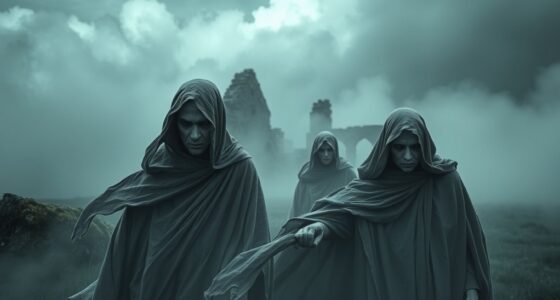
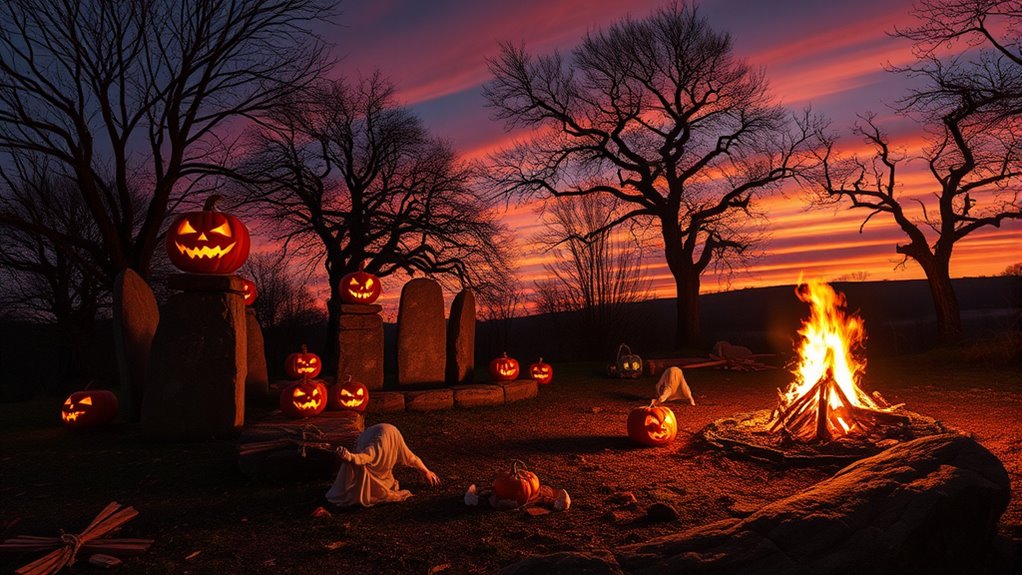
Have you ever wondered where Halloween actually comes from? The roots of this spooky holiday stretch back thousands of years to ancient rituals performed by Celtic tribes. These early traditions marked the end of harvest season and the beginning of winter, a time often associated with death and the supernatural. During Samhain, which was celebrated around October 31st, people believed that the boundary between the living and the dead blurred, allowing spirits to cross over into the world of the living. To ward off harmful ghosts, communities lit bonfires, wore masks, and offered sacrifices. These customs were designed to appease restless spirits and ensure a safe winter ahead. Over time, the traditions from these ancient rituals transformed, blending with other cultural influences, and gradually evolving into what we now recognize as Halloween.
As centuries passed, the influence of Roman and Christian traditions started to shape Halloween’s character. The Christian church, for instance, designated November 1st as All Saints’ Day, or All Hallows’ Day, a time to honor saints and martyrs. The night before, known as All Hallows’ Eve, became a time for people to light candles and hold vigil to remember the dead. These practices helped to merge pagan and religious customs, creating a sense of community and spiritual reflection. When European settlers brought these customs to North America, they encountered new cultures and beliefs, which further influenced the holiday. Over time, Halloween transitioned from a solemn night of remembrance into a more playful and community-centered celebration. The tradition of dressing up in costumes, bobbing for apples, and trick-or-treating emerged as ways for neighbors to come together, share treats, and ward off spirits in a fun, social manner. Additionally, the incorporation of building traditions helped solidify Halloween as a festive occasion enjoyed by many.
Today, Halloween has become a global phenomenon, characterized by elaborate costumes, haunted houses, and parties. Yet, underneath the commercialized festivities, the holiday still echoes its ancient origins—honoring the cycle of life and death, celebrating the supernatural, and connecting communities through shared rituals. Modern celebrations may have lost their original solemnity, but they carry the spirit of those ancient rituals that aimed to keep spirits at bay and honor the unknown. Whether you’re carving a pumpkin or attending a costume party, you’re partaking in a tradition that’s evolved over centuries—one rooted in the timeless human desire to understand, confront, and celebrate what lies beyond the everyday world.
Frequently Asked Questions
How Did Halloween Costumes Originate?
You might find that Halloween costumes originated from the historical costume evolution where people dressed up to ward off spirits and hide from ghosts. Cultural influences on dress played a big role, as communities adapted their traditional clothing for disguises. Over time, these costumes became more playful and creative, reflecting popular culture, horror themes, and imagination, turning Halloween into a night for fun, spooky, and inventive dress-up.
What Are the Symbols Associated With Halloween’s History?
You see, ancient symbols like pumpkins, skulls, and black cats carry deep cultural significance, representing protection from spirits and honoring the dead. These symbols originated from Celtic traditions and early Christian influences, embodying fears and hopes. They help you connect with Halloween’s history, reminding you of its roots in honoring ancestors and warding off evil spirits. These symbols continue to shape how you celebrate and embrace the spooky spirit today.
How Did Halloween Become a Commercial Holiday?
You see, Halloween became a commercial holiday through clever marketing strategies and cultural influences. Companies started promoting costumes, decorations, and candy as essential parts of celebrating, making it more than just a spooky tradition. Retailers recognized the holiday’s potential to boost sales, and media helped shape its modern image. As a result, Halloween transformed into a fun, profitable event that appeals to all ages through advertising and popular culture.
Are There Any Regional Halloween Traditions Worldwide?
You’ll find many regional festivities celebrating Halloween with unique cultural variations worldwide. In Mexico, Día de los Muertos honors loved ones with colorful altars and parades. In Ireland and Scotland, traditional bonfires and storytelling remain popular. Japan hosts themed events and costume parties, while in the Philippines, children enjoy “pambansang” festivals. These cultural variations highlight how Halloween adapts to local customs, making it a truly global celebration.
What Are the Health Effects of Halloween Candy Consumption?
Eating Halloween candy can harm your dental health because of high sugar intake, which promotes tooth decay and cavities. The more candy you consume, the greater your risk of damaging your teeth. To protect yourself, try to limit your candy intake and brush your teeth regularly after indulging. Choosing healthier treats or enjoying candy in moderation helps reduce these negative effects and keeps your smile healthy.
Conclusion
As you carve your pumpkin this Halloween, it’s no coincidence that centuries ago, people celebrated Samhain to ward off spirits. Those ancient traditions quietly echo in today’s costumes and candy. Maybe, just maybe, the spooky stories and ghostly decorations are more than mere fun—they’re a reminder that we’re still connected to those mysterious origins. So, as you enjoy the night, remember it’s all part of a centuries-old dance with the unknown.